
← Back
04/13/1970 • 7 views

Apollo 13 Oxygen Tank Explodes, Forcing Abort of Lunar Landing
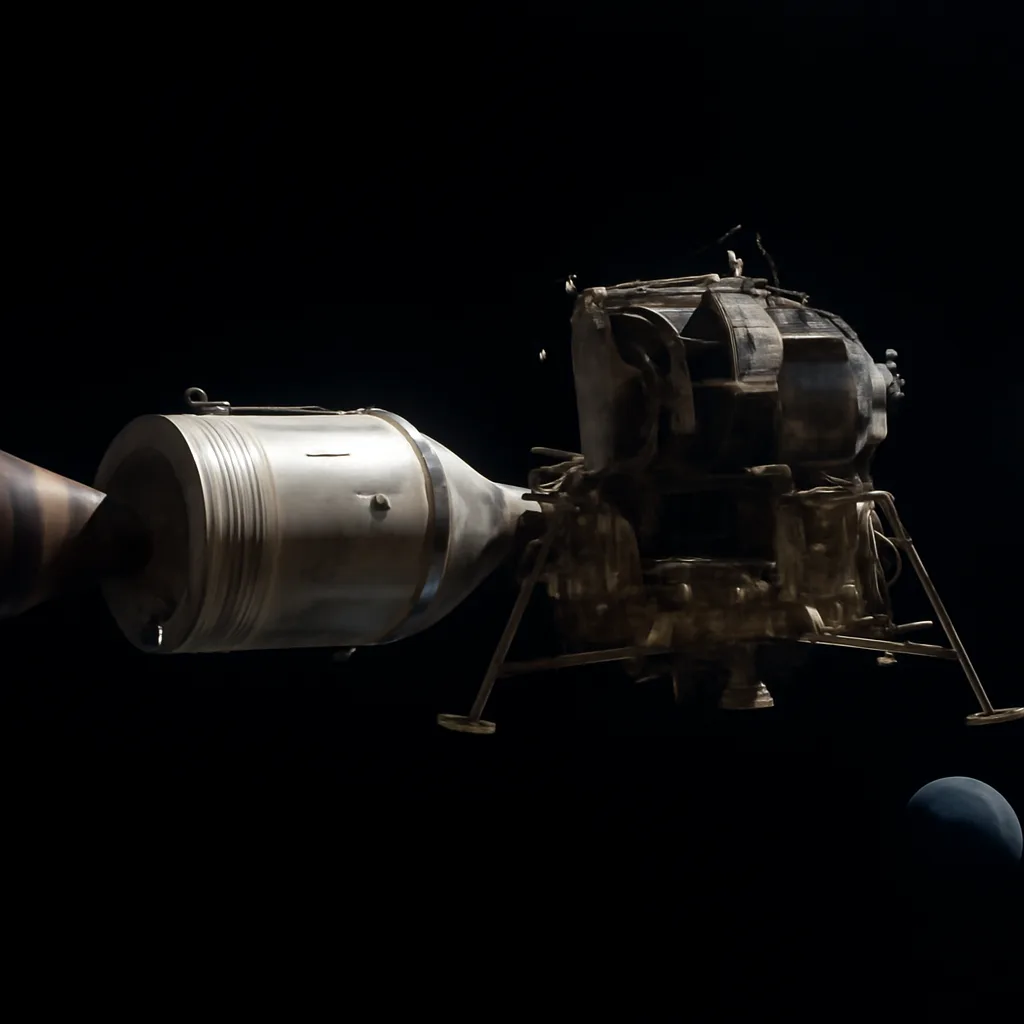
Apollo-era spacecraft in lunar mission configuration: the Command/Service Module docked with the Lunar Module against the blackness of space, with Earth visible in the distant background.

On April 13, 1970, an oxygen tank aboard Apollo 13 ruptured two days into the mission, crippling the Service Module and forcing NASA to abort the planned lunar landing and focus on returning the crew safely to Earth.


On April 13, 1970, the Apollo 13 mission, intended to land astronauts on the Moon, suffered a critical failure when an oxygen tank in the Service Module exploded. The incident transformed a routine lunar landing attempt into a high-stakes survival and engineering challenge that captured global attention.

Mission profile and early flight
Apollo 13 launched on April 11, 1970, carrying commander James A. Lovell Jr., command module pilot John L. “Jack” Swigert Jr., and lunar module pilot Fred W. Haise Jr. The mission proceeded normally through launch and translunar injection, with the crew en route to the Moon and the spacecraft systems operating within expected parameters.

Failure and immediate consequences
On April 13, roughly 56 hours after launch, the crew reported a loud bang and a loss of electrical power and oxygen readings from one Service Module tank. Telemetry and crew reports showed that an oxygen tank had ruptured, causing damage to the Service Module’s systems. The Command and Service Module (CSM) lost most of its oxygen supply and much of its electricity generation capability because the fuel cells that produced power required oxygen from the tanks.

Abort and use of the Lunar Module as a lifeboat
With the Service Module compromised and a lunar landing impossible, mission controllers at Houston called for an immediate abort of the lunar landing. To preserve life-support and propulsion for the return trajectory, the crew powered down the Command Module to conserve its remaining consumables and took refuge in the Lunar Module (LM), Odyssey, using it as an improvised lifeboat. The LM, designed for two to three days on the lunar surface, now supported three men for the longer journey back to Earth.

Engineering improvisation and resource management
NASA flight controllers and the crew undertook rapid problem-solving to stretch limited resources. Engineers on the ground devised procedures to adapt the LM’s environmental control and power systems to support the crew, and to jury-rig a CO2 removal solution because the LM’s lithium hydroxide canisters were becoming saturated. Navigational burns had to be performed using the LM’s descent engine to adjust the spacecraft’s trajectory for return. The mission required careful power-up sequencing of the Command Module later in the return to ensure it would be functional for reentry.

Return and splashdown
Despite the severity of the damage and multiple technical challenges, the combined efforts of the crew and Mission Control succeeded. Apollo 13 conducted course-correction burns, managed life-support issues, and reentered Earth’s atmosphere on April 17, 1970. The crew splashed down safely in the South Pacific, where they were recovered by the U.S. Navy.

Causes and aftermath
Investigations after the mission found that the oxygen tank’s failure was linked to a combination of factors, including a damaged heater inside the tank and procedures during preflight testing that had exposed hardware to higher temperatures and stresses than intended. The precise chain of events involved design, manufacturing, and handling issues; NASA and contractor reviews led to design changes, improved testing, and procedural reforms to reduce the risk of similar failures.

Legacy
Apollo 13 became a defining example of crisis management, teamwork, and engineering under pressure. While the mission failed to achieve its primary objective—a Moon landing—it succeeded in returning the crew safely and produced lessons that strengthened the safety and reliability of subsequent human spaceflight missions.

Sources for further reading include NASA mission reports and subsequent accident investigation documents, which provide detailed timelines, technical analyses, and recommendations that followed the incident.

Share this

Email Share on X Facebook Reddit

Did this surprise you?