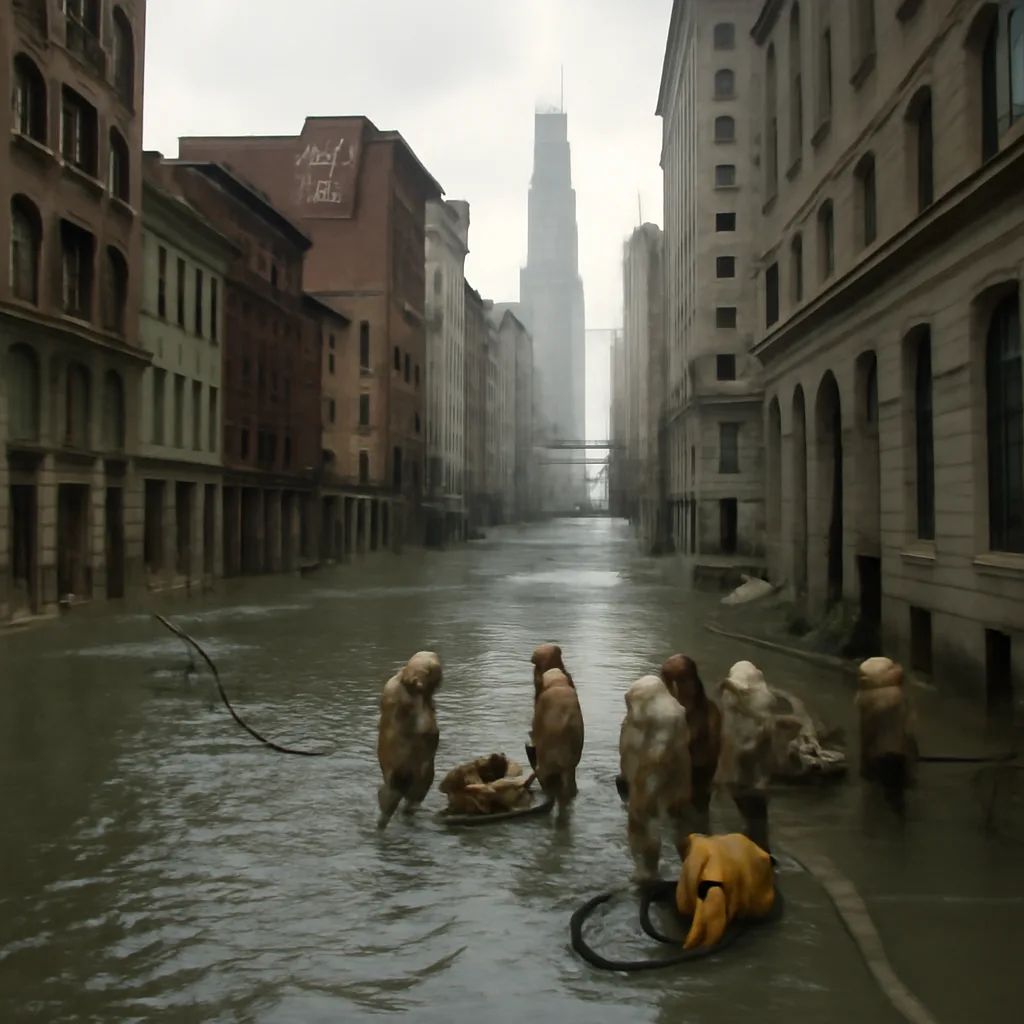
Early-Morning Flooding Submerges Chicago Loop Basements
On April 13, 1992, a breach in an old freight tunnel under the Chicago River sent millions of gallons of water into downtown basements and sublevels, disrupting power, transit and businesses across the Loop.
In the predawn hours of April 13, 1992, a breach in the Chicago freight tunnel system beneath the Chicago River allowed river water to surge into the basements and subbasements of the Loop, causing widespread flooding and disruption across downtown Chicago.
Background and cause
The city of Chicago had an extensive network of early 20th-century freight tunnels running beneath the central business district. These tunnels, originally built to move goods between buildings and the river, had been largely abandoned for decades but still carried utility lines and provided subterranean connections. A contractor working on a repair to a utility line beneath the Kinzie Street bridge accidentally damaged a wall of one of the freight tunnels. The damaged wall allowed water from the Chicago River to flow into the tunnel system. As water spread through interconnected passages and into adjacent building basements, it overwhelmed electrical and mechanical systems and caused cascading failures.
Extent of damage
Water flooded dozens of buildings' lower levels, including offices, retail spaces, and public infrastructure. The flooding cut power to parts of the Loop, disrupted telephone and data lines, and caused elevator and heating systems to fail. Underwater damage affected sensitive equipment and archives stored below ground in several buildings; some businesses lost records and hardware. The flood also forced closures of streets and commuter rail services that used subgrade facilities nearby, and several subway and elevated-train connections were temporarily impacted by power loss rather than direct inundation.
Response and containment
City emergency personnel, utility crews, and private contractors responded through the day and into the following weeks. Crews worked to locate and seal the breach, pump water out of flooded areas, and restore electrical and mechanical services. The US Army Corps of Engineers and other specialists were involved in assessing structural risk and coordinating repairs where needed. Restoration of buildings' lower levels proved time-consuming due to waterlogged wiring, heating and ventilation equipment, and mold risk in affected materials.
Economic and civic impact
The flood inflicted substantial economic costs from business interruption, property damage, and repair bills. Many downtown businesses closed temporarily, and public agencies relocated certain operations while cleanup and infrastructure repairs proceeded. The event prompted scrutiny of aging subterranean infrastructure and renewed efforts to map, maintain, and secure older tunnels and utility conduits beneath the city.
Aftermath and legacy
In the years after the event, Chicago officials and private owners reviewed inspection and maintenance practices for underground spaces. The flood is often cited in local histories as a reminder of vulnerabilities created by aging infrastructure and hidden urban networks. While immediate physical repairs were completed and services restored, the incident influenced policy discussions about underground risk management and emergency preparedness for critical downtown infrastructure.
Notes on sources and certainty
Contemporary news reports, municipal damage assessments, and later retrospectives documented the April 13, 1992, flooding as originating from the freight tunnel system under the Chicago River and detail the resultant damage and response. Specifics such as exact water volume estimates and the full accounting of economic losses vary among sources; where figures differ, summaries above reflect consensus descriptions rather than single disputed numbers.