
← Back
07/29/2018 • 4 views

California Declares State of Emergency as July 2018 Wildfires Rage
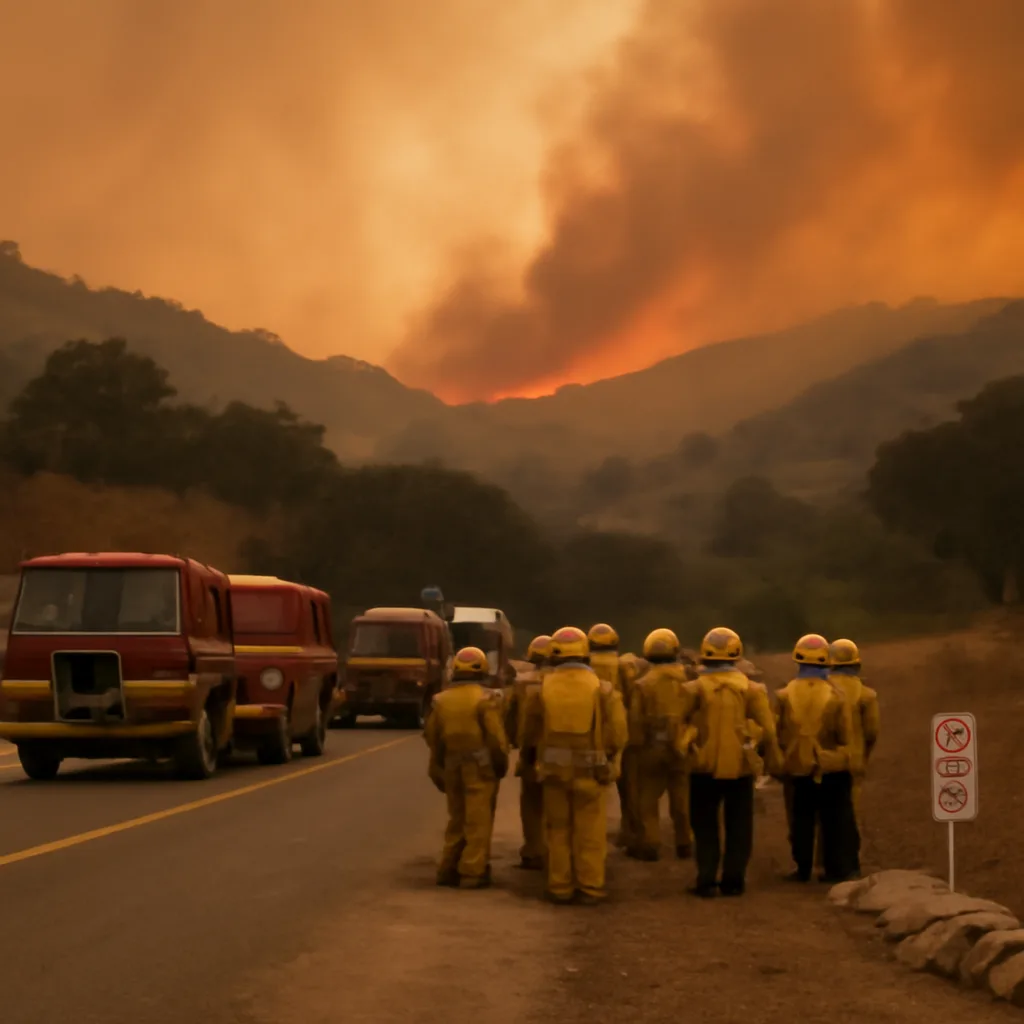
Smoke-filled sky over a California landscape with firefighters and fire engines near a roadside, vegetation scorched and evacuation signage visible.

On July 29, 2018, California officials declared a state of emergency as multiple wildfires—driven by hot, dry conditions and strong winds—threatened communities and strained firefighting resources across the state.


On July 29, 2018, California declared a state of emergency as numerous wildfires burned across the state, prompting large-scale evacuations and mobilization of firefighting resources. The declaration was issued in response to rapidly spreading fires fueled by high temperatures, low humidity, and strong winds in several regions, which threatened homes, infrastructure and public safety.

Scope and impacts
Several major fires were active in late July 2018, including incidents in Northern and Southern California. The emergency declaration allowed state authorities to access additional resources, coordinate evacuations, and seek federal support where needed. Local jurisdictions reported evacuations of residential areas, closures of highways and parks, and disruptions to utilities in some affected counties. Firefighters from multiple agencies—Cal Fire, U.S. Forest Service crews, and local volunteer departments—worked under difficult conditions to protect communities and to contain the blazes.

Government response
A state of emergency is a legal mechanism that enables the governor to expedite resources, deploy personnel, and request aid from the federal government. In 2018, California’s declaration enabled faster distribution of state funds for firefighting and recovery, and facilitated interagency coordination among state and federal responders. Emergency operations centers were activated to manage evacuation orders, sheltering, and public information. Where damages were severe, local officials later pursued federal disaster declarations to secure additional funding for recovery efforts.

Underlying conditions
California’s fire season in 2018 followed years of drought and a pattern of increasingly destructive fires. Hotter, drier weather and vegetation buildup created abundant fuel, while episodic wind events—such as the Diablo and Santa Ana winds—can rapidly accelerate fire spread. Fire behavior and impacts that summer reflected both immediate weather conditions and longer-term climate and land-management factors that influence wildfire risk.

Public safety and recovery
Evacuation orders and advisories were issued for communities in the path of active fires; residents were urged to follow instructions from local authorities, prepare evacuation kits, and monitor official information channels for updates. In the weeks following the declaration, firefighting efforts focused on containment lines, structure protection, and mop-up operations. Recovery for affected communities involved damage assessments, temporary housing and assistance for displaced residents, and infrastructure repairs.

Context and significance
The July 29, 2018, emergency declaration was one episode in a broader trend of significant wildfire events in California during the 2010s and beyond, which prompted policy discussions on forest management, emergency preparedness, utility infrastructure, and climate adaptation. While individual fires have distinct causes—ranging from lightning to human activity—the collective increase in large, destructive wildfires has had lasting implications for public safety planning, insurance markets, and community resilience in the state.

Notes on sources and accuracy
This summary synthesizes contemporaneous reporting and official emergency-notification practices used by California authorities in 2018. Specific details such as the names, sizes, and containment levels of individual fires on July 29, 2018, varied by incident and are recorded in official Cal Fire and local agency incident reports from that period.

Share this

Email Share on X Facebook Reddit

Did this surprise you?