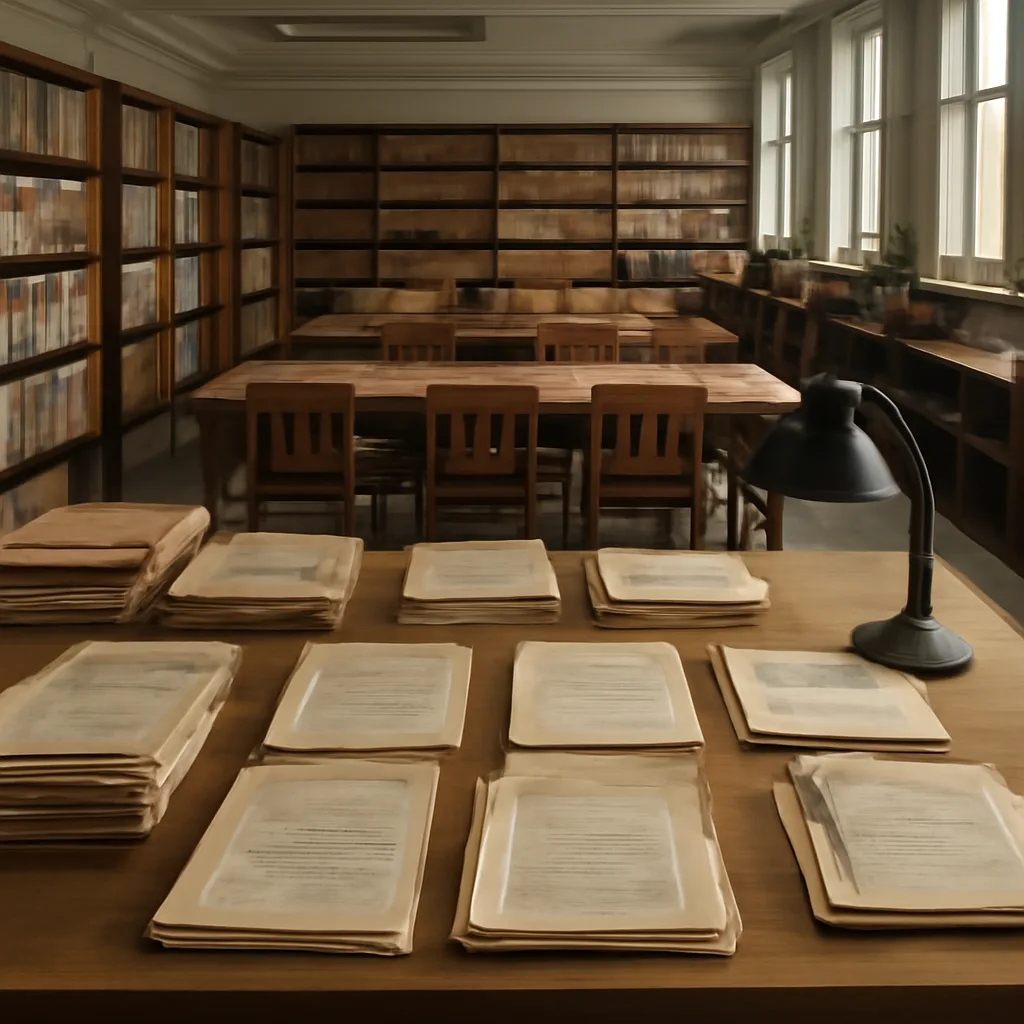
CIA Publishes Declassified UFO Files from 1940s–1990s
On Jan. 17, 2016, the CIA released a trove of declassified documents on unidentified aerial phenomena, spanning reports, analyses and internal correspondence from the mid-20th century to the 1990s, aiming to clarify past investigations but leaving some questions unresolved.
On January 17, 2016, the Central Intelligence Agency made publicly available a large set of declassified documents related to unidentified aerial phenomena (UAP), commonly referred to as UFOs. The release was part of an ongoing effort by the agency to improve public access to historical records and came after years of requests and media interest in government records on anomalous aerial observations.
Contents and scope
The released files include incident reports, internal memoranda, intelligence assessments, technical evaluations and administrative correspondence covering several decades, particularly the 1940s through the 1990s. Many documents summarize sightings reported by civilians, military personnel and other government agencies; others discuss analytical efforts to evaluate photographic evidence, radar returns and witness statements. The material reflects the variety of cases that entered CIA files—from misidentified conventional aircraft, astronomical objects and meteorological phenomena to reports that remained unexplained after investigation.
Context and purpose of the release
The declassification and release were consistent with long-standing archival practices and responses to Freedom of Information Act (FOIA) requests. The CIA stated that the purpose was to increase transparency about historical records and to place past reporting and analytical practices in the public record. The agency also noted that some content remained redacted for reasons such as protecting intelligence sources and methods, national security, or privacy.
What the documents show—and what they do not
The files illustrate how UAP reports were collected, routed and sometimes scrutinized by analysts in different branches of the U.S. government. They show instances where investigations concluded mundane explanations—balloons, astronomical bodies, aircraft and instrumentation error—and other cases where investigators recorded insufficient data to reach firm conclusions. The documents reveal internal debates about how seriously certain reports should be treated, the limits of available sensor data, and the challenges of corroborating witness accounts.
The release did not provide definitive proof of extraterrestrial activity. Nor did it represent a comprehensive, modern scientific study of UAP; the archives largely reflect historical reporting practices, technological limitations of past sensor systems, and the priorities of agencies at the time. Some records remained heavily redacted or withheld, and certain investigative details—such as raw sensor logs or later follow-up analyses conducted by other agencies—were not always present in the CIA files.
Reactions and subsequent developments
Scholars, journalists and UAP researchers used the documents to reconstruct historical patterns of reporting and to test specific claims about incidents. Historians of science and intelligence noted the value of the release for understanding how Cold War-era priorities shaped data collection and interpretation. The documents also fed public interest and debate about the appropriate balance between transparency and protection of sensitive sources and methods.
Legacy and continuing questions
The January 2016 disclosure contributed to broader efforts by multiple U.S. agencies to revisit and, in some cases, release historical records related to UAP. In subsequent years, congressional attention and new reporting requirements prompted additional reviews and briefings by defense and intelligence organizations. While the CIA release enriched the archival base for researchers and the public, it left unresolved questions about specific incidents and about how modern sensor networks and analytic practices might change the assessment of contemporary UAP reports.
Researchers and members of the public interested in these historical records can access the released documents through the CIA’s reading room and related archival repositories. Those materials serve as a resource for examining how officials documented, analyzed and communicated about anomalous aerial reports across much of the 20th century.