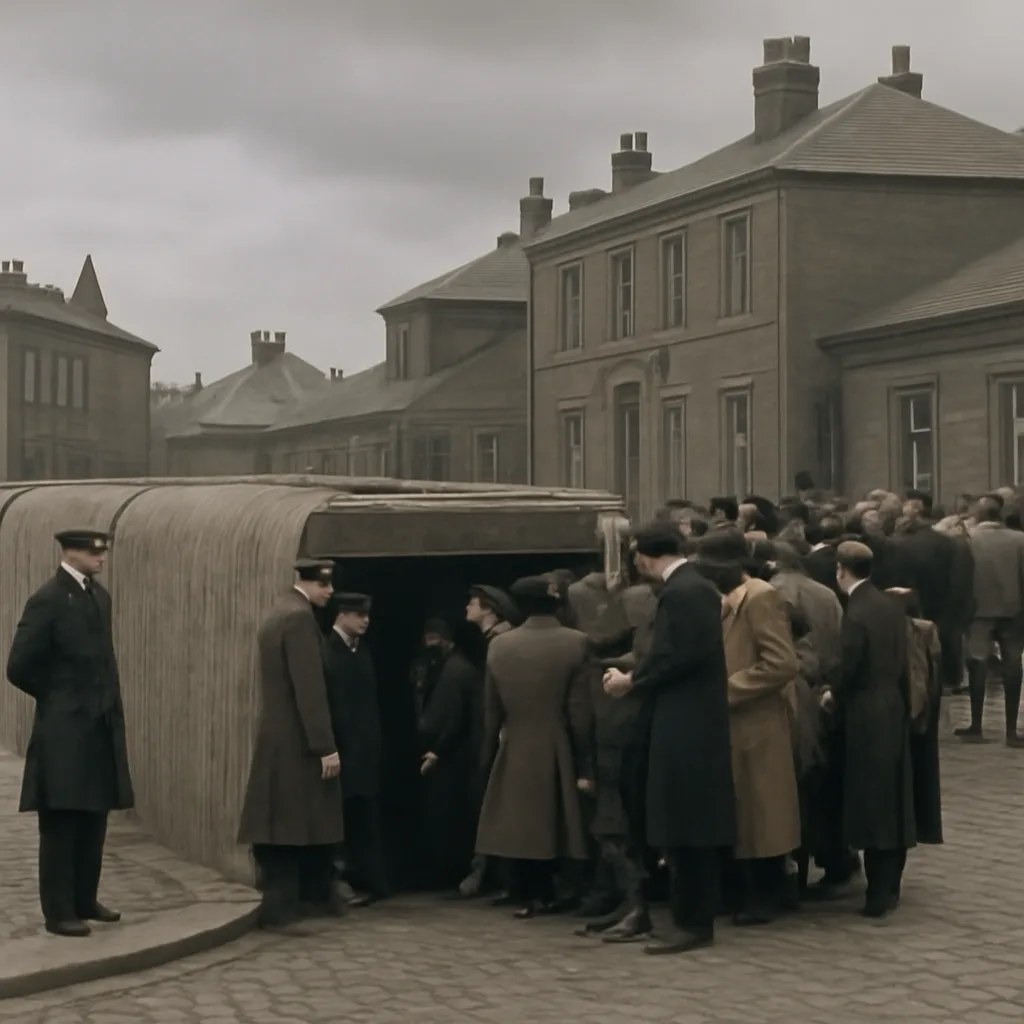
Civilians Use the First Purpose-Built Air Raid Shelters
On March 8, 1918, during World War I, civilians in British cities began using purpose-built air raid shelters as German air raids increased, marking an early shift toward organized civilian protection from aerial attack.
By early 1918 the advent of strategic bombing in World War I had moved beyond reconnaissance and sporadic strafing to more sustained attacks on population centers. On 8 March 1918, civilians in parts of Britain began using purpose-built air raid shelters constructed specifically to protect noncombatants from aerial bombardment. These shelters arose from growing municipal and national efforts to reduce casualties and maintain morale as air raids—carried out by Zeppelins earlier in the war and increasingly by fixed-wing bombers—threatened urban areas.
Background
Aerial attacks on cities were a new phenomenon in the First World War. From 1915 German Zeppelin raids struck London and other British towns, provoking public alarm and stimulating debate about civil defence. Municipalities experimented with blackout regulations, street lighting curfews, warning systems and improvised refuges. By 1917–1918, advances in bomber aircraft and tactics, and the intensification of raids, pushed local authorities to create more robust, purpose-built shelters rather than relying solely on cellars, basements and ad hoc refuges.
Design and construction
Early purpose-built shelters of this period varied in design according to available materials, local conditions and municipal budgets. Common forms included reinforced underground chambers in public parks and adapted railway arches, concrete shelters adjacent to civic buildings, and communal trenches or covered shelters in streets and squares. Construction emphasized blast protection and the ability to hold multiple civilians for several hours. Ventilation, entryways designed to reduce blast effects, and simple benches were typical features. Many shelters were modest in scale and aimed at rapid construction using locally available labor and materials.
Civilian use and organization
Use of the shelters was organized through local authorities and voluntary groups. Local wardens, air raid precaution (ARP) committees and police coordinated warning systems—siren signals, whistles or public announcements—and guided residents to the nearest shelter. Drill practices and signage (where available) sought to prevent chaos during alarms. Women’s organizations and volunteer workers often assisted in equipping shelters with basic supplies and maintaining order.
Impact and limitations
Purpose-built shelters reduced immediate vulnerability in the areas where they were provided and helped sustain civilian morale by offering a sense of protection and organization. However, their coverage was uneven: wealthier districts or larger municipalities could afford better and more numerous shelters, while rural areas and poorer neighborhoods often relied on traditional cellars. Moreover, the shelters of 1918 were relatively primitive compared with the extensive underground complexes and purpose-designed air-raid constructions that would appear in the Second World War.
Historical significance
The March 1918 introduction and use of dedicated air raid shelters by civilians represents an early institutional and technological response to the threat of aerial warfare directed at noncombatants. These measures signaled a recognition by governments and municipalities that civilian populations required organized civil defence infrastructure. Lessons learned in 1918—about shelter design, warning systems and civilian organization—fed into interwar debates on civil defence and informed later, more comprehensive shelter programs in the 1930s and 1940s.
Notes on sources and interpretation
Contemporary reports, municipal records and newspapers from 1917–1919 document the construction and use of early air raid shelters in Britain and other affected countries. Precise dates and the scope of use can vary in local records; 8 March 1918 is identified in some municipal accounts as a date when newly completed shelters were first used in certain towns during raids. Because civil-defence arrangements were locally administered and records are uneven, historians emphasize regional variation rather than a single nationwide rollout on that exact date.