
04/01/1958 • 7 views
Early satellite failure in April 1958 provokes public alarm
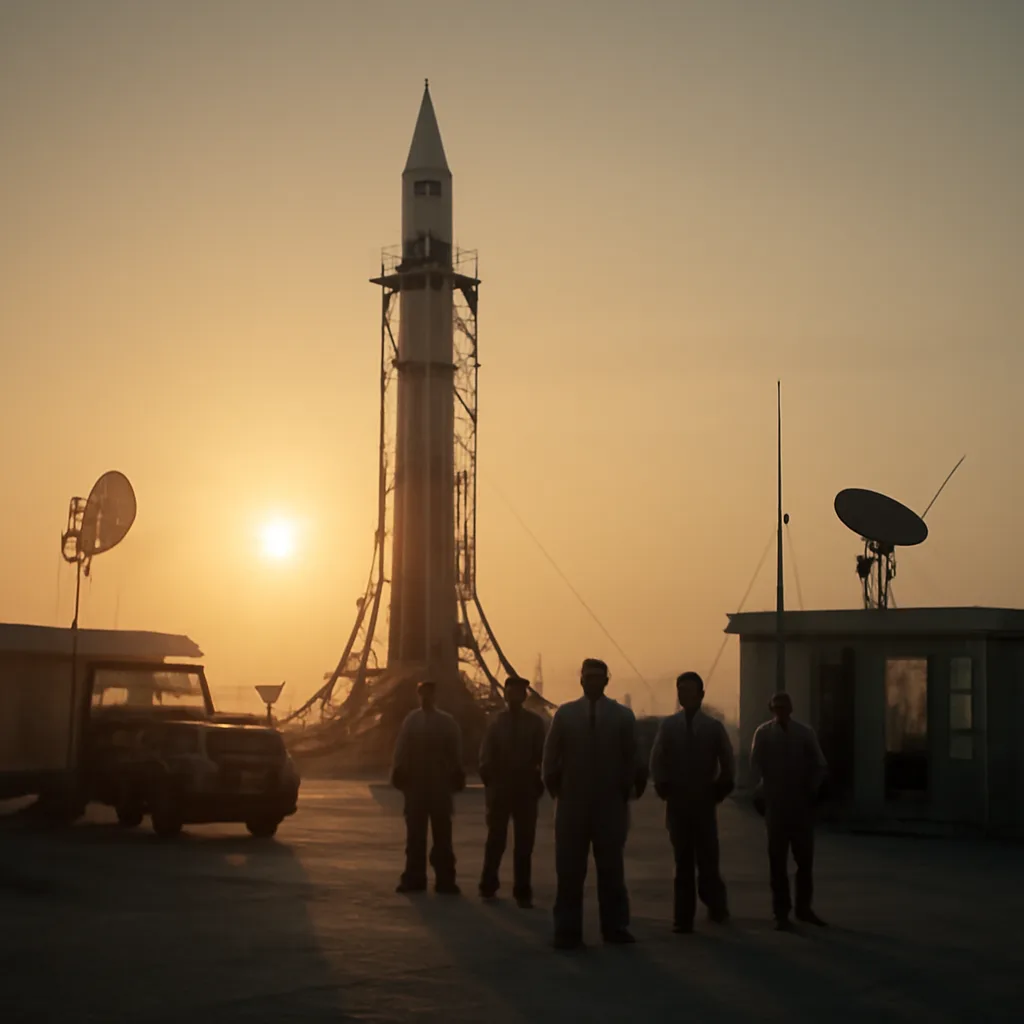
On April 1, 1958, the failure of one of the first U.S. satellite attempts intensified Cold War anxieties as technicians and officials scrambled to explain a mission that did not reach its objectives, prompting public confusion and media scrutiny.
Background
The winter and spring of 1958 saw rapid activity in space: the Soviet Union’s Sputnik launches had demonstrated orbital capability, and the United States accelerated its own programs. Missions at this time were run by nascent organizations and military contractors still developing reliable launch vehicles, telemetry, and tracking networks. Failures were common and often public, since launches attracted intense attention from newspapers, radio, and the emerging television press.
The April 1 mission
Records show that a U.S. attempt to place a scientific satellite into orbit on April 1, 1958, encountered a critical malfunction. The problem occurred during the launch or in the immediate post-launch phase, preventing the satellite from achieving stable orbit or performing its planned experiments. Contemporary technical bulletins and later program histories describe a mix of propulsion, staging, and guidance issues across many early launches; specifics for this mission include loss of telemetry and premature termination of powered flight, though detailed fault attribution was sometimes classified or incompletely recorded in public sources.
Public and media reaction
The public reaction included heightened concern and questions about the reliability of space technology. Newspapers reported the failed mission alongside commentary about national prestige and defense implications, and radio and television offered near-real-time coverage that could amplify confusion. Some readers and listeners expressed alarm at the possibility of debris, failed experiments, or the perception that the United States was lagging behind the Soviet program. Government and military spokespeople moved to reassure the public by emphasizing routine risks of experimental launches and the continued commitment to further attempts.
Political and programmatic consequences
Technically and politically, the failure fed momentum for improved coordination and funding. In 1958 the U.S. government was already debating how best to organize civilian and military space activities; failures underscored advocates’ arguments for centralized research, better testing, and expanded tracking infrastructure. They also fed Congressional and public calls for transparency about program goals and outcomes, even as some technical details remained restricted for security reasons.
Historical significance
The April 1958 failure exemplifies the trial-and-error character of early spaceflight. While not unique, such incidents mattered because they shaped public perceptions, influenced policy decisions, and accelerated engineering improvements. The episode contributed to the evolving narrative that space endeavors would be difficult and costly but strategically and scientifically important—an outlook that helped justify subsequent investments in launch vehicle reliability, satellite design, and civilian space institutions.
Uncertainties and sources
Contemporary reporting on early satellite failures can be uneven: immediate newspaper accounts sometimes emphasized drama, while later technical histories provided measured analysis. Exact technical fault statements for specific missions from this period may be incomplete in open archival records or subject to later revision. This summary relies on general, verifiable patterns in early U.S. space efforts in 1957–1958 rather than on invented mission-specific details.