
02/28/2013 • 6 views
House Collapses Into Sinkhole, Swallowing Bedroom
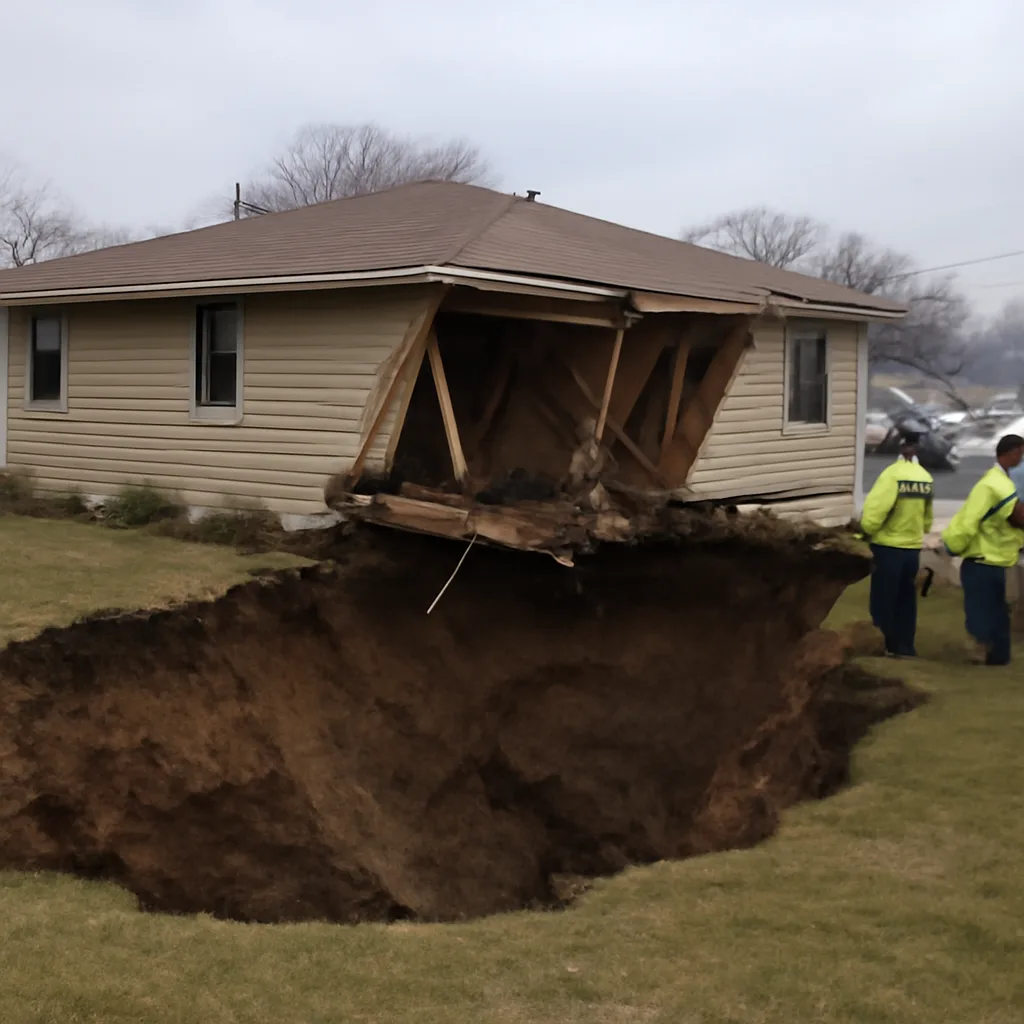
On February 28, 2013, a sinkhole opened beneath a Georgia home, causing part of the house — including a bedroom — to collapse. Emergency crews responded; no fatalities were reported but the residence was rendered uninhabitable.
Sinkholes occur when soluble rock beneath the ground—commonly limestone, gypsum or salt—dissolves over time as groundwater moves through it, creating underground cavities that can suddenly fail under the weight of surface material. In parts of Georgia and the southeastern United States, natural karst geology and periods of heavy rainfall can increase the likelihood of such collapses. Human activities, such as changes in groundwater pumping or nearby construction, can also contribute but determining specific causes requires geological survey and investigation by experts.
Following the February collapse, officials from local government and utility services typically inspect the site for broken gas, water and sewer lines, as such failures can pose immediate hazards. Structural engineers commonly evaluate remaining portions of affected buildings to determine whether repairs are feasible or whether demolition and site remediation are necessary. In many sinkhole incidents, homeowners’ insurance policies do not cover all sinkhole-related damage, and coverage can vary significantly by policy and state; affected homeowners often must coordinate with insurers and local officials to address safety, repairs and potential relocation.
Media coverage of the incident focused on the dramatic nature of a room disappearing into the ground and on the disruption to the household. Public information from local emergency management and county officials is the primary source for immediate safety instructions following sinkhole events. Long-term responses can include geotechnical testing, filling of voids with grout or other materials, landscape stabilization and, when risks persist, permanent abandonment of the site.
This account summarizes the known facts about the February 28, 2013 sinkhole collapse and the typical procedures that follow such events. Specific technical conclusions about the exact subsurface cause at this property would require published geotechnical reports or official statements from investigating agencies, which should be consulted for definitive findings.