
← Back
05/13/2004 • 9 views

Man Pronounced Dead Awakens During His Autopsy in UK Hospital
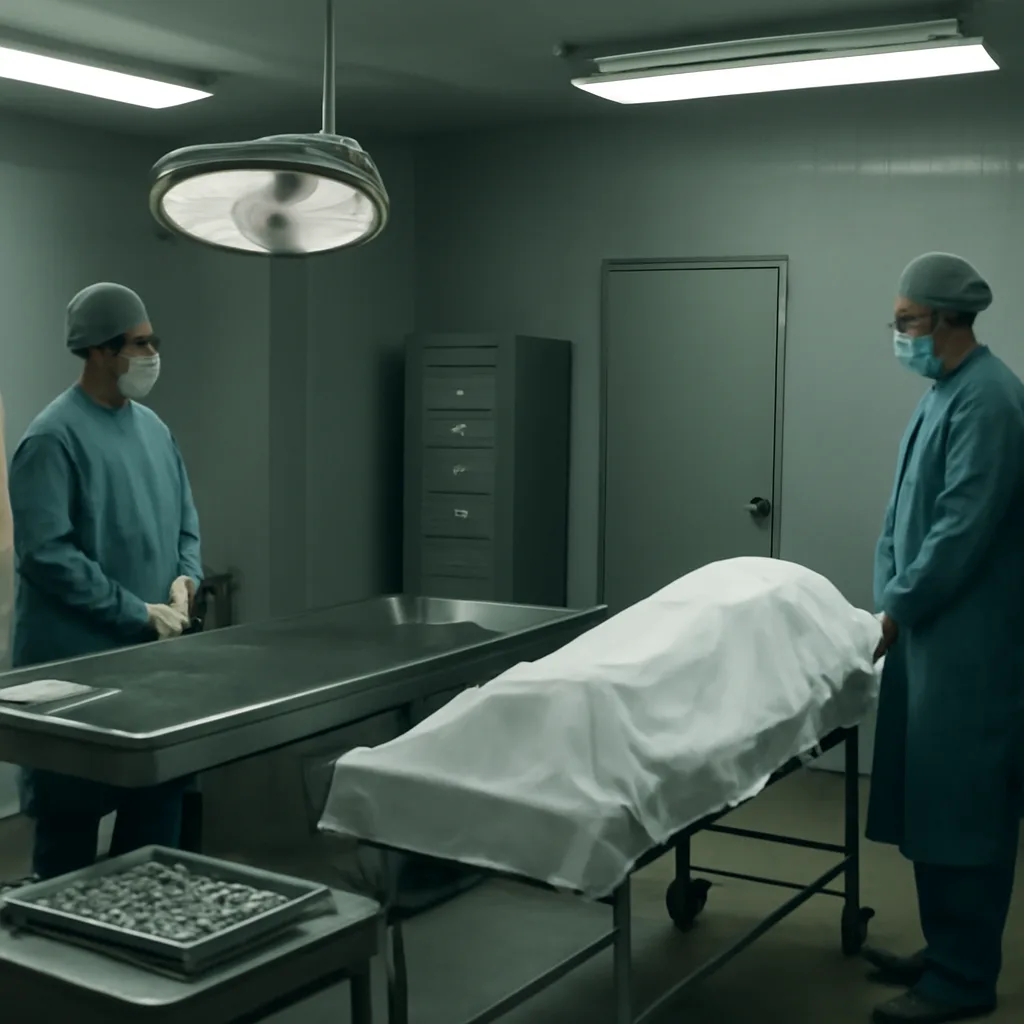
Hospital mortuary room with a covered stretcher and clinical staff in protective gowns and gloves preparing instruments; subdued lighting and a somber, clinical atmosphere.

In May 2004 a British man legally declared dead was discovered to be alive during his own autopsy at a hospital morgue, prompting inquiries into the death certification and postmortem procedures.


On 13 May 2004 a man in Britain who had been formally declared dead regained signs of life while undergoing a postmortem examination. The case drew attention to medical, legal and procedural safeguards surrounding death certification and the conduct of autopsies.

According to contemporaneous press reports and later summaries, the patient had been admitted to hospital in a severely unwell state. Clinicians determined he was beyond recovery and completed the necessary paperwork to certify death. The body was transferred to the hospital mortuary for a postmortem, which in the United Kingdom can be carried out to establish cause of death when there is clinical uncertainty or for coroner investigations.

During the autopsy the surgical team observed movements and signs inconsistent with death and halted the procedure. Staff rendered emergency resuscitation and the man was taken back to intensive care. Accounts at the time indicated that he subsequently recovered to the point of regaining consciousness before later dying again — though reporting varied on the precise clinical course after the resuscitation.

The incident raised immediate questions about how death had been certified and whether reversible states (for example, deep coma with minimal respiration, drug-induced suppression, or profound hypothermia) had been adequately ruled out. It also prompted scrutiny of communication between clinical teams and mortuary staff and the protocols used to confirm biological death before transfer for postmortem.

Hospital and legal responses in such cases typically include an internal inquiry to review clinical decisions and documentation, and involvement of the coroner if the death remains subject to legal investigation. Media coverage at the time noted that the case was unusual but not without precedent: there are documented historical and modern instances worldwide of extreme hypoperfusion or brain suppression producing very low vital signs that can be misread as death.

Medical literature discusses several conditions that can mimic death, including certain overdoses, severe hypothermia, and particular neurological states. Standard practice in many jurisdictions emphasizes multiple checks for cardiac, respiratory and neurological signs, and in uncertain situations recommends observation or additional tests (such as electrocardiography) before declaring death. The 2004 UK case reinforced calls by some clinicians and professional bodies for rigorous, standardized protocols and improved training to prevent premature certification.

Beyond immediate clinical lessons, the incident highlighted legal and ethical dimensions: the responsibilities of physicians certifying death, the rights of patients and families, and the need for transparent reporting when procedural errors occur. It also spurred public discussion about the rare but consequential consequences of diagnostic error at the end of life.

Because reporting at the time varied in detail and some clinical records remain confidential, precise aspects of the man’s condition before the autopsy and his subsequent clinical trajectory are not uniformly documented in public sources. What is clear from contemporary accounts is that the event occurred on 13 May 2004 in the UK, involved a declared-dead patient who showed signs of life during a postmortem, and led to renewed focus on death-certification practices.

Share this

Email Share on X Facebook Reddit

Did this surprise you?