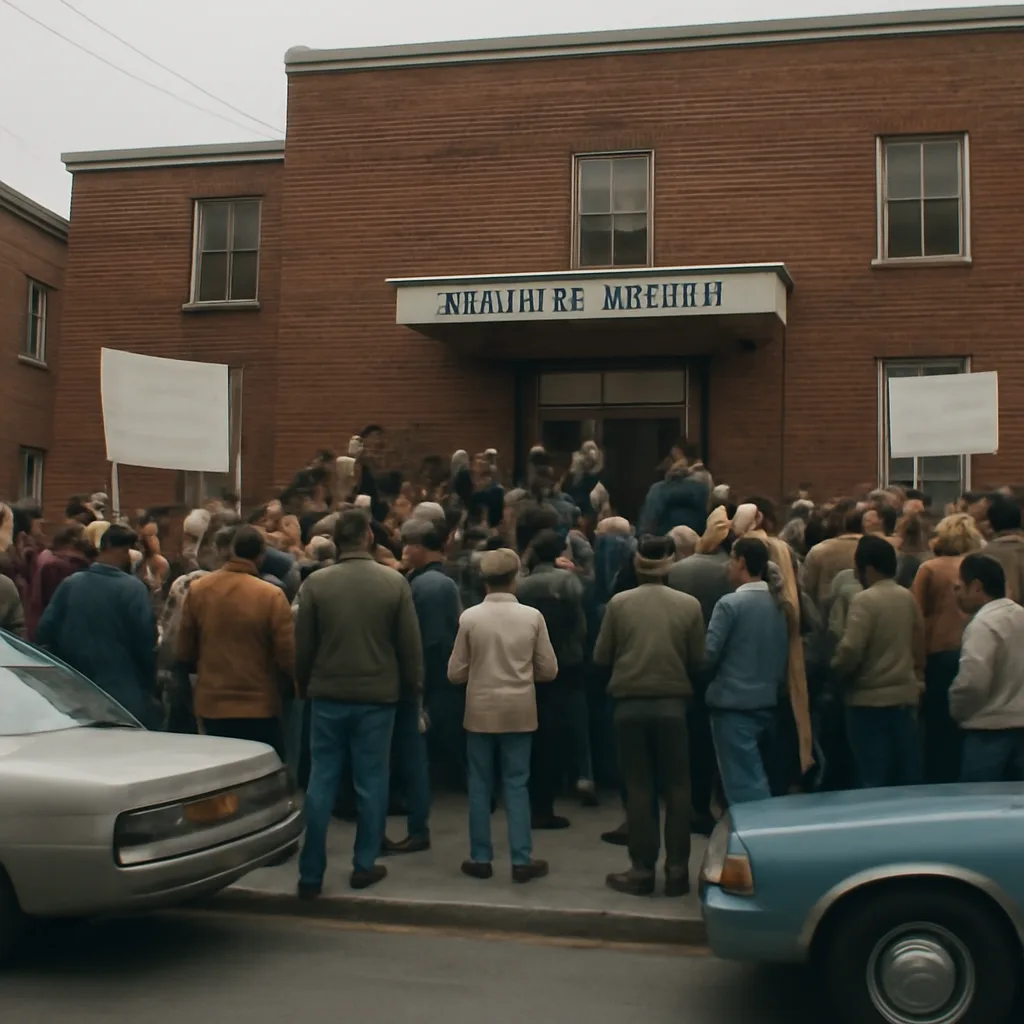
1987 Mob Storms Police Station Demanding Arrest of a 'Ghost'
On May 13, 1987, a crowd besieged a local police station insisting authorities arrest a supposed spirit blamed for recent disturbances. The incident highlighted local beliefs, communal tensions, and challenges for law enforcement in distinguishing rumor from criminality.
On May 13, 1987, a mob gathered and forced its way into a police station to demand that officers arrest a figure the crowd described as a ghost. The episode took place amid a string of unexplained incidents in the locality that residents attributed to supernatural causes. Those incidents—reports of strange noises, sudden illness in livestock, and objects reportedly moving without apparent cause—had stoked fear and rumor. Local leaders say these rumours spread quickly through word of mouth and local meetings, turning community anxiety into direct confrontation with law enforcement.
Eyewitness accounts and contemporaneous local press indicate that several dozen people arrived at the station, some carrying makeshift banners and domestic tools. They insisted that police identify and detain the entity they held responsible. Police responded by attempting to calm the crowd and to explain that the legal system could not arrest an incorporeal being. Tensions rose when residents demanded immediate action; according to available reports, officers ultimately detained a few individuals for breaching the station and causing a public disturbance.
The incident exposed a collision between local belief systems and the formal mechanisms of state authority. For residents, the priority was stopping whatever they believed was harming their community; for police, the priority was maintaining order and applying the rule of law. Contemporary coverage noted officials’ difficulty in addressing fear rooted in cultural and religious frameworks while avoiding the appearance of dismissing sincere concerns.
Scholars of folklore and social unrest cite such episodes as examples of how rumors and unexplained events can catalyze collective action. In communities where belief in spirits or curses is prevalent, perceived failures by authorities to respond to threats—real or inferred—can erode trust and prompt citizens to take matters into their own hands. The 1987 police-station confrontation fits into a broader pattern documented in different regions and eras, where supernatural explanations for misfortune have triggered protests, vigilantism, or demands for ritual intervention.
The legal outcomes in this specific case involved charges related to public disorder for some participants; there is no record of any legal action taken against a supernatural entity. Local officials afterwards reportedly engaged with community leaders to defuse tensions, including public meetings and appeals to customary intermediaries in an effort to reconcile civic order with residents’ beliefs. Exact details about negotiations, participants, and longer-term repercussions vary across contemporaneous accounts, and some elements remain contested or poorly documented in the public record.
The May 13 event underscores how cultural context shapes responses to uncertainty and how authorities are sometimes forced to navigate between enforcing secular law and acknowledging deeply held local convictions. While the demand to arrest a ghost may sound extraordinary, historians note that similar clashes between belief and bureaucracy have recurred worldwide when unexplained phenomena intersect with social strain, economic hardship, or weak institutional trust.