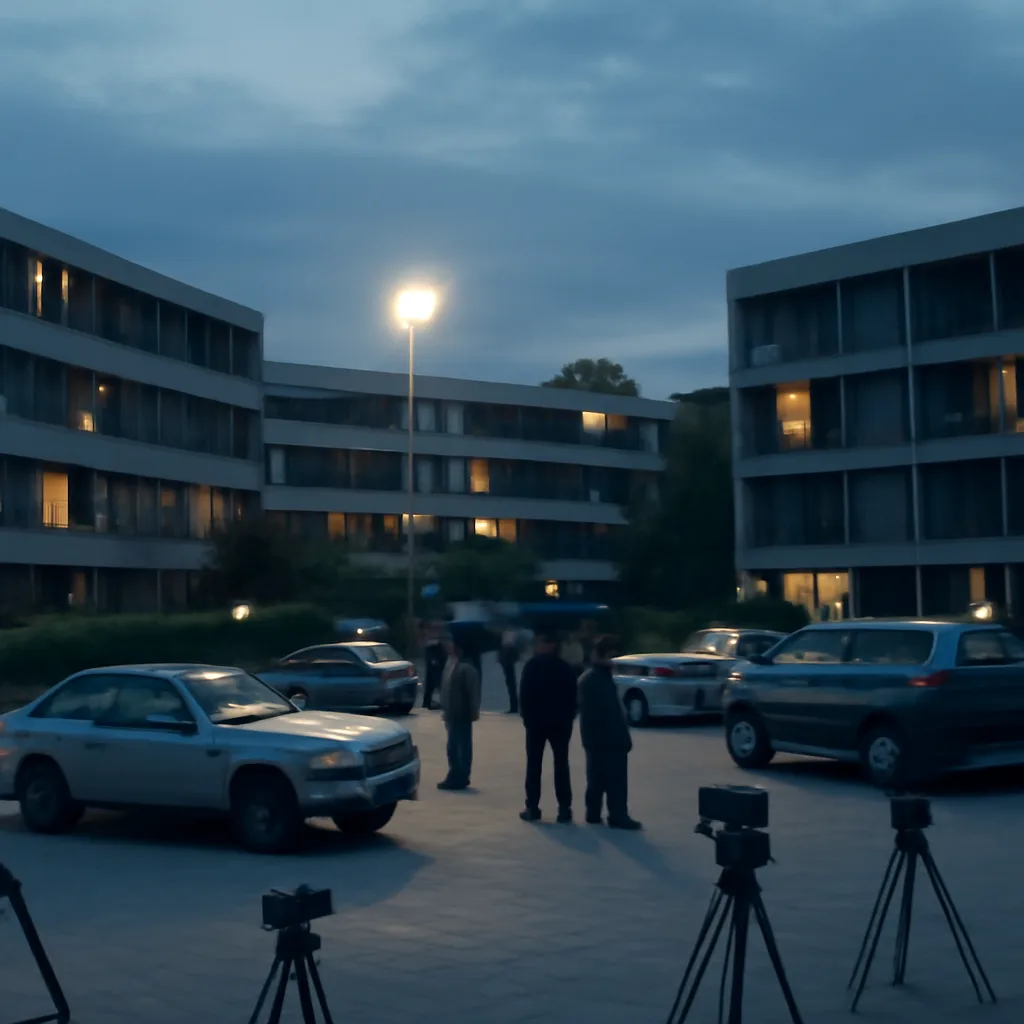
On September 5, 1972, Palestinian militants took Israeli athletes hostage at the Munich Olympic Village, leading to a day-long standoff and a failed rescue that resulted in the deaths of 11 Israeli team members, one West German police officer, and five of the attackers. The incident transformed perceptions of Olympic security and international terrorism.
On the morning of September 5, 1972, eight members of the Palestinian group Black September entered the Olympic Village in Munich, West Germany, where athletes from around the world were housed for the Summer Games. The attackers killed two members of the Israeli delegation and took nine others hostage, demanding the release of Palestinian prisoners held in Israel and the release of two German leftist prisoners. The event unfolded live in media coverage and rapidly became an international crisis.
German authorities initially attempted negotiation within the Olympic Village. As the situation developed, the hostage-takers and their captives were transported by bus to a nearby military airfield, Fürstenfeldbruck, under the pretense that a plane would fly the captors and hostages out of the country. German police arranged an ambush at the airfield, intending to resolve the standoff during the transfer. The plan involved a small number of law enforcement officers posing as technicians to approach the aircraft while other police waited concealed; however, the German forces were ill-prepared for the scale and complexity of the operation.
The rescue attempt at Fürstenfeldbruck failed. Poor coordination, insufficient intelligence about the attackers’ firepower and positions, and the absence of specialized counterterrorism units contributed to the chaotic outcome. A gun battle erupted on and around the tarmac, during which an explosive detonated inside one of the helicopters used to bring the hostages to the airfield. By the end of the confrontation the attackers had killed or mortally wounded the remaining Israeli hostages. In total, 11 Israeli athletes and coaches and one West German police officer were killed; five of the eight attackers were also killed. Two attackers were captured and later released after hijacking a plane to Libya; their subsequent fates have been reported differently in various accounts.
The Munich killings had immediate and lasting repercussions. The Olympic Games were suspended for 24 hours and then resumed, a decision that generated international debate about the appropriateness of continuing the competition. West Germany faced intense criticism for its handling of the crisis and shortcomings in law enforcement preparedness; the incident exposed vulnerabilities in security at major international events.
In response to Munich, Israel launched covert reprisals targeting individuals and networks implicated in the attack, and many Western countries re-evaluated and strengthened their counterterrorism capabilities. West Germany created specialized police units and revised procedures for crisis response; other nations followed suit by developing dedicated counterterrorism teams and improving coordination among services.
The massacre also shifted global public awareness of transnational terrorism. The images and reports from Munich—broadcast worldwide—brought the issue into mainstream international consciousness and influenced policy debates about security, intelligence sharing, and the balance between openness at international gatherings and protection against violent threats.
Historical assessments note areas of uncertainty or dispute: accounts differ on specific tactical decisions made on the night of the rescue attempt, the precise sequence of some actions at the airfield, and the later whereabouts or fates of certain individuals associated with the attackers. Contemporary records and investigative reports agree, however, on the central facts of the hostage-taking, the failed rescue at Fürstenfeldbruck, and the deaths of the Israeli team members.
The Munich massacre remains a defining moment in modern Olympic history and in the public memory of international terrorism—an event that reshaped security practices at major events and underscored the deadly reach of politically motivated violence.