
02/10/1855 • 4 views
Mysterious Rooftop Footprints Follow 1855 Snowfall
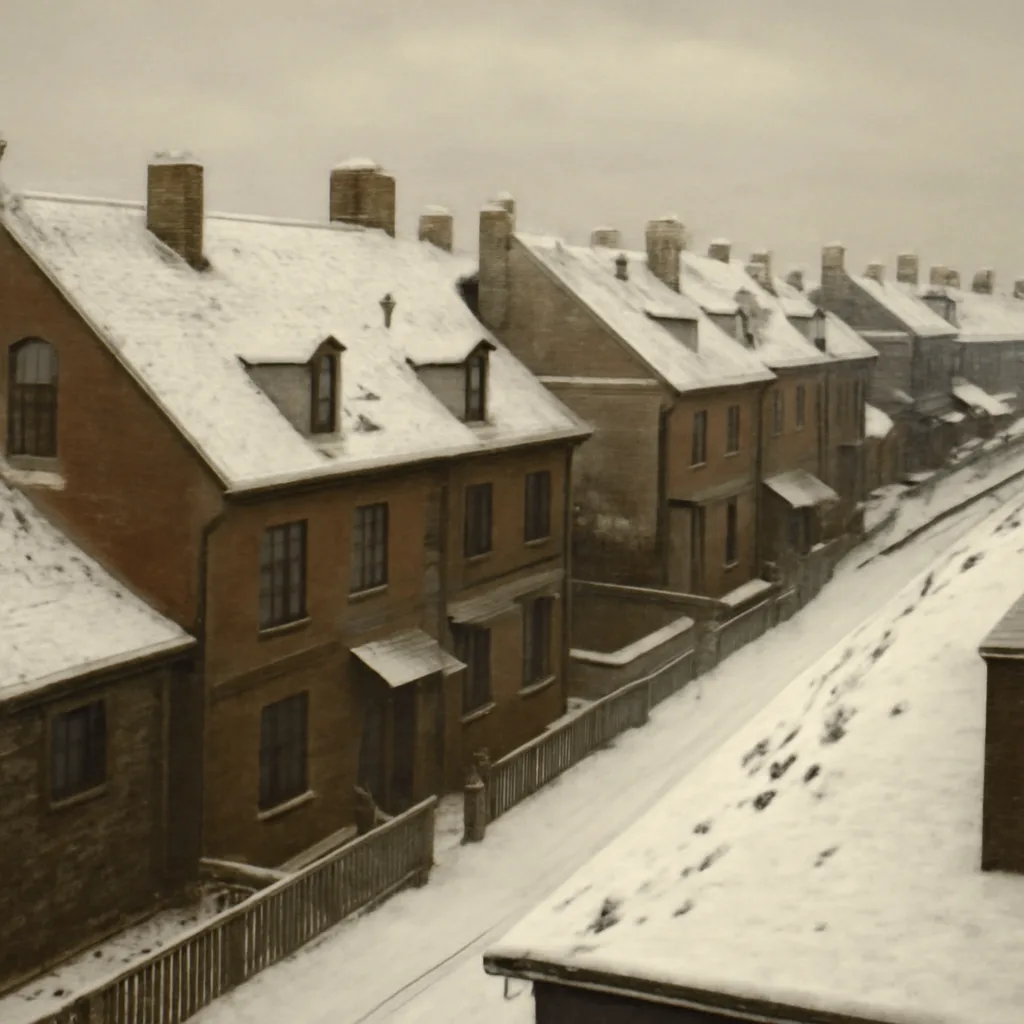
After an overnight snowfall on February 10, 1855, residents reported unexplained footprints crossing several rooftops. Contemporary accounts describe prints in fresh snow with no visible tracks to or from the ground.
Contemporary reporting and correspondence provide the basis for the incident’s reconstruction, though accounts vary in detail. Newspaper notices and private letters of the period—where preserved—tend to agree on the basic facts: a snowfall preceded the discovery, footprints were visible on elevated surfaces, and observers found no clear ground approach or exit points. Some reports emphasized the oddity of prints leading across roof valleys or appearing in places that would have been difficult to access from the eaves.
Possible explanations offered at the time and considered by later historians fall into several categories. First, human access: it is possible that someone had traversed low-pitched roofs, raised scaffolding, or used ladders to reach roof surfaces before the snowfall or during a lull, leaving prints that became visible after a later fall. Such movements could be obscured if observers did not inspect neighboring properties or if the person’s approach path was erased by drifting snow or subsequent wind. Second, animal activity: larger animals—such as foxes, dogs, or feral livestock—can and do move on roofs in some settings, especially where outbuildings, garden walls, or adjoining structures provide stepping points. Differences between human and animal prints can sometimes be misread in sloppy snow or by casual observers.
Third, meteorological and structural explanations: wind can redistribute snow in ways that accentuate impressions or create the illusion of tracks. Snow that partially melts and refreezes, or that is compacted by thermal bridging where heat escapes from an attic, can produce linear patterns that resemble footprints. Additionally, thaw-and-freeze cycles sometimes reveal earlier markings. In the absence of close, methodical inspection, such processes might be mistaken for new, unexplained incursions.
Fourth, and less formally documented, are social and cultural factors: contemporary interest in the unusual could encourage embellishment or selective reporting. The mid-19th century press often carried brief anecdotal notices of odd occurrences; editors sometimes amplified these for readership. Where surviving records are limited to short notices or secondhand accounts, distinguishing factual detail from rumor becomes difficult.
Historians treating the 1855 rooftop footprints emphasize caution. The event fits patterns seen elsewhere and in other periods—reports of unconnected rooftop tracks after snow are recurrent in local folklore and occasional news items—but reliably attributing a single cause to a specific occurrence requires more detailed contemporaneous evidence than typically survives. No authenticated, detailed investigations, photographs, or forensic records from February 1855 have been located that conclusively resolve whether the prints were made by people, animals, or natural processes.
What remains notable is the event’s reflection of how communities in the 19th century recorded and debated unexplained phenomena. The rooftop footprints captured attention because they touched ordinary domestic spaces—roofs, chimneys, and yards—and because they presented a simple, puzzling visual cue that resisted immediate explanation. Today the incident is best treated as a well-attested but unresolved local curiosity: documented in period notices and correspondence, plausible explanations exist, but definitive proof for any single theory is lacking.