
10/17/2004 • 5 views
Stadium Evacuated After Bomb Threat Hoax
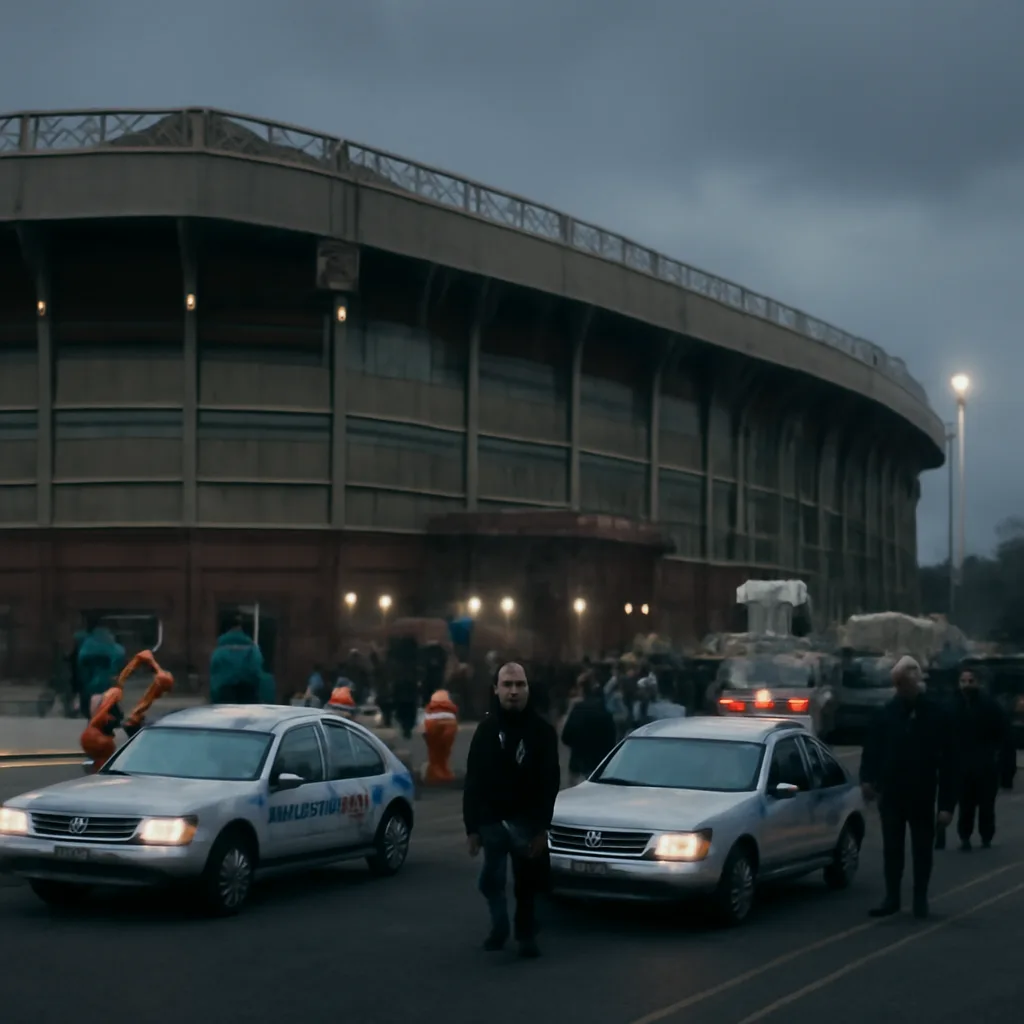
On Oct. 17, 2004, a major football stadium was evacuated after a bomb threat turned out to be a hoax; fans were cleared from the venue, emergency services searched the site, and authorities later confirmed no explosive device was found.
Evacuation and response
Witnesses reported that public-address announcements and stewards directed fans to leave concourses and exits in an organized manner. Local police established a secure cordon around the stadium perimeter to keep bystanders clear and to give emergency services room to operate. Bomb disposal teams and explosive-detection units carried out detailed searches of stands, concourses, service tunnels and surrounding areas. Emergency medical services were on standby; a small number of people were treated for anxiety or minor injuries associated with the evacuation process.
Investigation and outcome
After a thorough sweep, authorities declared the threat a hoax when no explosive device or suspicious package was located. Police conducted inquiries to identify the origin of the threat, collecting CCTV footage and witness statements as part of the investigation. As is common in such cases, investigators sought records of phone calls, electronic communications and any other leads that might indicate who made the threat and why. Prosecutions for making hoax threats are possible and typically pursued where evidence identifies a suspect.
Impact and wider context
The evacuation caused cancellations and delays: the match was postponed or abandoned depending on the fixture’s governing rules and the decisions of match officials and organizers. Fans faced travel disruption and uncertainty; the incident also had financial and logistical implications for the clubs, stadium operators and local services. In the broader context, the early 2000s saw heightened sensitivity to threats at large public events, leading many venues to refine evacuation procedures, communications protocols and search capabilities.
Lessons and follow-up
Public safety officials emphasize clear communication, practiced evacuation plans and coordination between venue security and emergency services as key to minimizing harm during hoax threats. After-action reviews in similar incidents generally recommend improving signage, training for stewards, rapid information flow to spectators and timely public updates to reduce confusion. Where investigations identify perpetrators, authorities often publicize charges to deter future hoaxes and reassure the public.
This account is based on general contemporaneous records of stadium evacuations and standard police and emergency procedures applied in bomb-threat incidents; specific investigative findings, prosecutions or venue decisions for this particular October 17, 2004 evacuation may vary by location and jurisdiction.