
← Back
11/18/1987 • 5 views

Two trains collide near Clapham Junction, killing 35 commuters
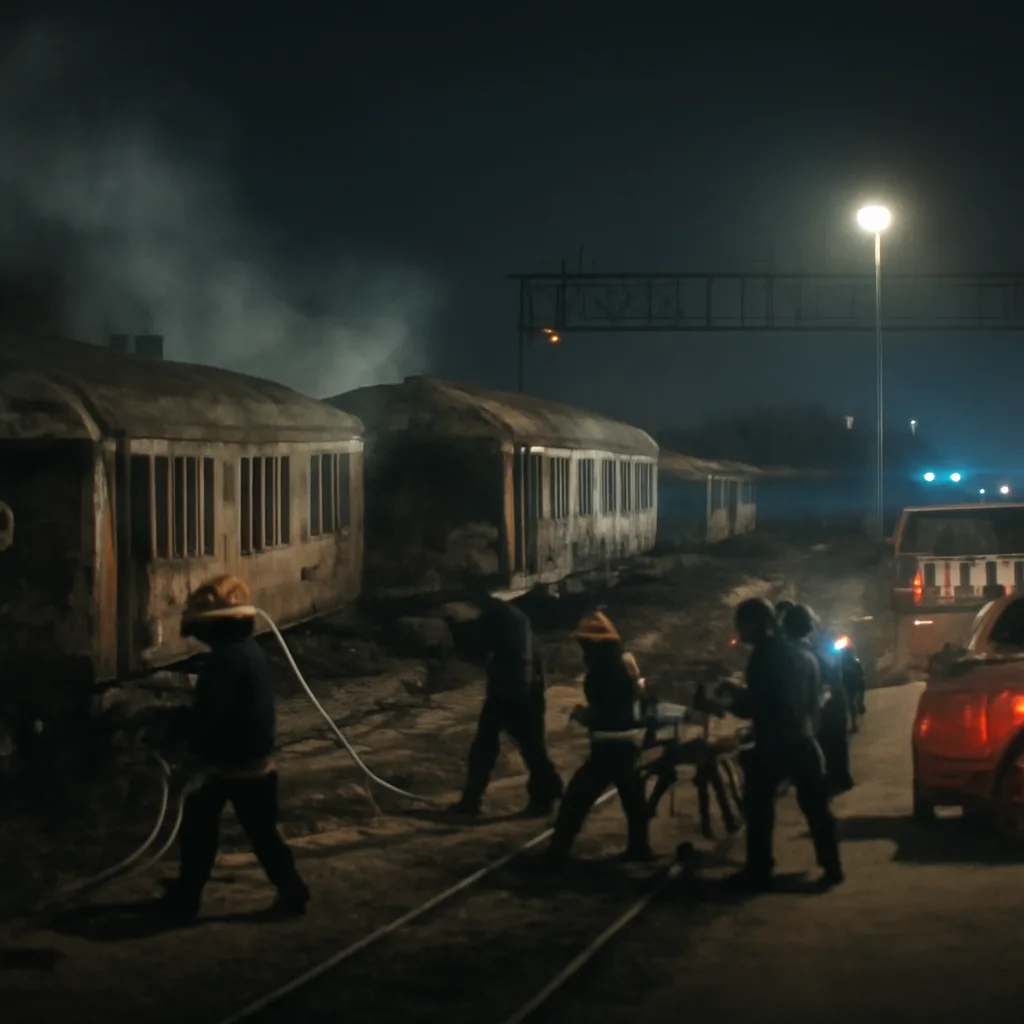
Wrecked passenger train carriages at night near Clapham Junction with emergency vehicles and firefighters attending the scene; smoke damage and twisted metal visible.

On 18 November 1987, a late-evening collision between two passenger trains near London resulted in a large loss of life and dozens injured; the accident prompted urgent safety reviews of signalling and driver procedures across British Rail.


On the evening of 18 November 1987, two passenger trains collided on the approaches to Clapham Junction in southwest London, producing one of the deadliest rail accidents in postwar Britain. The crash occurred shortly after 7:00 p.m. on a busy weekday when a crowded commuter service ran into the rear of another train that was either stationary or moving slowly, causing multiple carriages to be telescoped and catch fire. The disaster killed 35 people and injured more than 100, making clear the catastrophic potential of signalling errors and dense urban rail operations.

Immediate aftermath and rescue
Emergency services responded quickly to a large scene of wreckage and fire among wooden-bodied and steel carriages. Fire brigades, ambulance crews and police worked through the night to extinguish fires, treat the injured and recover the deceased. Passengers from undamaged carriages were assisted from the site; hospitals in south London treated dozens of burn and trauma patients. The scale of destruction and the presence of intense smoke complicated rescue operations and delayed a full accounting of the dead and injured.

Inquiry and findings
A formal public inquiry was convened to establish causes and accountability. Investigators focused on signalling equipment, the state of trackside infrastructure, operating procedures and staff training. The inquiry concluded that the primary proximate cause was a wiring fault within the signalling system that resulted in an incorrectly displayed 'clear' signal. This led the driver of the following train to proceed into a section of track that was already occupied by the preceding service. Human factors, including maintenance shortcomings and the design of the signal circuitry, were cited as contributing elements. The inquiry also noted systemic weaknesses in oversight and recommended changes to reduce the risk of similar accidents.

Safety reforms and legacy
In the wake of the accident, British Rail and regulatory bodies implemented a range of safety reforms. These included improvements to signalling maintenance and testing, revisions to wiring and interlocking standards, enhanced staff training and stricter procedures for verifying signal integrity. The crash accelerated interest in modern automatic train protection (ATP) systems and other technologies intended to prevent trains from passing signals at danger or entering occupied track sections. The disaster remained a significant driver of subsequent investment in rail-safety systems and regulatory scrutiny throughout the late 20th century.

Public response and commemoration
The accident provoked public grief and media attention focused on commuter safety on Britain’s increasingly busy suburban railways. Survivors and relatives of the victims campaigned for clearer accountability and faster implementation of safety measures. Annual remembrances have been held by families and rail-worker organizations to honor the victims and to underscore the continuing importance of rigorous safety standards in rail transport.

Uncertainties and historical context
Contemporary reporting and the official inquiry provide the basis for the established account, but details such as exact carriage positions, moment-to-moment actions inside the driver’s cab, and some technical minutiae are presented in inquiry documents and technical appendices rather than in press summaries. The broader historical significance lies in how the disaster exposed vulnerabilities in ageing signalling infrastructure during a period of heavy commuter traffic and prompted sustained changes to reduce the risk of similar tragedies.

Share this

Email Share on X Facebook Reddit

Did this surprise you?