
10/24/1945 • 4 views
United Nations Founded to Prevent Future Global War
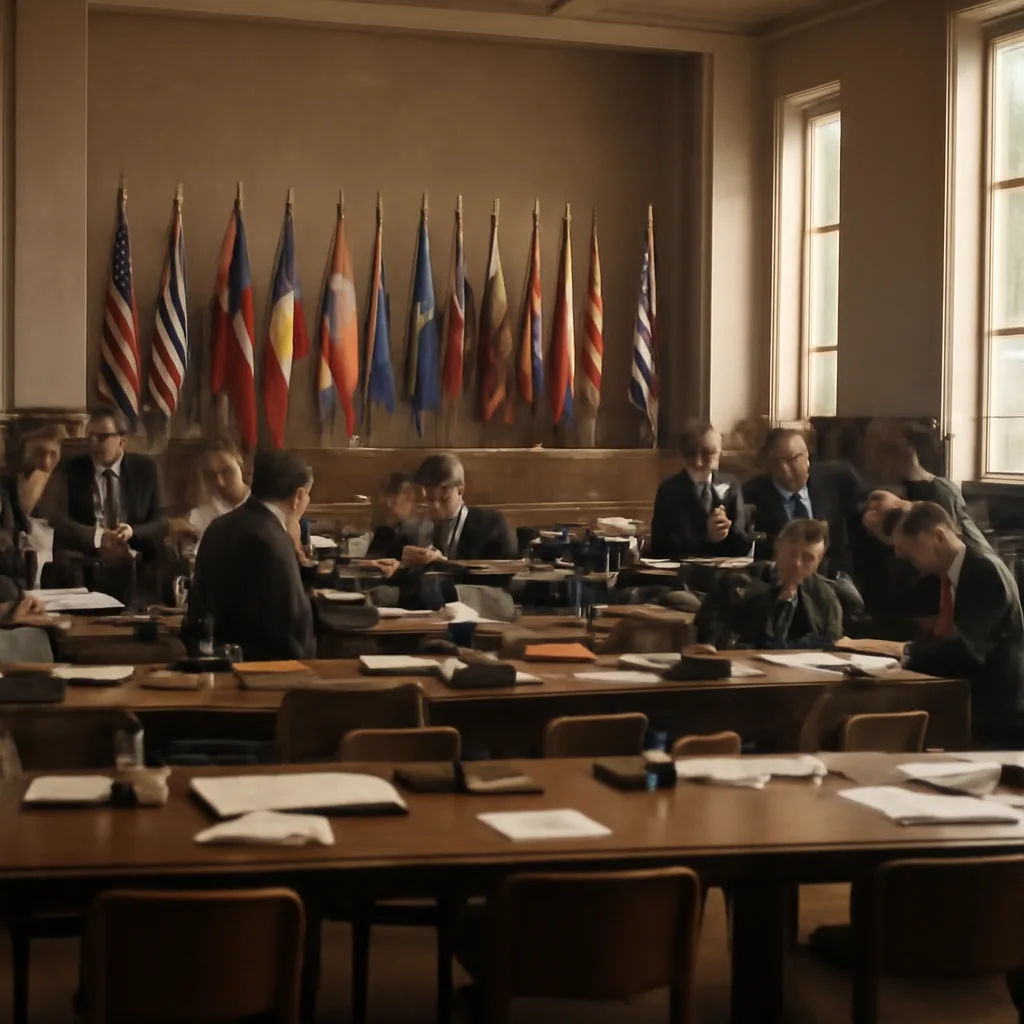
The United Nations was officially established on October 24, 1945, when enough signatory states ratified its Charter, creating an international organization intended to promote peace, security and cooperation after World War II.
Origins and context
The idea of an international body to maintain peace and foster cooperation gained renewed momentum during World War II. Allied leaders used the term “United Nations” during the war to describe their coalition against the Axis powers. Planning for a postwar international organization accelerated as Allied diplomacy progressed: the Atlantic Charter (1941) articulated principles for a postwar world; the Dumbarton Oaks proposals (1944) detailed institutional arrangements; and the Yalta Conference (February 1945) among Franklin D. Roosevelt, Winston Churchill and Joseph Stalin resolved several structural questions, including the composition and veto power of the Security Council’s permanent members.
San Francisco Conference and Charter
Delegates from 50 Allied and other invited states met in San Francisco from April to June 1945 at the United Nations Conference on International Organization. The conference built on prior drafts and negotiations to produce the UN Charter, a treaty that defined the organization’s purposes, organs (including the General Assembly, Security Council, Economic and Social Council, International Court of Justice and Secretariat) and procedures. The Charter emphasized the maintenance of international peace and security, the development of friendly relations among nations based on respect for sovereign equality, and cooperation on economic, social and humanitarian problems.
Ratification and entry into force
Under the terms of the Charter, the organization would come into existence once the Charter had been ratified by the principal Allied powers and a majority of other signatories. After the San Francisco conference, national ratification processes took place. On October 24, 1945, the required ratifications were deposited with the United States government, which had been designated as the repository of the Charter. The Secretary of State then notified the signatories that the Charter had entered into force, and that date—October 24—became the UN’s official founding day. Many member states and the UN system later observed October 24 as United Nations Day.
Early priorities and limitations
In its early years the UN addressed urgent issues arising from the war’s aftermath: territorial adjustments, displaced persons and refugees, postwar reconstruction and the establishment of specialized agencies to handle health, labor, food and other transnational concerns. The Security Council began operating with its permanent five members (the United States, Soviet Union, United Kingdom, China and France) and their veto powers—a feature that facilitated agreement among major powers but also introduced an enduring limitation when those powers’ interests diverged.
Significance and legacy
The UN provided a durable institutional forum for diplomacy and multilateral cooperation, helping to manage conflicts, coordinate humanitarian relief and develop international law and norms. Over time its membership expanded as colonies gained independence, and its remit grew to encompass development, human rights, environmental issues and peacekeeping. The organization’s effectiveness has varied by issue and era; it has been both praised for humanitarian and diplomatic achievements and criticized for constraints arising from power politics, funding shortfalls and bureaucratic challenges.
October 24, 1945, marks the formal beginning of an institution intended to mitigate the causes of large-scale war and to provide states a structured means of negotiation. The UN’s founding reflected wartime realities and agreements among victorious powers, and its subsequent history has been shaped by changing global politics and the expanding expectations placed on multilateral governance.