
07/27/1931 • 4 views
1931 Yangtze floods devastate central China, causing mass loss of life and displacement
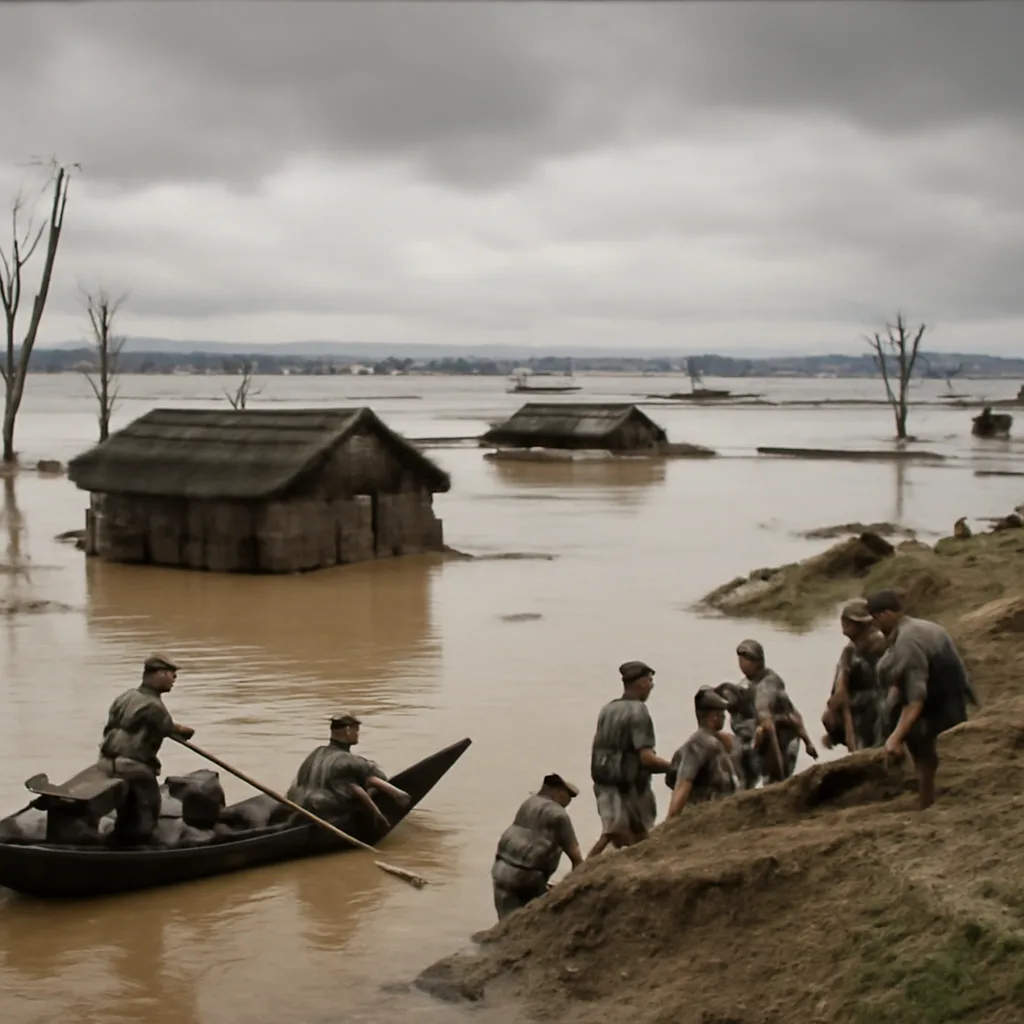
In July 1931, unprecedented rainfall and swollen rivers led to floods along the Yangtze and its tributaries that inundated large parts of central and eastern China, causing tens of thousands—by some estimates hundreds of thousands—of deaths and displacing millions.
The immediate physical impacts were catastrophic: widespread inundation of agricultural land destroyed crops at a critical point in the growing season, livestock were lost, and homes and infrastructure were swept away or rendered unusable. Communication and transport networks collapsed in many areas, complicating rescue and relief efforts. Urban as well as rural populations suffered; parts of the provincial capitals and smaller market towns became islands or were completely submerged.
Casualty figures from 1931 vary and remain a subject of historical debate. Contemporary and later estimates differ widely: some official counts and modern summaries cite tens of thousands of direct drowning deaths, while other estimates—including broader counts that factor in disease, famine and displacement in the months following the inundation—reach into the hundreds of thousands or more. The difficulty of obtaining accurate counts at the time, disrupted record-keeping, and differing definitions of flood-related deaths contribute to the range of estimates.
Public health crises followed the flooding. Stagnant waters and disrupted sanitation encouraged outbreaks of waterborne and vector-borne disease, including cholera, dysentery and malaria. Combined with the loss of food stocks and planting land, these conditions produced severe famine in some affected regions. Relief efforts were mounted by local authorities, foreign missions, charitable groups and individuals, but logistics, political fragmentation in the Republic of China, and the scale of the disaster limited their effectiveness.
The 1931 Yangtze floods had lasting social and economic consequences. Large population movements—temporary and permanent—altered labor availability and local economies. Rebuilding required major investments in levees, water management and infrastructure, and prompted public debate about river control, floodplain management and the responsibilities of central and provincial authorities. The disaster exposed weaknesses in disaster preparedness and governance during a period of political instability.
Historians treat the 1931 floods as a complex event shaped by climatic extremes, seasonal river dynamics, human settlement patterns and the preexisting condition of flood-control works. While the immediate trigger was an unprecedented hydrological event, the severity of its impact reflected the vulnerability of densely populated floodplains and limitations in contemporary flood management.
Because primary documentation and statistical methods from the period are imperfect, precise totals for deaths and displaced persons remain uncertain and contested in scholarship. What is widely agreed is that the 1931 floods rank among the deadliest natural disasters of modern times, with profound short- and long-term effects on millions of people across central and eastern China.