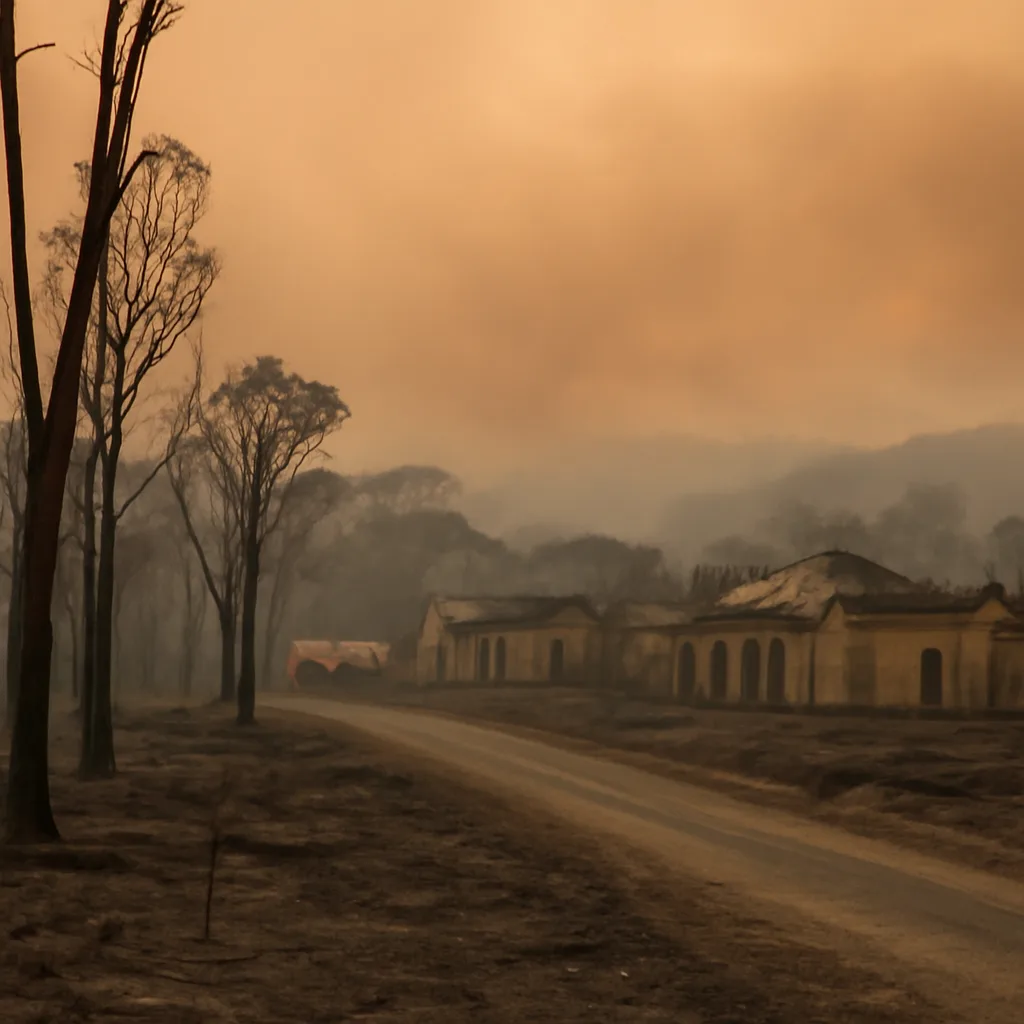
2019 Australian Wildfires Ravage Communities Across Multiple States
Beginning in late 2019, a series of large wildfires driven by extreme heat and drought burned millions of hectares across Australia, destroying homes and infrastructure, killing and displacing people and wildlife, and prompting widespread domestic and international emergency responses.
From June 2019 through early 2020, Australia experienced one of its most severe wildfire seasons in modern history, with the peak of destruction occurring in November 2019 and continuing into the following months. A combination of prolonged drought, record-high temperatures, low humidity and strong winds created conditions that allowed fires to ignite and spread rapidly across multiple states, including New South Wales, Victoria, Queensland, South Australia and Western Australia.
Many fires began as relatively small ignitions from a mix of causes—lightning strikes, accidental human activity, and in some cases deliberately lit blazes—but the extreme weather amplified their growth. By November 8, 2019, several blazes were already well established in New South Wales and nearby regions, and over the following weeks fire fronts merged and produced vast areas of active burning. Firefighters, emergency services and volunteers faced prolonged, dangerous fireground conditions and were often stretched thin by near-simultaneous incidents across broad geographic areas.
The impacts on communities were severe. Residential areas and small towns saw homes and buildings lost to fast-moving fires; thousands of residents were evacuated, and some communities were effectively cut off during emergency operations. The death toll included both civilians and emergency responders, and many people suffered injuries or long-term health effects from smoke exposure. Exact numbers varied by report and were revised as assessments continued.
The ecological and wildlife losses were extensive. Large swathes of native forest, heathland and other ecosystems were burned, and estimates from conservation organizations and researchers indicated that hundreds of millions—possibly over a billion—vertebrate animals were killed or displaced across the affected regions. Iconic species such as koalas and certain bird and marsupial populations experienced catastrophic local declines where habitat was destroyed.
Smoke from the fires created hazardous air quality over vast distances and across state lines, with thick haze affecting major cities including Sydney and Melbourne for extended periods. The atmospheric effects also led to reduced visibility, disruptions to transport, and public health warnings advising people to limit outdoor activity.
The scale of the 2019–2020 fire season prompted a substantial national and international response. Australian federal and state governments mobilized resources, declared states of emergency in affected jurisdictions, and accepted offers of assistance from foreign governments. Non-governmental organizations and community groups organized relief for evacuees, provided temporary shelter, food and medical support, and coordinated long-term recovery and rebuilding efforts.
The fires also stimulated debate and policy discussion about land management, fire preparedness, emergency response capacity, and the role of climate change in increasing the frequency and intensity of extreme weather events that contribute to severe fire seasons. Scientific assessments and inquiries carried out after the fires examined fire management practices, resource allocation, and the need for improved community resilience and ecological restoration.
Recovery and rehabilitation has been ongoing: rebuilding damaged towns, restoring habitats, monitoring wildlife populations and supporting the mental health and economic recovery of affected communities. While containment of individual fires occurred over subsequent months, the 2019–2020 season is remembered for its unprecedented geographic extent and the depth of its social and environmental consequences.
Note: Specific casualty figures and area-burned totals reported at different times have varied as official agencies and researchers refined their assessments. For precise, up-to-date statistics consult official government reports and peer-reviewed scientific analyses.