
04/19/1861 • 7 views
Harvard opens the United States' first modern gymnasium
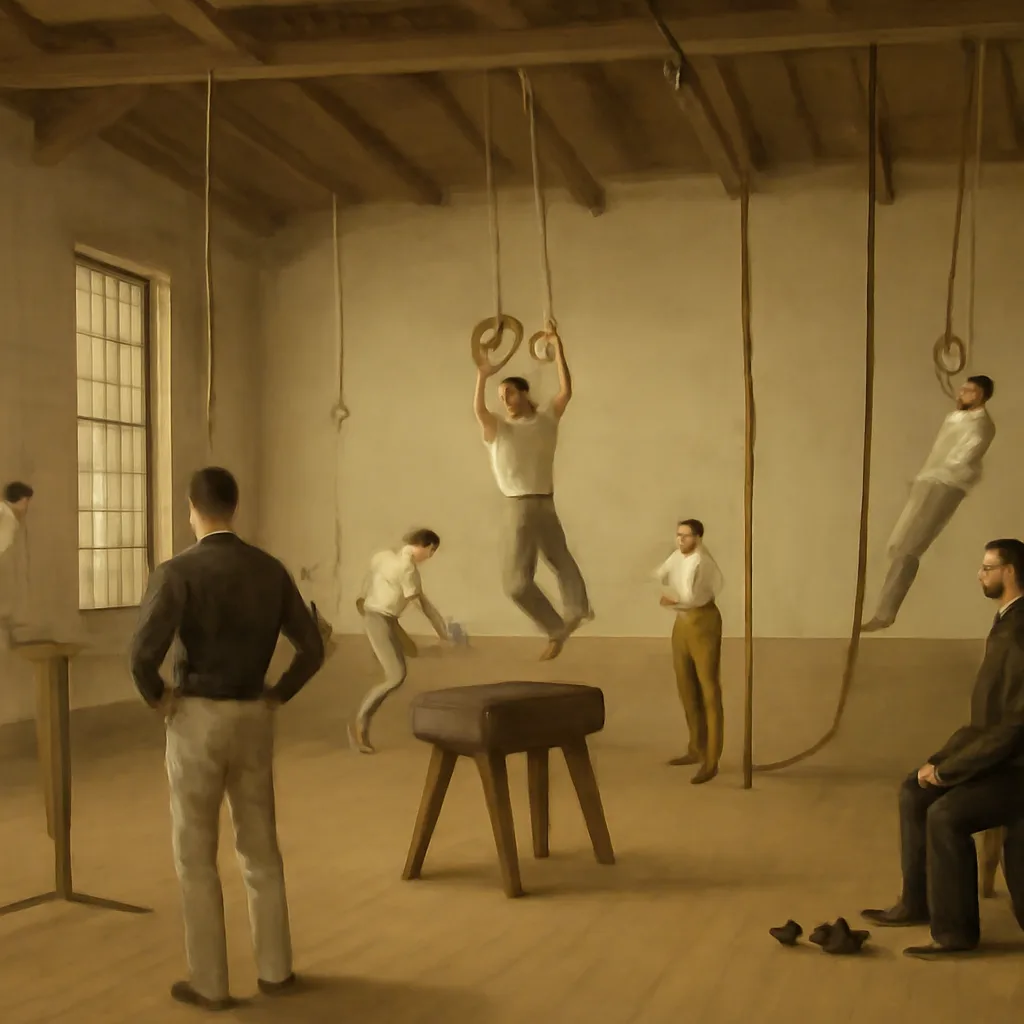
On April 19, 1861, Harvard University dedicated a purpose-built indoor gymnasium—often cited as the first modern gymnasium in the United States—marking a shift toward organized physical education on American campuses.
The mid-19th century saw growing interest in physical culture in the U.S., influenced by European systems such as the German Turnverein and the Swedish gymnastics movement. At American colleges, debates about the role of physical activity in moral and intellectual development intensified as administrators confronted concerns about student health and discipline. Harvard’s gymnasium reflected these currents. It provided apparatus—such as parallel bars, rings, and vaulting equipment—and organized classes led by instructors trained in contemporary gymnastic methods.
Contemporary newspaper accounts and university records describe the Harvard gymnasium as part of a larger trend toward institutionalizing physical education. The timing of the opening coincided with national turmoil: two days earlier, on April 17–19, 1861, the outbreak of the Civil War was reshaping the nation. Nevertheless, the gymnasium’s establishment signaled a long-term shift in American higher education, from an exclusive focus on classical study toward a broader curriculum that included structured physical training.
Historians debate precise claims about “firsts” in American gymnasia. Some communities and private clubs—particularly German-American Turner societies—had established gymnastic halls and clubs earlier in the 19th century, and other colleges experimented with exercise spaces and outdoor calisthenics programs. What sets Harvard’s 1861 facility apart in many accounts is that it was a dedicated, purpose-built indoor gym on a college campus intended for regular instruction as part of student life, which aligns with modern conceptions of a gymnasium.
The Harvard gymnasium influenced other institutions. Over subsequent decades, American colleges increasingly adopted dedicated gymnasia and formalized physical education departments. By the late 19th and early 20th centuries, the presence of gymnasia, required physical training, and organized intercollegiate athletics had become commonplace across the country.
Primary, contemporaneous documentation—such as university catalogues, trustees’ minutes, and local press—supports the date and the character of Harvard’s facility, though scholarly accounts vary in how they situate the 1861 gymnasium within a broader genealogy of American physical culture. To avoid overstating a singular origin, most historians treat the Harvard gymnasium as an early and influential example of the modern collegiate gymnasium rather than the sole progenitor of all American fitness institutions.