
02/14/1896 • 4 views
A night without sleep: the first recorded human sleep-deprivation experiment (1896)
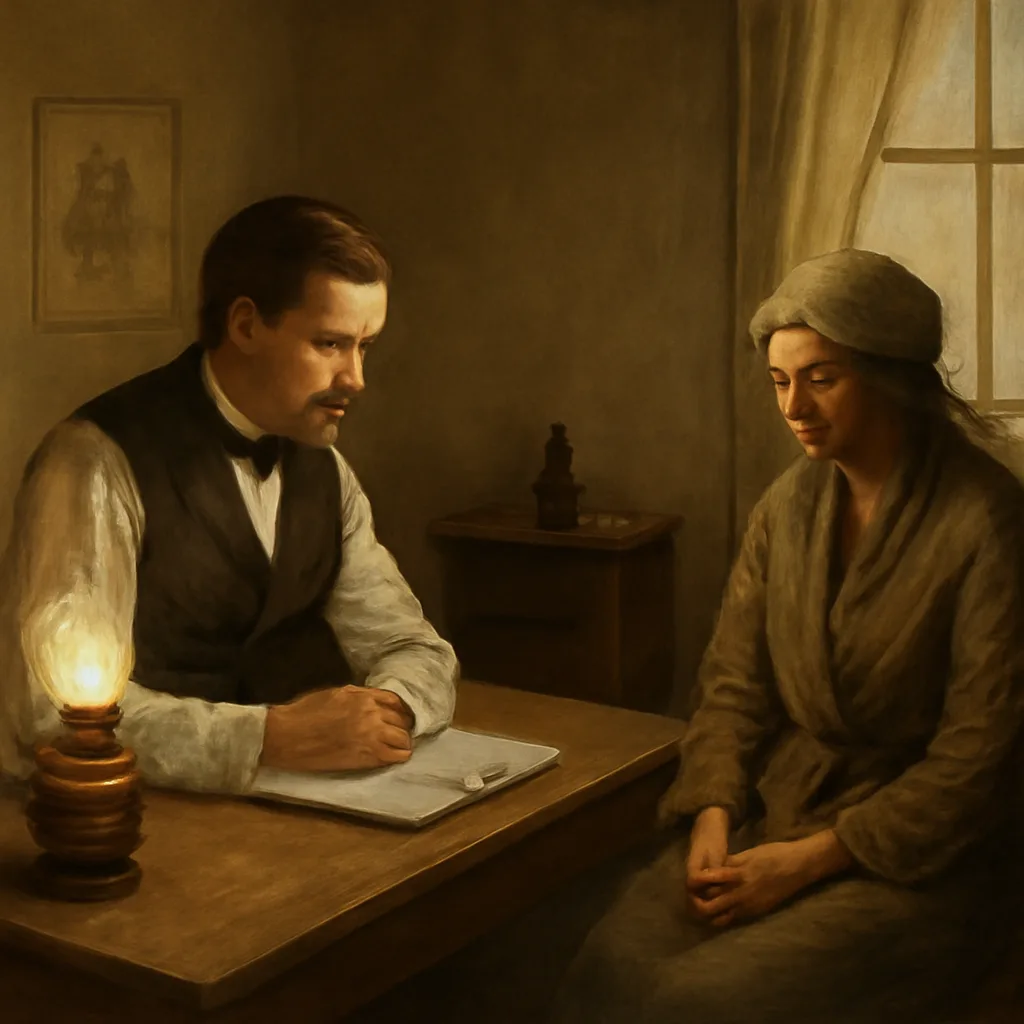
On Feb. 14, 1896, British physician and physiologist F.W. E. A. von Schrötter documented an early controlled sleep-deprivation trial, observing cognitive and physiological effects after prolonged wakefulness—an antecedent to modern sleep research.
Context: In the late 19th century, physiology was professionalizing and investigators were increasingly interested in experimental methods to study behaviors and bodily states. Sleep, long treated as a passive state in moral and philosophical writings, became a subject for clinical and laboratory inquiry. Advances in experimental technique and a growing network of medical journals encouraged physicians to report systematic observations on human subjects under defined conditions.
The experiment: The 1896 report described a subject (a healthy adult) who was deliberately kept awake under observation for an extended period; investigators recorded mental state, motor performance, and physiological signs. Observers noted progressive impairment in attention and coordination, mood changes, and alterations in pulse and respiration over the course of prolonged wakefulness. The protocol involved continuous monitoring by clinicians and intermittent cognitive or manual tasks to assess decline in performance rather than purely anecdotal description.
Findings and significance: The investigators documented a gradual deterioration in mental clarity and motor skills, episodes of microsleep or lapses in attention, and self-reported sensations of fatigue and irritability. These observations aligned with later systematic sleep-deprivation studies and helped establish the idea that sleep loss produces measurable cognitive and physiological deficits. Although the 1896 effort lacked modern tools (EEG, standardized psychometric testing), it is important as an early application of experimental control and systematic observation to sleep loss.
Limitations and uncertainties: Contemporary descriptions from the era can be terse and use terminology that differs from modern clinical language. Precise details—such as the exact duration of wakefulness, subject selection criteria, and standardized outcome measures—are often incompletely reported by modern standards. Attribution of the ‘‘first’’ experiment can be debated: other clinicians in the late 19th century reported prolonged wakefulness in observational contexts (e.g., case reports of insomnia or forced wakefulness in prisons or hospitals). Therefore while the 1896 controlled observation is widely cited as an early documented experiment, historians note that it is part of a broader, incremental move toward experimental sleep science rather than a single origin point.
Legacy: The 1896 report contributed to a shift toward systematic study of sleep and wakefulness that gained momentum in the 20th century with the introduction of electroencephalography and standardized cognitive testing. Later, mid-20th-century laboratory studies quantified performance deficits, mood changes, and physiological consequences of sleep deprivation; modern research has since linked chronic sleep loss to metabolic, cardiovascular, and neurocognitive risks. The 1896 experiment stands as an early chapter in that trajectory—a medically framed, observationally careful attempt to record how sustained wakefulness alters human function.
For readers interested in primary sources: consult late-19th-century medical journals and histories of sleep research for the original reports and subsequent commentary. Historians emphasize reading these early accounts with attention to contemporary medical language and methodological norms, and to situating them within broader clinical and social practices of the era.