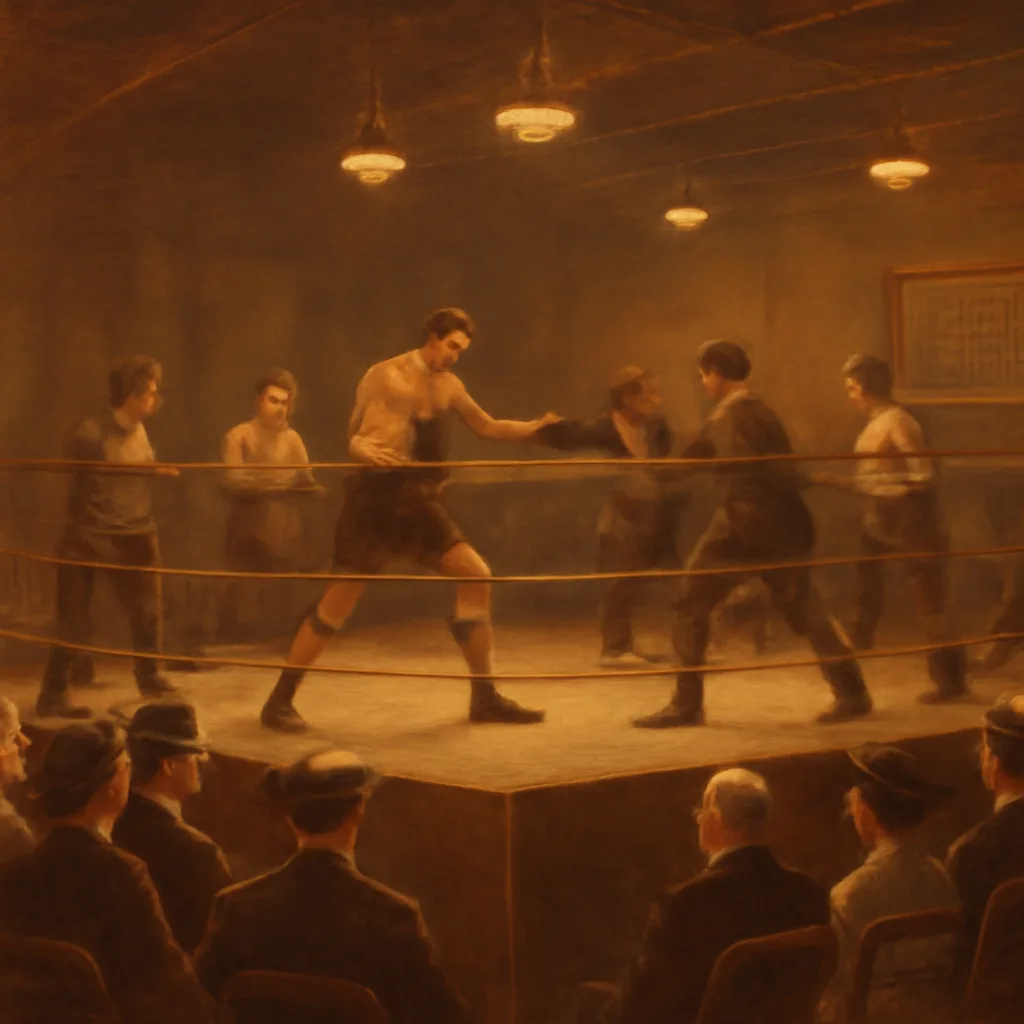
Boxer Faces Six Opponents in One-Night Exhibition, August 19, 1913
On August 19, 1913, a professional boxer took part in an extraordinary exhibition card in which he met six brief opponents in one evening—a stunt common in vaudeville-era boxing exhibitions that showcased stamina and crowd entertainment rather than sanctioned championship competition.
On August 19, 1913, a professional boxer participated in a one-night exhibition event in which he met six opponents in succession. Such programs were part of a broader entertainment culture in the United States and Britain during the early 20th century, when boxing blurred lines between sport, spectacle, and variety-show amusement. These exhibitions emphasized endurance, skill demonstration, and crowd-pleasing novelty rather than formal competitive rankings or title contention.
Context: By 1913, boxing was evolving from an often informal pastime into a more regulated professional sport. Still, many venues—particularly vaudeville houses, fairgrounds, and smaller athletic clubs—hosted exhibition bouts. Promoters used multiple-opponent exhibitions to draw audiences curious to see a favored fighter repeatedly tested in brief matches, to fill long program schedules, and to create talking points for newspapers and word-of-mouth advertising.
Format and purpose: Exhibitions of this type typically featured rounds far shorter than those in sanctioned championship matches, and protective measures (such as fewer overall punches and prearranged stoppages) were sometimes employed to reduce injury. The stated goal was demonstration rather than decisive results: fighters showed punching technique, defensive skill, footwork, and the ability to recover quickly between short contests. Referees and promoters often prioritized spectacle and safety over strict competitive judgment.
Participants and atmosphere: The primary boxer would usually be the billed attraction; his six opponents could be journeymen professionals, local contenders, or fellow exhibitors chosen to provide varied styles. Events occurred in theaters, armories, or small arenas with audiences drawn by the novelty. Contemporary accounts of similar cards describe lively crowds, betting small sums on outcomes, and press coverage that mixed sports reporting with theatrical notice.
Historical significance: While single-night multi-opponent exhibitions did not shape official rankings, they reflect important aspects of early 20th-century sporting culture: the commercialization of athletic displays, the mingling of legitimate competition with entertainment, and the centrality of boxing as popular mass amusement. These shows offered fighters extra income and visibility in an era when purses from single sanctioned bouts could be modest.
Limitations and sources: Specific records for many individual exhibitions are fragmentary; event details such as exact venue, gate receipts, precise fight durations, or complete opponent identities are sometimes missing or reported inconsistently in surviving newspapers and trade publications. When reconstructing a particular August 19, 1913 card, historians rely on contemporary newspapers, boxing trade papers (like The Police Gazette or Sporting Life), local archival materials, and municipal records where available. Because documentary completeness varies, some particulars of any single exhibition—timing, full fight-by-fight descriptions, or precise medical outcomes—may remain uncertain.
Legacy: One-night exhibitions like the August 1913 event contributed to the popular image of boxing as both sport and show. Over subsequent decades, as athletic commissions and standardized rules gained authority, such novelty cards became less central to mainstream professional boxing, though exhibition matches have periodically reappeared in various forms for charity, promotion, or entertainment.
In sum, the August 19, 1913 six-opponent exhibition exemplifies a once-common entertainment format that prioritized demonstration and spectacle within the evolving world of early professional boxing. While not decisive for sporting titles, these events illuminate how boxing reached broad audiences and how fighters supplemented their careers in a rapidly professionalizing field.