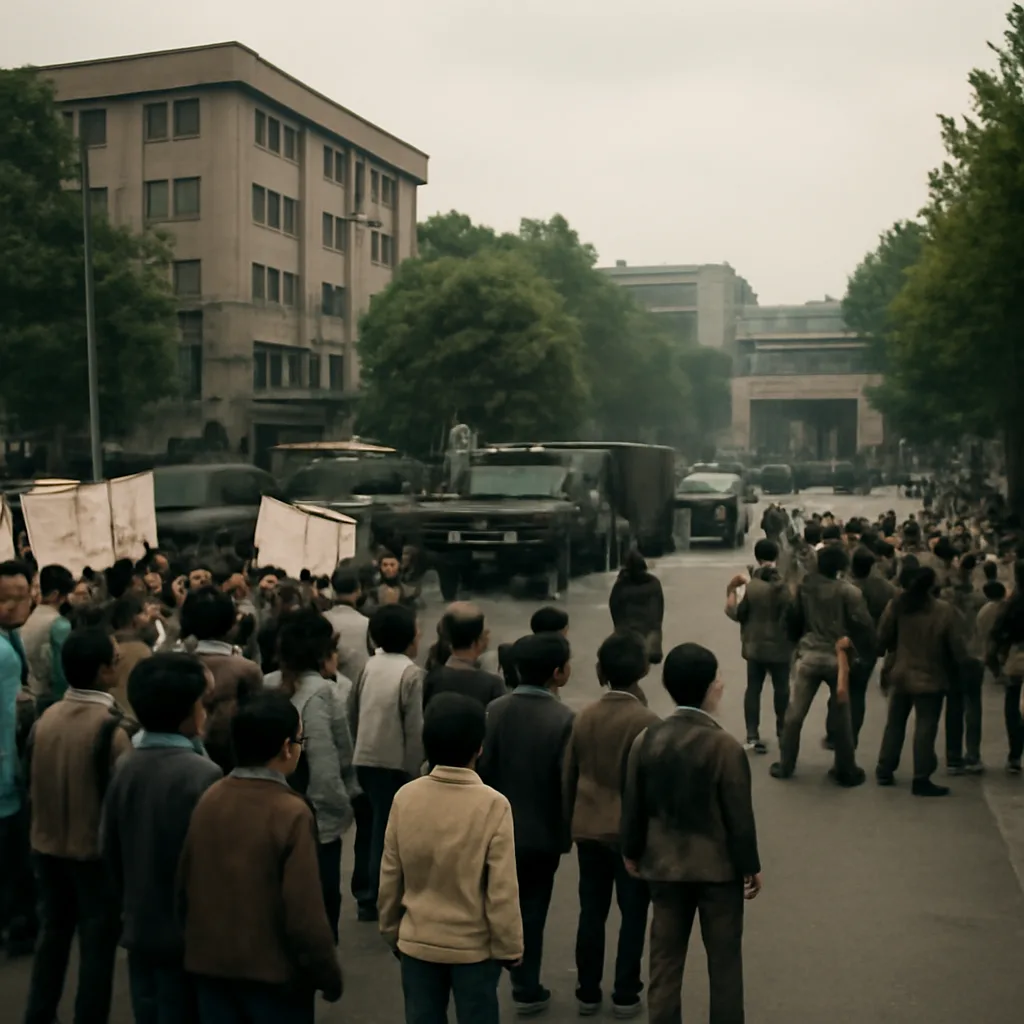
South Korea Declares Martial Law as Protests Escalate in May 1980
On May 17, 1980, South Korea’s government declared nationwide martial law amid mass protests and political turmoil following the assassination of President Park Chung-hee and rising demands for democratization. The move expanded military authority, suppressed demonstrations, and set the stage for a violent crackdown in Gwangju.
On May 17, 1980, the Republic of Korea’s ruling authorities announced the extension of martial law nationwide, a decisive action taken amid an acute political crisis that followed the October 1979 assassination of President Park Chung-hee. The declaration—made by the new security leadership and enacted by the military-dominated government—closed universities, banned political activities, censored the press, and gave the armed forces broad powers to detain civilians and suppress public assemblies.
Background
The declaration occurred against a backdrop of intense political uncertainty. After Park’s death, power struggles unfolded between rival military and political factions. In April 1980, student-led pro-democracy demonstrations grew across the country, calling for civilian government, an end to authoritarian controls, and the release of political prisoners. By mid-May the unrest had intensified, and the government argued that extraordinary measures were necessary to restore order.
Scope and legal effect
Martial law effectively suspended many civil liberties and transferred significant authority to military commanders. Universities and colleges were ordered closed, labor unions and political organizations were prohibited from organizing, and media censorship tightened. The government used emergency decrees to broaden detention powers and to criminalize unauthorised demonstrations. Although framed by authorities as a temporary necessity to stabilize the nation, the measures concentrated control in the hands of the military and limited legal avenues for dissent.
Immediate consequences
The declaration precipitated further confrontations between citizens and security forces. In the days that followed, large-scale demonstrations continued in multiple cities. The most consequential events unfolded in Gwangju, where local protests escalated into a major uprising. Security forces engaged demonstrators with lethal force; estimates of deaths and injuries vary and remain subject to historical investigation and differing accounts. The imposition of martial law hindered independent reporting and restricted access to affected areas, complicating contemporaneous understanding of events.
Political aftermath
Nationally, the martial-law declaration consolidated power among military leaders and set the institutional context for a period of continued authoritarian rule. The suppression of protests delayed political liberalization and intensified domestic and international scrutiny of South Korea’s human-rights record. Over subsequent years, victims’ families, activists, and scholars documented events and pressed for inquiries, leading to later official investigations and greater public recognition of the 1980 incidents.
Historical assessment
Scholars and witnesses view the May 17 declaration and its enforcement as a pivotal moment in South Korea’s modern history—one that underscored tensions between authoritarian governance and popular demands for democratization. While contemporary authorities justified martial law as necessary for stability, critics argue it enabled disproportionate use of force and curtailed democratic development. Some details—particularly precise casualty figures and responsibility for specific actions during subsequent crackdowns—have been contested and revised as archival material and testimonies have emerged.
Legacy
The events connected to the May 17, 1980, martial-law declaration remain central to South Korea’s political memory. They contributed to long-term movements for democratic reform and accountability. Commemorations, legal reviews, and historical research over ensuing decades have sought to clarify the record and to address the grievances of those affected, while the episode continues to inform debates about civil-military relations and the limits of state emergency powers.