
← Back
03/21/1917 • 7 views

Early Reconstruction: 1917 Operation to Rebuild a Face
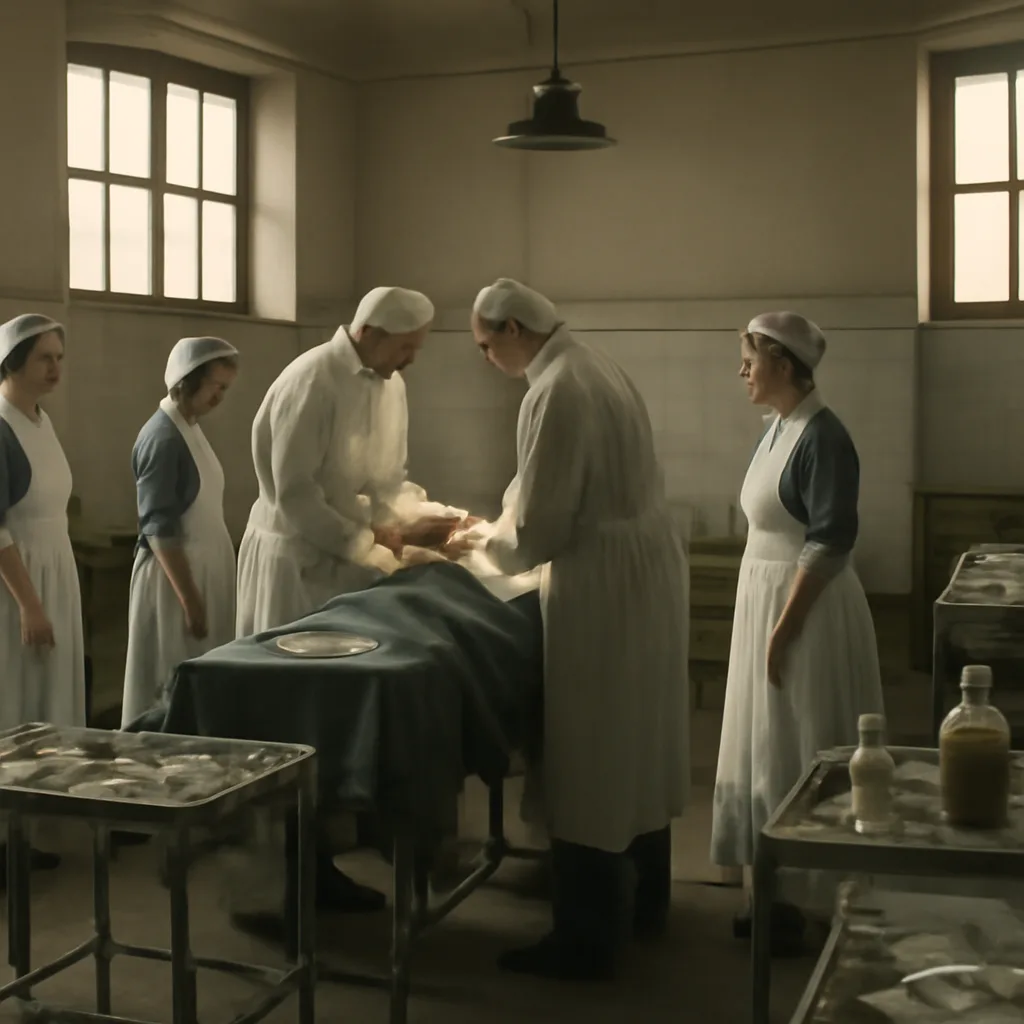
Early 20th-century surgical ward with doctors and nurses around an operating table, medical instruments and bandages visible; period hospital interior with wooden-backed chairs and plain tiled walls.

On March 21, 1917, surgeons completed one of the first documented facial reconstructions using plastic surgical techniques developed during World War I, repairing severe facial injuries with innovative grafting methods that laid groundwork for modern reconstructive surgery.


By 1917, the scale and nature of facial injuries from artillery and trench warfare had propelled surgeons to develop new approaches to restore form and function. On March 21, 1917, a notable reconstruction procedure was performed that exemplified this shift: surgeons used tissue-grafting techniques and staged operations to reconstruct a face badly damaged by combat trauma. While records from the period vary in detail and attribution, this operation sits within a broader wave of surgical innovation led by physicians in Britain and France responding to the demands of the Western Front.

Before the war, ‘‘plastic’’ techniques—then commonly called plastic surgery or reconstructive surgery—were less advanced and largely elective. The war introduced devastating facial wounds from shrapnel and gunshots, often leaving bones exposed, mouths and noses destroyed, and eyelids and cheeks mutilated. Military surgeons and hospital units near the front established specialized wards for maxillofacial and reconstructive care. Pioneers such as Sir Harold Gillies in Britain and Hippolyte Morestin in France experimented with pedicle skin grafts, tubed flaps, and staged procedures to transfer tissue safely and rebuild features.

The March 21, 1917 operation reflected these practices. Surgeons frequently began with debridement and infection control, then planned multi-stage reconstructions. Techniques borrowed from civilian practice were adapted: local and distant flaps of skin and underlying tissue were fashioned into ‘‘tubes’’—a method that preserved blood supply while transporting tissue across the body—and later opened to recreate facial contours. Bone fragments were stabilized when possible; dental and oral repairs were integrated into reconstructive plans to restore eating and speech. Such procedures were lengthy, often performed under improvised anesthesia and within wartime hospital constraints, and required repeated operations over months or years.

Contemporary accounts and later historical studies highlight both the medical ingenuity and the severe human cost that motivated it. Gillies’s work at Queen’s Hospital, Sidcup, is frequently cited for systematizing staged facial reconstruction, and his teams documented many early operations and outcomes. However, precise attribution for ‘‘the first’’ facial reconstruction is contested: different surgeons reported pioneering techniques at different times and places, and wartime record-keeping could be incomplete. The March 21, 1917 operation is best understood as part of this collective, fast-evolving field rather than a single discrete invention.

The developments of 1917 had lasting effects. Techniques refined during the war informed postwar civilian practice, expanded understanding of wound healing and vascularized tissue transfer, and ultimately contributed to modern microsurgical methods. Beyond technical advances, the era prompted improvements in multidisciplinary care—combining surgeons, dentists, prosthetists, and rehabilitation specialists—to address the complex needs of patients with facial injuries.

Historians caution against simplifications: claims about ‘‘firsts’’ in surgical history often depend on how procedures are defined and on fragmentary documentation. What is clear is that by March 1917, surgeons treating battlefield casualties were performing sophisticated reconstructive operations that significantly advanced the field and changed the prospects for many wounded soldiers.

Share this

Email Share on X Facebook Reddit

Did this surprise you?