
← Back
06/18/1998 • 4 views

1998 Amazon Fires Spark Global Concern
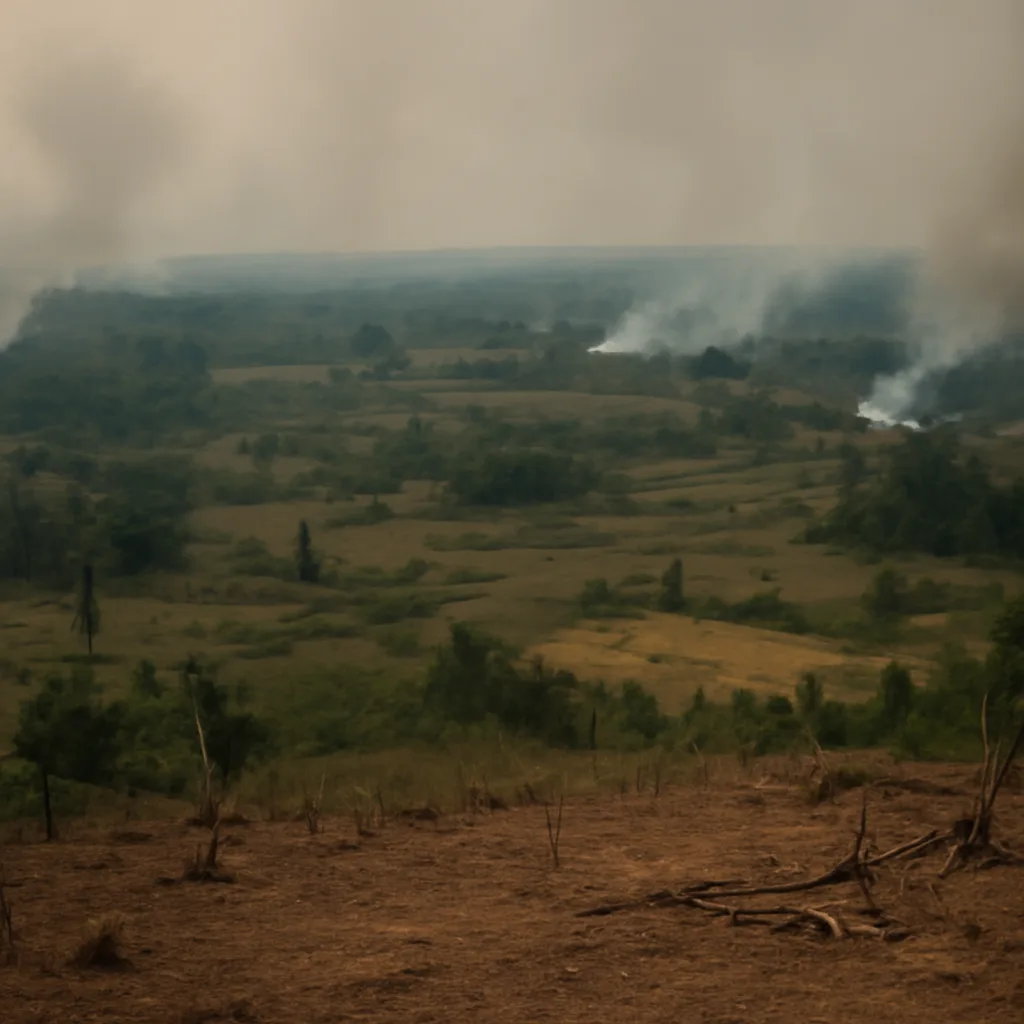
Smoke plumes rising over a patchwork of cleared fields and remaining forest in the Brazilian Amazon during a dry season, viewed from a high vantage with no identifiable faces.

In June 1998, widespread fires in the Brazilian Amazon drew international attention as smoke plumes and satellite imagery revealed extensive burning tied to drought and agricultural clearing, prompting criticism of land-use practices and calls for stronger environmental protection.


In mid-June 1998, Brazil experienced a marked increase in fires across the Amazon rainforest and adjacent regions, a development that attracted attention from scientists, environmental groups and foreign governments. The episode occurred against a backdrop of an unusually strong El Niño the previous year and a regional drought that left forests and vegetation drier than normal. Those conditions, combined with ongoing practices of slash-and-burn clearing for agriculture, ranching and small-scale farming, contributed to the scale and visibility of the fires.

Satellite data and aerial observations showed extensive smoke plumes and hotspots across parts of northern and central Brazil. Media outlets and environmental organizations documented fires burning along forest margins and in cleared areas, with smoke affecting cities and towns downwind. The visibility of the fires on satellite imagery intensified international scrutiny, as images circulated showing numerous active fire locations across the Amazon basin.

Responsibility for the fires was attributed primarily to human land-use activities. Farmers, ranchers and other landholders commonly use fire to clear vegetation for pasture or crops; during dry conditions those fires can escape control and spread into forested areas. Environmental groups and some scientists emphasized that while fire is a tool in local agricultural systems, its expansion into forest contexts threatens biodiversity, carbon storage and indigenous territories.

Brazilian authorities responded in varied ways. Local and federal agencies sometimes mobilized firefighting resources where feasible, but limited capacity, rugged terrain and the scale of burning constrained responses. The fires also drew political attention: domestic critics and international observers urged stronger enforcement of environmental regulations, improved land management, and greater support for monitoring and firefighting. The episode contributed to debates over the balance between development, land tenure systems, agricultural expansion and environmental protection in the Amazon.

The 1998 fires occurred within a longer history of seasonal and human-driven burning in Amazonia. Patterns of deforestation and fire had been increasing for decades due to road building, cattle ranching expansion and agricultural colonization. Scientists studying the 1998 season highlighted how drought and El Niño-linked climate variability can amplify the impacts of land-use fires, increasing the likelihood that burning will escape into primary forests. Research since then has underscored the role of repeated fire in degrading forest ecosystems and increasing vulnerability to future droughts.

International reaction included concern from environmental organizations, research institutions and foreign governments that monitor tropical forest health and global carbon dynamics. Calls for enhanced international cooperation, technical assistance for monitoring and firefighting, and support for sustainable land-use practices were part of the discourse. At the same time, Brazilian officials and local stakeholders pointed to the complexity of governance, land-tenure conflicts and economic pressures that drive deforestation and burning.

The 1998 fires did not occur in isolation but were part of an ongoing pattern of episodic burning in Amazon regions tied to human activity and climate variability. The season reinforced key policy and scientific points made repeatedly over decades: that preventing destructive fire in humid tropical forests requires addressing underlying land-use incentives, strengthening law enforcement and monitoring, supporting sustainable livelihoods, and preparing for climate variability. It also demonstrated the utility of satellite monitoring to detect and quantify fire activity, a tool that has become central to tracking Amazon deforestation and fires in subsequent years.

While the 1998 events prompted sharp criticism and calls for action, they also highlighted persistent governance and economic challenges that have complicated efforts to reduce fire-driven forest loss in Brazil. The season is referenced in research and policy discussions as an example of how drought and human land uses interact to produce large-scale fire impacts in tropical forests.

Share this

Email Share on X Facebook Reddit

Did this surprise you?