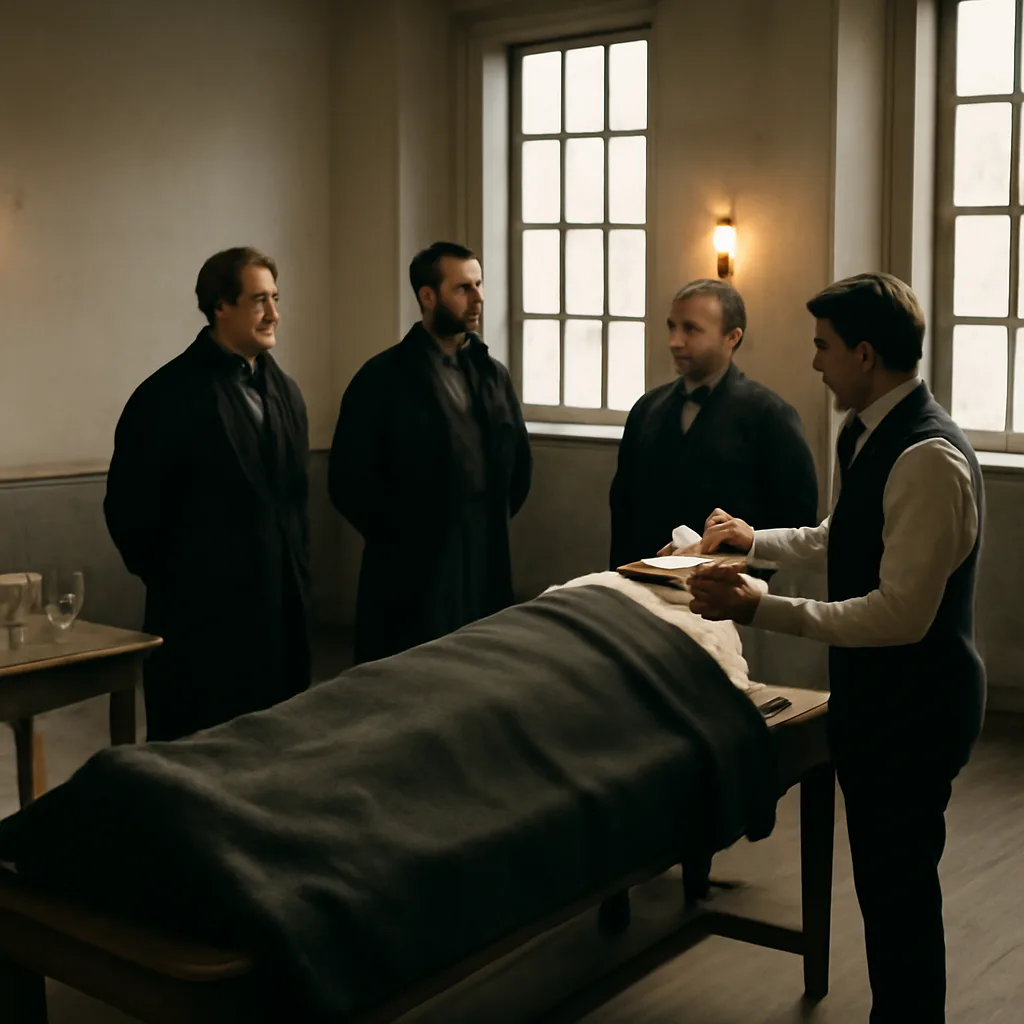
First Public Demonstration of Surgical Anesthesia, March 30, 1842
On March 30, 1842, in Boston, a public demonstration introduced inhaled ether anesthesia to surgical practice, marking a decisive shift in pain management and the practice of surgery.
On March 30, 1842, a public demonstration in Boston marked an important early moment in the introduction of inhaled ether as a surgical anesthetic. Although several figures and experiments contributed to the development and adoption of surgical anesthesia, this demonstration helped move the concept of chemically induced insensibility to pain from private experiments and anecdote toward wider public and professional awareness.
Background
Before the 1840s, surgery was typically performed with the patient fully conscious; speed and physical restraint were the principal means of controlling pain. Throughout the late 18th and early 19th centuries, natural remedies and topical measures were used in limited ways, but true systemic analgesia remained elusive. In the years immediately preceding 1842, chemists and physicians were exploring the properties of various inhaled gases and volatile liquids—including nitrous oxide, ether (sulfuric ether), and chloroform—for their capacity to alter sensation and consciousness.
The demonstration
The March 30, 1842 demonstration in Boston involved the administration of inhaled ether to produce insensibility during a surgical procedure. Accounts from the period indicate that a patient inhaled ether delivered by a practitioner while an operator proceeded with a surgical intervention. Contemporary reports emphasized that the patient did not exhibit the expected signs of severe pain, and the event attracted the attention of local physicians and the public. The demonstration contributed to debates within the medical community about the safety, efficacy, and practicality of using chemical agents to prevent surgical pain.
Contested origins and subsequent developments
Histories of anesthesia note that developments were incremental and involved multiple people in different places. Crawford W. Long in Georgia and Horace Wells in Hartford experimented with inhaled gases (Long with ether and Wells with nitrous oxide) earlier in the 1840s and late 1830s, but their work was not widely publicized at the time. The Boston 1842 demonstration is one among several early publicized events that moved the idea forward; a more widely known demonstration in 1846 in Boston by dentist William T.G. Morton, who publicly demonstrated ether anesthesia at Massachusetts General Hospital, is often credited with catalyzing rapid adoption. Historians continue to debate priority and credit among these figures, noting differences in documentation, publication, and publicity.
Impact
Public demonstrations such as the March 30, 1842 event helped persuade surgeons and hospitals that inhaled anesthetics could be used reliably enough to transform surgical practice. Within a few years of these demonstrations, ether and later chloroform became common in operating theaters in Europe and North America, fundamentally altering surgical technique by allowing slower, more precise procedures and reducing the trauma of operations. The spread of anesthesia also raised new questions about dosing, patient safety, and the physiological effects of anesthetic agents—areas that would become subjects of clinical study and regulation.
Historical perspective
It is important to treat singular demonstrations like the March 30, 1842 event as part of a broader, contested history. Multiple practitioners in different locations experimented with inhaled agents, and many early efforts were underreported or published later, complicating tidy claims of a single ‘‘first.’’ Nevertheless, public demonstrations in the early 1840s were instrumental in shifting medical opinion and practice, paving the way for the routine use of anesthesia in surgery.
Sources and reliability
Contemporary newspaper reports, hospital records, and later historical analyses form the basis for accounts of the 1842 demonstration and related events. Because primary documentation from some early practitioners is incomplete or published after the fact, historians note disputes over priority and emphasize the cumulative nature of the discovery and adoption of anesthesia.