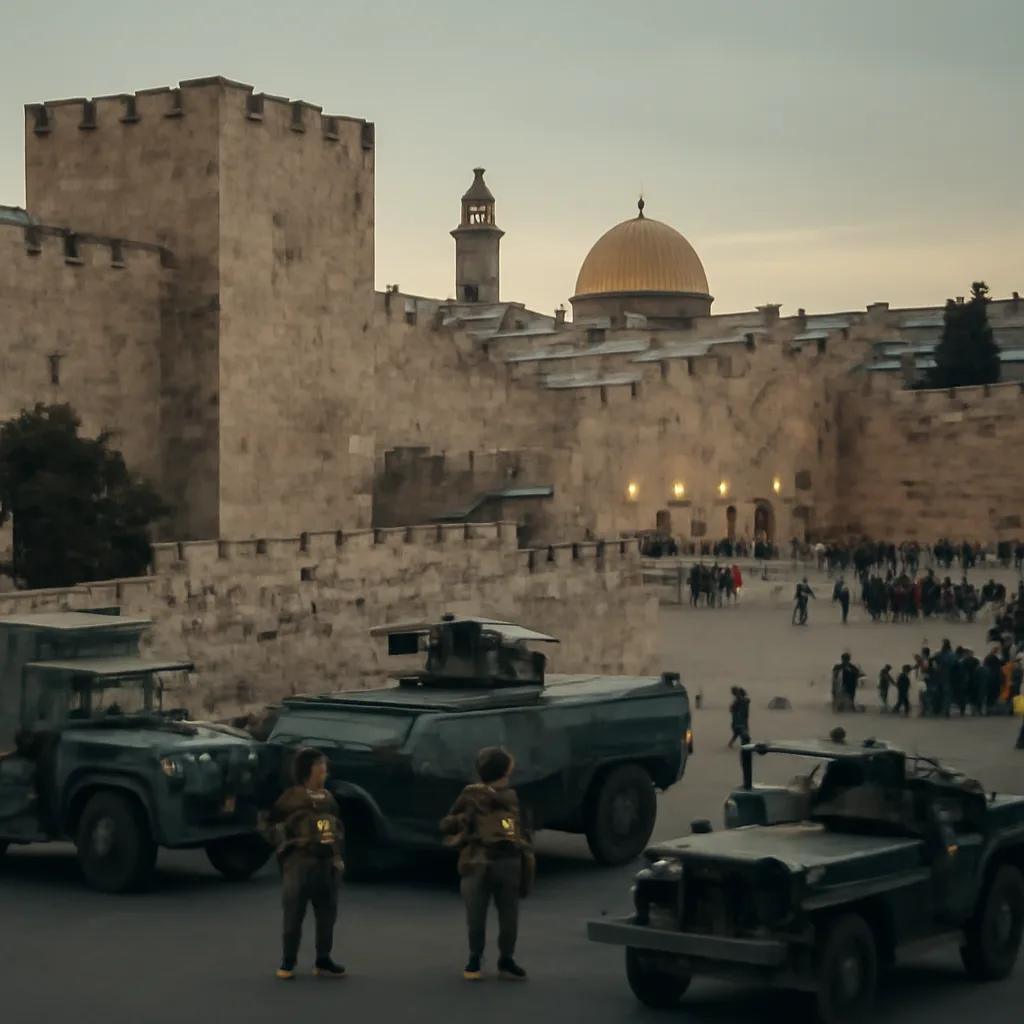
Israeli forces take control of Jerusalem in Six-Day War
On June 7, 1967, during the Six-Day War, Israeli military units captured East Jerusalem, including the Old City and its holy sites, bringing the entire city under Israeli control for the first time since 1948—an outcome with lasting political and religious ramifications.
On June 7, 1967, in the third day of the Six-Day War, Israeli forces captured East Jerusalem from Jordanian control, including the walled Old City and major religious sites such as the Western Wall and the Temple Mount/Haram al-Sharif. The operation followed intense fighting on multiple fronts during a conflict that began on June 5 after escalating tensions and military mobilizations across the region.
Military actions and timeline
Israeli paratroop units and Armored Corps elements entered Jerusalem from the west and northwest on June 7. Fierce street fighting occurred in neighborhoods and approaches to the Old City. Following engagements with Jordanian defenders, Israeli troops reached the Old City in the afternoon. By the evening, Israeli forces had secured key positions within the Old City, and Israeli leaders announced control of Jerusalem. The capture concluded decades of divided control: West Jerusalem had been in Israeli hands since 1948, while East Jerusalem, including the Old City, had been administered by Jordan since 1948.
Immediate consequences
The takeover enabled Jewish access to the Western Wall for the first time since 1948; religious ceremonies and public gatherings took place at the site in the days following the capture. Israel later extended civil law, jurisdiction, and administration over East Jerusalem and began planning municipal and legal integration measures—actions that were and remain internationally contested.
International and legal context
The acquisition and subsequent annexation-related measures were met with broad international criticism. United Nations Security Council Resolution 242, adopted in November 1967, called for withdrawal of Israeli armed forces from territories occupied in the conflict and emphasized the inadmissibility of acquiring territory by war, though interpretations and applications of the resolution have varied. The status of Jerusalem became a central and enduring issue in Israeli-Palestinian and wider Arab-Israeli diplomacy, with most states not recognizing Israel’s annexation of East Jerusalem. The United Nations and much of the international community consider East Jerusalem occupied territory under international law; competing Israeli and Palestinian claims over the city have driven decades of negotiations and periodic violence.
Human and urban impact
The capture affected residents of diverse communities—Palestinian Arabs, Jews, and Christians—through shifts in governance, movement, property claims, and municipal services. Demographic, property, and planning policies implemented in subsequent years have shaped the city’s urban development and social landscape. Many Palestinians became subject to Israeli military administration initially and later to different legal regimes depending on status and location.
Long-term significance
Jerusalem’s capture in 1967 transformed the geopolitics of the Middle East and became a focal point for religious sentiment and national identity on both sides. It remains one of the core issues in peace negotiations, with final status questions—sovereignty, access to holy sites, borders, and residents’ rights—left unresolved in permanent status agreements. The events of June 7, 1967, continue to inform political positions, international diplomacy, and local experiences in Jerusalem today.
Notes on sources and contested facts
This summary relies on widely documented historical accounts of the Six-Day War and subsequent international responses. Specific details—such as unit movements, casualty figures, and administrative measures—are subject to differing accounts in contemporary reports and later histories; where disputes exist, historians and primary sources provide varying emphases and interpretations.