
← Back
09/25/1992 • 4 views

NASA Launches Mars Observer Mission
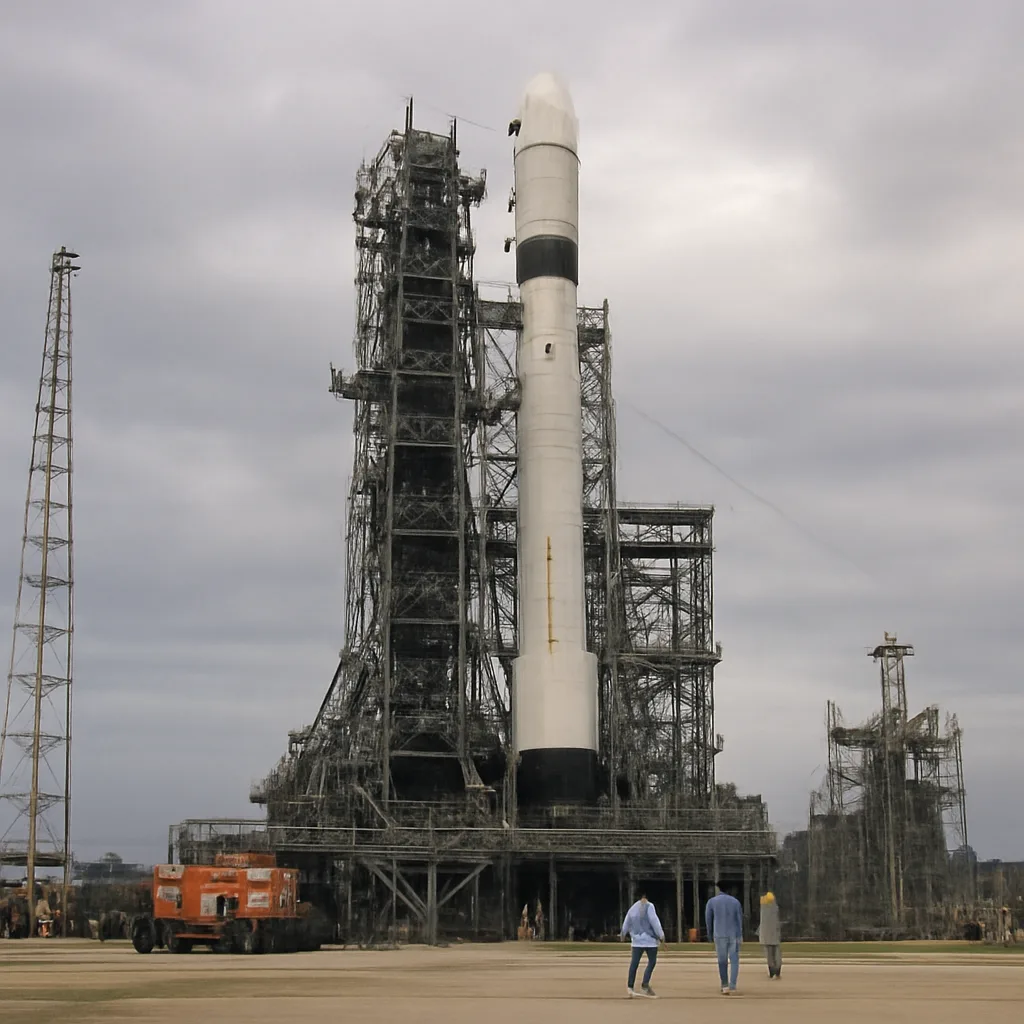
Mars Observer spacecraft being prepared for launch at Cape Canaveral in the early 1990s, showing the spacecraft on the launch pad with service structures and a Titan rocket nearby.

On September 25, 1992, NASA launched the Mars Observer spacecraft to study the Martian surface, atmosphere and magnetic field in preparation for extended exploration—though the spacecraft later failed before completing primary science operations.


On September 25, 1992, NASA launched the Mars Observer mission from Cape Canaveral Air Force Station aboard a Titan III launch vehicle. The mission’s primary objective was to study Mars’ surface, atmosphere and magnetic environment from orbit, providing high-resolution imaging, mapping of mineral and chemical composition, and atmospheric profiling to inform future missions.

Mars Observer was developed by NASA’s Jet Propulsion Laboratory (JPL) and the Lewis Research Center (now Glenn Research Center) with contributions from academic and industry partners. The spacecraft carried a suite of instruments including a high-resolution imaging system (the Mars Observer Camera), a thermal emission spectrometer for mineralogy, a gamma-ray spectrometer for elemental composition, a magnetometer/thermal plasma package to study magnetic fields and charged particles, and atmospheric sensors for pressure, temperature and composition. The planned mission profile involved a three-month cruise to Mars followed by insertion into a near-polar orbit where systematic global mapping would be conducted over at least one Martian year.

During cruise, controllers at JPL performed routine checkouts and trajectory corrections. On August 21, 1993—about three days before Mars orbit insertion—contact with Mars Observer was lost. The spacecraft had been preparing for engine burns required for orbital capture. Subsequent attempts to reestablish communication using NASA Deep Space Network assets were unsuccessful. Investigations considered possible causes including a fuel line rupture, pressurization failure, or an explosion related to propulsion system pressurant, but a definitive cause was never established publicly.

The loss of Mars Observer represented a significant setback for NASA’s Mars exploration program at the time. The mission had been expected to deliver a leap in global Martian datasets: high-resolution images to identify landing sites, maps of mineralogy to reveal past environmental conditions, and detailed atmospheric and magnetic measurements. Many of the scientific objectives and instrumentation concepts from Mars Observer were later incorporated into subsequent missions, including Mars Global Surveyor (launched 1996), Mars Odyssey (2001), and the instruments and priorities of later orbiters and landers.

The Mars Observer episode influenced NASA program management and engineering practices, contributing to increased emphasis on system-level testing, propulsion system procedures, and risk reduction for interplanetary missions. Publicly available mission documentation, post-loss reviews and later analyses have been used by engineers and mission planners to mitigate similar risks in future spacecraft designs.

Although Mars Observer did not return the planned science, its legacy persisted through the re-use and refinement of its science goals and instrument designs. Many of its intended measurements—global imaging, mineralogical mapping, and atmospheric studies—became central components of later successful missions that have dramatically improved understanding of Mars’ geologic history, climate evolution and potential habitability.

The mission remains an important chapter in the history of robotic exploration: a reminder of the technical challenges of interplanetary flight and of how lessons from failures are integrated into the continuing effort to explore Mars.

Share this

Email Share on X Facebook Reddit

Did this surprise you?