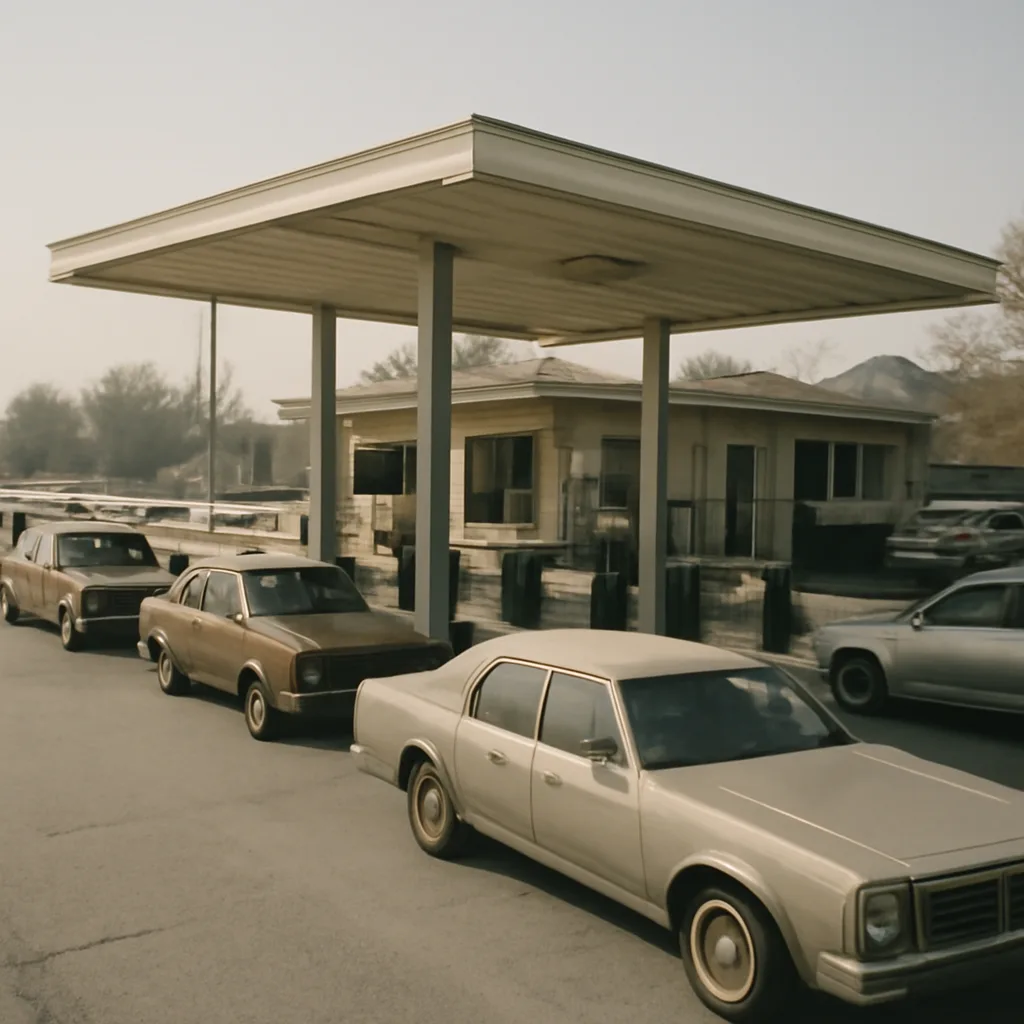
Nationwide Fuel Shortages Grip the United States, October 1979
Beginning in October 1979, the United States faced widespread gasoline shortages driven by a complex mix of crude oil market turmoil, refinery constraints, and domestic policy responses, producing long lines at pumps and renewed political debate over energy policy.
In October 1979 the United States experienced widespread gasoline shortages that affected many regions and revived public anxiety about energy security. The shortages were not the result of a single event but stemmed from several interacting factors: high and volatile crude oil prices following the 1979 Iranian Revolution, disrupted global oil supplies, limited refinery capacity in the U.S., and policy and logistical frictions that constrained distribution.
Background: global supply and price shock
The Iranian Revolution (1978–79) removed significant Iranian crude supplies from global markets and contributed to a spike in oil prices and volatility. Although the initial 1973–74 oil shock and the 1979 disruptions were distinct, both episodes exposed the U.S. economy’s vulnerability to changes in world oil markets. Higher crude prices raised costs for refiners and distributors and made gasoline more expensive at the pump, which in turn affected supply patterns.
Domestic refining and distribution constraints
U.S. refineries had limited spare capacity. Maintenance schedules, regional refinery outages, and the logistical complexity of moving gasoline between regions meant that localized shortages could develop even without a total national supply collapse. The late 1970s also saw growing demand for gasoline in certain areas, and the fuel distribution network—pipelines, terminals, and trucking—sometimes could not redirect supplies quickly enough to meet surges in demand.
Price controls and policy responses
Federal and state-level policies played a role in how shortages were experienced. In the earlier 1970s, price controls and allocation systems had contributed to distortions; by 1979 policymakers were debating deregulation, allocation rules, and emergency measures. Public officials and industry leaders exchanged criticisms about responsibility for bottlenecks. Some states implemented odd-even rationing or other temporary measures during acute local shortfalls.
Public impact and behavior
The visible consequence for many Americans was long lines at service stations, station closures, and periodic rationing of sales by license plate or pump. These disruptions affected commuting, small businesses, and public mood, contributing to political pressure for federal action on energy policy and conservation. Consumers responded with conservation measures such as reduced discretionary driving and greater interest in fuel-efficient vehicles.
Political and policy consequences
The 1979 shortages helped push energy policy higher on the national agenda. Policymakers debated measures to increase domestic refining capacity, encourage conservation, and reduce dependence on foreign oil. The episode reinforced arguments for strategic reserves and for coordinated national strategies to address vulnerabilities in energy supply and distribution.
Assessment and historical context
While not a single, continuous nationwide blackout of gasoline supply, the October 1979 shortages were significant as part of a broader era of energy instability in the 1970s. They underscored structural limits in refining and distribution, the sensitivity of the U.S. market to international disruptions, and the political ramifications of energy scarcity. Historical accounts attribute the shortages to a combination of international supply shocks, domestic infrastructure constraints, and policy choices rather than to any single cause.
Sources and verification
This summary synthesizes widely documented elements of the 1970s energy crises: the impact of the Iranian Revolution on oil markets, recurring refinery and distribution bottlenecks in the United States, and contemporary policy debates about price controls, rationing, and conservation. Details about specific regional measures, refinery outages, and exact timelines vary by locality and are documented in contemporary news reports and government records from the period.