
10/25/1917 • 4 views
October Revolution topples Russia’s Provisional Government
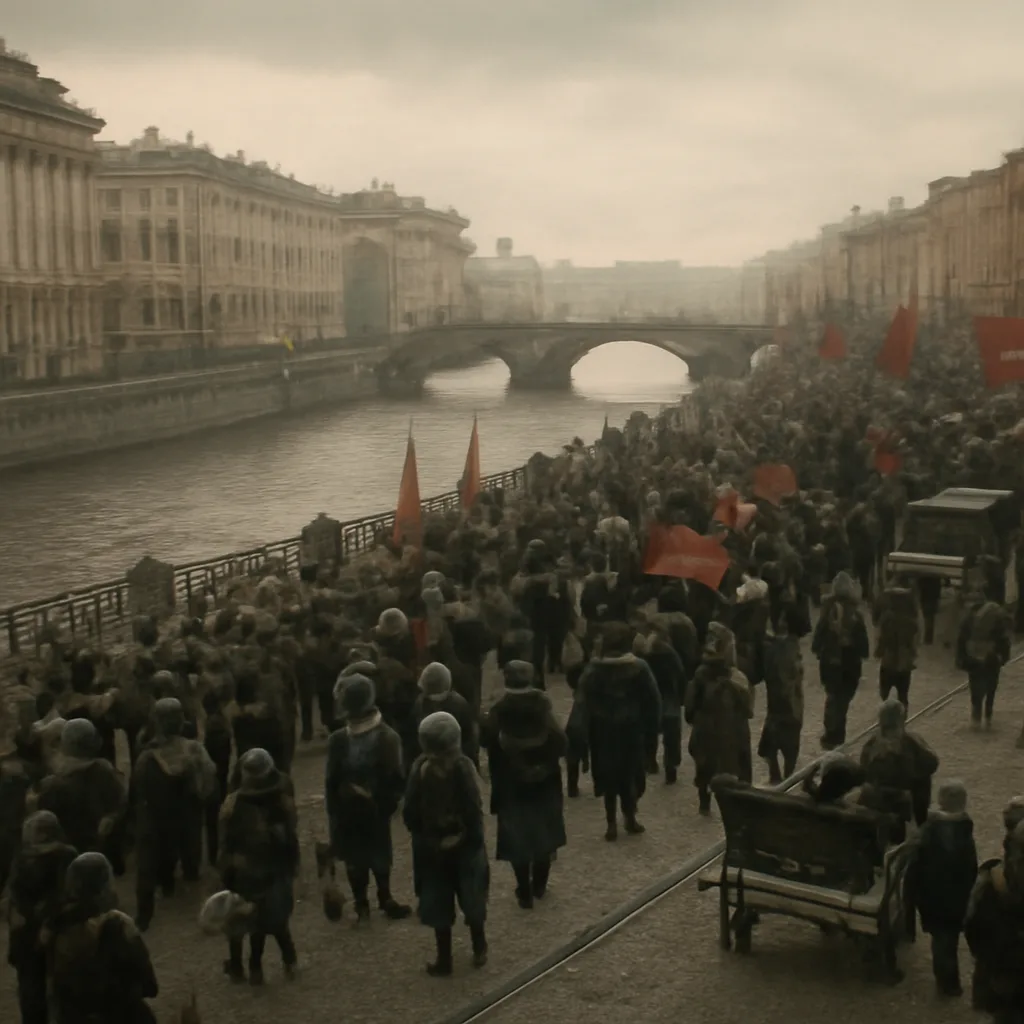
On 25 October (Julian calendar; 7 November Gregorian) 1917, Bolshevik forces seized key centers in Petrograd and deposed the Russian Provisional Government, marking a decisive transfer of power that led to Soviet rule.
The operation targeted communication and transportation hubs: telegraph and telephone offices, railway stations, the state bank, and the premises of the Provisional Government. The cruiser Aurora is often associated with the uprising for firing a blank or signaling shot—accounts vary on its precise role—but Bolshevik-led Red Guards and sympathetic soldiers and sailors took control of bridges, forts and government buildings. Overnight and into the morning of 25 October, the Bolsheviks surrounded the Winter Palace, where the Provisional Government had its headquarters, and arrested ministers after an ultimatum and limited resistance. The transfer of power was relatively quick in Petrograd but did not mean immediate nationwide control.
The Bolsheviks justified their action as a popular insurrection against a government they portrayed as unable to end the war, address land reform, or meet workers’ and soldiers’ demands. After seizing authority, the Bolsheviks moved to consolidate power: they issued decrees on peace and land, redistributed authority to the soviets, and began reorganizing state institutions. The uprising in Petrograd sparked or accompanied unrest in other cities and regions, but across much of the former Russian Empire the outcome would be determined in the ensuing months and years through negotiation, local power struggles, and ultimately the Russian Civil War (1917–1922).
Historians note that the October events combined elements of planned coup and spontaneous mass action. Contemporary sources and later scholarship debate the scale of popular participation in Petrograd, the level of military force used, and how much was decided in advance by Bolshevik leadership versus evolving on the ground. The date is commonly given as 25 October according to the Julian calendar in use in Russia at the time; most modern accounts translate this to 7 November in the Gregorian calendar. The seizure of the Provisional Government in October is widely regarded as the pivotal moment that brought the Bolsheviks to state power and set the course for the Soviet Union.