
← Back
10/25/1998 • 4 views

Footballer Fatally Struck by Lightning During Match on 25 October 1998
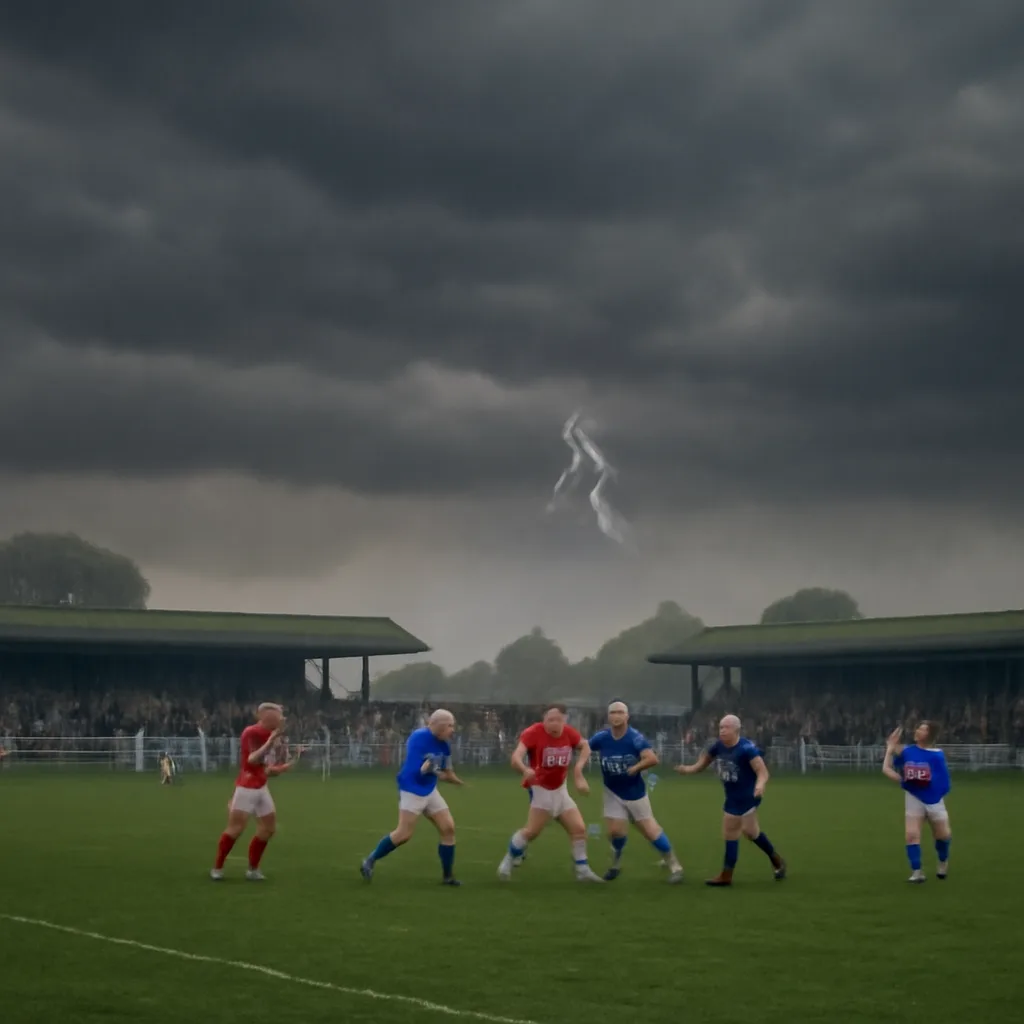
Outdoor soccer match under a dark stormy sky; players and officials clustered near the center of a grass pitch with visible rain and lightning in the distance.

On 25 October 1998, a soccer player collapsed and later died after being struck by lightning during a match played in severe storm conditions; reports at the time attributed the death to a lightning strike that hit the field while play continued.


On 25 October 1998 a soccer player was killed by a lightning strike sustained during a match played in stormy weather. Contemporary news accounts and later summaries report that a lightning discharge occurred above or near the pitch while the game was underway; the player collapsed immediately and was later pronounced dead. Authorities and match officials faced criticism for allowing play to continue despite visible thunderstorm activity.

Context: Outdoor sports carry recognized risks during thunderstorms because lightning can strike players, goalposts, and wet ground. By the late 1990s many national and international sport-governing bodies had begun to develop or adopt protocols urging suspension of play when lightning or thunder is present. However, enforcement and awareness varied by country, competition level and local organizers.

Incident details and reporting: Sources from the period describe the event as occurring on 25 October 1998 during a competitive match. Accounts agree on the sequence: thunderstorm conditions were present, lightning struck in the vicinity of the field, a player collapsed at or near the moment of the strike, and medical personnel were unable to save him. Press coverage emphasized the suddenness of the event and the shock among teammates, officials and spectators. Exact identifying details about the player, the teams involved and the match competition vary among contemporaneous reports; some outlets named the individual and club, while others withheld or later retracted identifying details. Because media records from different regions are not fully consistent, specific biographical facts should be verified against primary contemporaneous sources before citation.

Aftermath and implications: The incident prompted discussion in local and national sporting communities about safety measures, emergency response and the responsibility of referees and organizers to suspend matches when lightning threatens. In some jurisdictions such events accelerated the adoption of formal lightning-safety policies—such as clear criteria for delaying or abandoning play, recommended evacuation to safe shelter, and coordination with medical services—though the pace and extent of policy change differed by federation.

Historical note: Lightning strikes that injure or kill athletes on outdoor fields are rare but documented across many sports and countries. This 1998 case is one of several high-profile incidents that contributed to growing public and institutional awareness of the hazard. Where exact details are inconsistent across reports, independent verification from original contemporaneous news articles, official match reports or medical/coroner records is recommended for researchers seeking to cite names, teams or legal outcomes.

Limitations: Publicly available accounts of the 25 October 1998 incident are uneven in detail and sometimes contradictory on particulars such as the player’s identity and the competition level. This summary sticks to widely reported facts—date, cause (lightning strike), immediate collapse and death, and subsequent scrutiny of safety practices—while noting that some specifics remain disputed or require primary-source confirmation.

Share this

Email Share on X Facebook Reddit

Did this surprise you?