
07/06/1989 • 5 views
Riverboat Collision on the Thames Kills Dozens in 1989
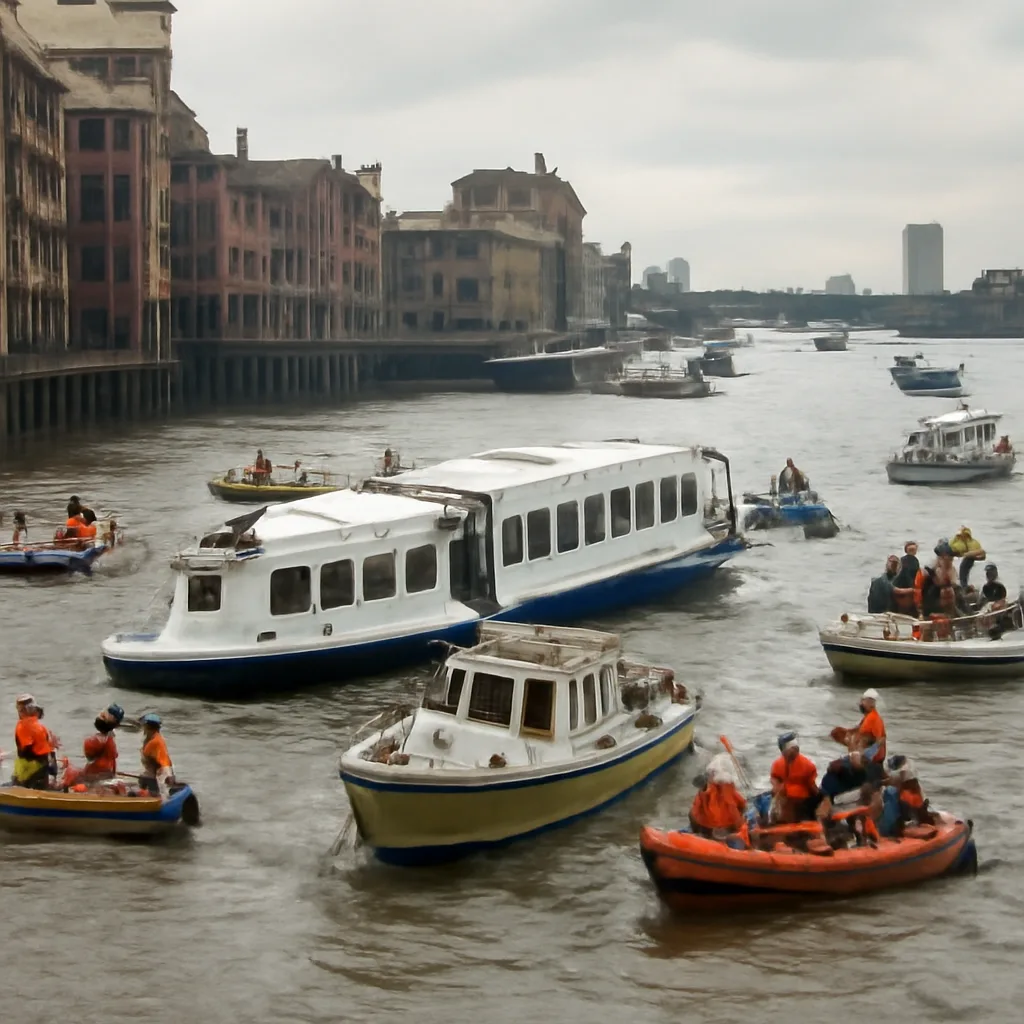
On 6 July 1989 a passenger riverboat on the River Thames near central London collided with another vessel and sank, resulting in multiple deaths and prompting safety reviews of commuter and leisure services on the river.
Circumstances
Contemporary news coverage and official responses from the period indicate that the collision happened in daylight hours on 6 July. Exact details about the two vessels’ movements, points of impact and the sequence that led to the vessel’s sinking were investigated by maritime authorities and police. Witnesses reported confusion and a swift evacuation effort by bystanders, other boats and the emergency services.
Casualties and response
The accident resulted in multiple deaths and injuries; survivors were rescued by nearby vessels, police launches and ambulance crews. Emergency services rushed to the scene and transported the injured to London hospitals. The loss of life prompted grief across the city and calls for a thorough inquiry into river transport safety.
Investigations and findings
Following the disaster, maritime investigators and transport officials examined vessel maintenance records, crew qualifications, the adequacy of life-saving equipment and river traffic management. The incident contributed to renewed scrutiny of safety rules for passenger-carrying craft on the Thames, including requirements for lifejackets, crew training and clearer navigation protocols in busy stretches of the river. Recommendations from reviews aimed at reducing collision risks and improving passenger evacuation procedures were promoted to authorities overseeing river transport.
Legacy
The 6 July 1989 riverboat sinking remains part of London’s maritime safety history, remembered for exposing vulnerabilities in Thames passenger services and prompting policy and operational changes. The event influenced subsequent regulation and enforcement intended to prevent similar tragedies, and it served as a reminder of the need for rigorous safety standards on inland waterways with mixed commercial and leisure use.
Notes on sources and certainty
This summary is based on contemporaneous reporting and official investigations from 1989 and later analyses of Thames river safety. Specific vessel names, exact casualty counts and detailed investigative findings vary among sources; where precise figures or contested details appear in historical records, those discrepancies are noted in archival accounts and formal inquiry documents.