
← Back
10/04/1993 • 4 views

Shelling of the Russian Parliament Amid 1993 Constitutional Crisis
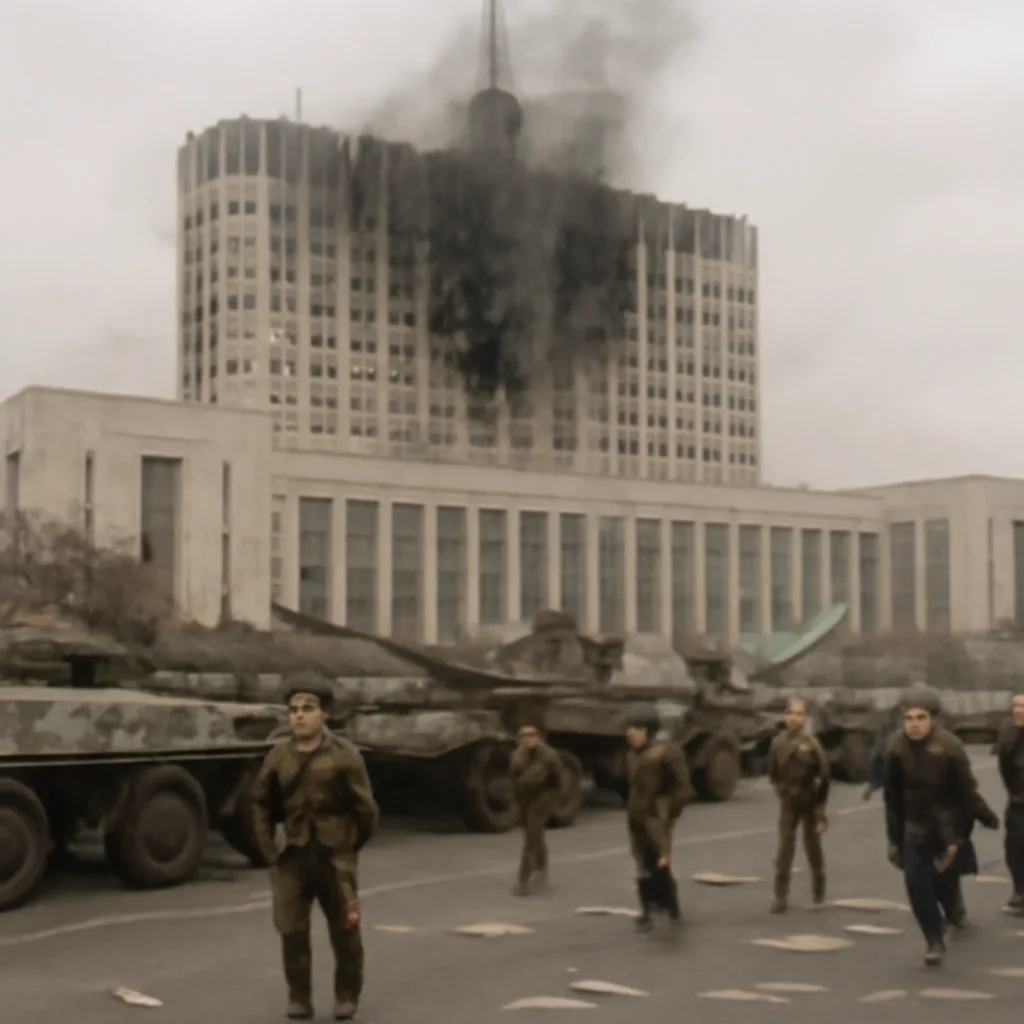
The Russian White House (parliament building) in Moscow under attack in October 1993: smoke and damage to the façade, armored vehicles near the building and people in winter coats on nearby streets.

On October 4, 1993, Russian forces shelled the Russian White House—the seat of parliament—ending a standoff between President Boris Yeltsin and parliamentary opponents and marking a decisive and violent turn in the country's post-Soviet constitutional conflict.


In the autumn of 1993 Russia confronted a constitutional crisis that pitted President Boris Yeltsin against the democratically elected parliament (the Supreme Soviet and its opposition leadership). The confrontation, rooted in disputes over the pace and scope of post-Soviet political and economic reforms, escalated after Yeltsin dissolved the parliament in September, an action his opponents declared unconstitutional. Parliamentarians responded by impeaching Yeltsin, appointing a rival president, and barricading themselves in the Russian White House (the parliamentary building in Moscow).

Tensions rose through late September and early October. Clashes between pro-parliament demonstrators and forces loyal to Yeltsin occurred in Moscow, with casualties during street fighting. On October 3 and into October 4, 1993, after weeks of standoff and failed negotiations, Yeltsin ordered military units to retake the White House. Armored vehicles and tanks were deployed to central Moscow. On October 4, units loyal to the presidency opened artillery and tank fire on the White House. The shelling and subsequent infantry assault breached the building’s defenses, and by the evening government forces had control of the site.

Estimates of casualties from the confrontation vary. Official tallies reported several dozen dead and hundreds wounded in the immediate fighting, while independent and later assessments suggested higher numbers, including dozens to potentially hundreds killed when accounting for street clashes, the assault on the White House, and related violence in Moscow over the preceding days. The crisis also produced many arrests and a charged political aftermath.

The immediate political consequence was the defeat of the parliamentary opposition. Yeltsin consolidated power, and a new constitution strengthening presidential authority was approved in a December 1993 referendum. The events of October 1993 remain controversial: supporters of Yeltsin and some analysts argue the president’s actions were necessary to prevent a return to Soviet-era governance and to preserve reform momentum; critics characterize the shelling and suppression of the parliament as an anti-democratic use of force that derailed Russia’s democratic development.

Scholars and journalists continue to debate responsibility for specific decisions, the proportionality of force used, and the accuracy of casualty figures. Archival research, contemporary reporting, and later memoirs have contributed to understanding but have not eliminated disputes over details. The October 1993 confrontation is widely seen as a pivotal moment in post-Soviet Russian politics, reshaping the balance of power between executive and legislative branches and influencing the country’s political trajectory for decades.

Share this

Email Share on X Facebook Reddit

Did this surprise you?