
← Back
05/02/1962 • 4 views

Tanzanian village struck by weeks-long outbreak of uncontrollable laughter, 1962
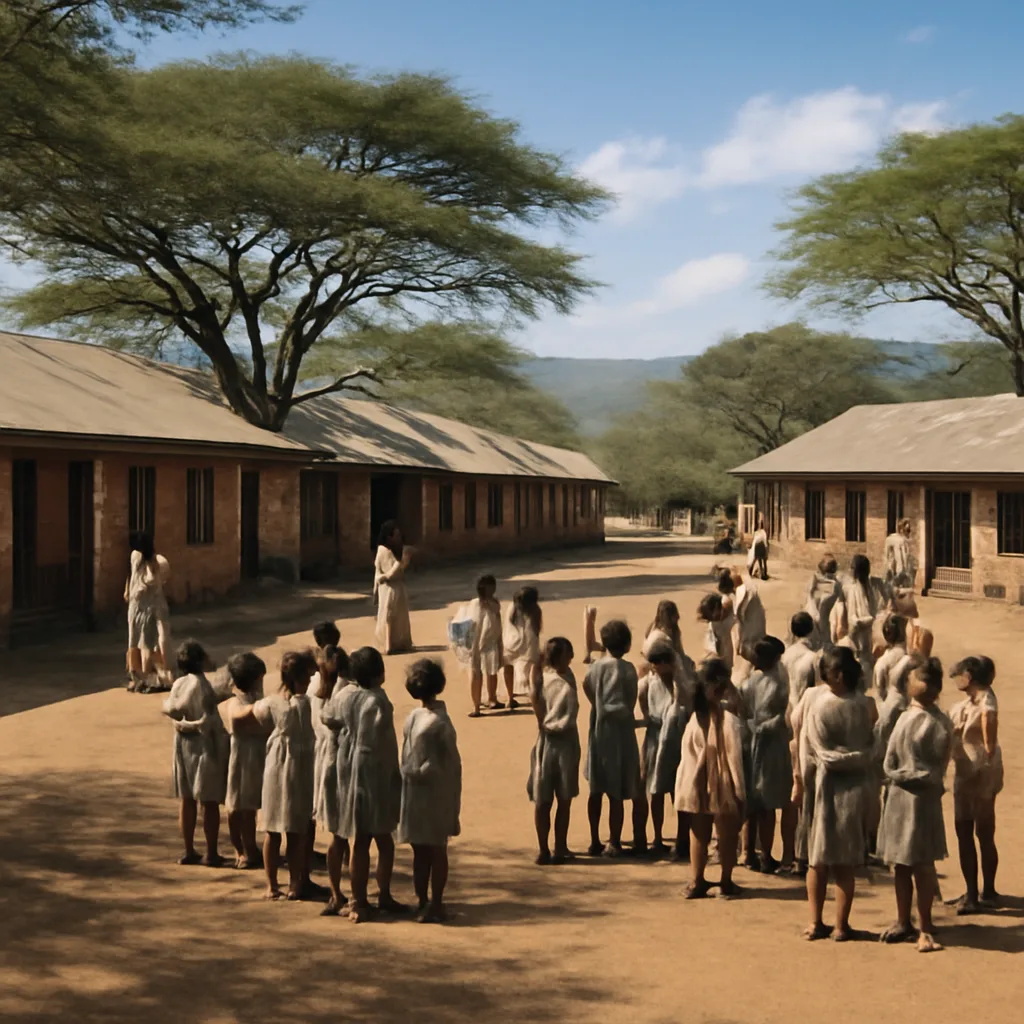
Exterior view of a rural 1960s East African mission boarding school compound with children gathering outdoors; simple buildings, trees and dusty paths visible.

In May 1962 a series of contagious laughter episodes began in a village school in what was then Tanganyika, spreading among students and residents and lasting for weeks; the incident drew international attention and remains a noted case of mass psychogenic illness.


In early May 1962 an unusual episode of prolonged, uncontrollable laughter began among pupils at a mission-run boarding school in the village of Kasanga (often cited in accounts as nearby the town of Tanganyika’s Bukoba region). The first reported cases started on May 2: several schoolgirls began laughing uncontrollably and were unable to resume normal behavior for extended periods. Over subsequent days the phenomenon spread to other pupils, then to teachers and members of the local community. Reports indicate episodes continued intermittently for several weeks before gradually subsiding.

Contemporary observers and later researchers have treated the event as an instance of mass psychogenic illness (MPI), sometimes termed mass hysteria, though labels have varied. Symptoms as described in contemporaneous accounts included bouts of laughter, crying, fainting, respiratory problems and the inability to concentrate on daily tasks and schoolwork. The outbreak reportedly disrupted schooling: classes were suspended, and the school closed temporarily while authorities and medical personnel examined the situation. International newspapers and medical journals took interest, and the incident became a reference point in studies of collective behavior under social and psychological stress.

Contextual factors are important to understanding how the event spread. The school population consisted largely of adolescents living in close quarters, a demographic and setting in which emotionally driven contagion is more likely to propagate. The region had recently undergone social changes: Tanganyika had gained independence from British colonial rule in December 1961, and communities were adjusting to political and social transitions. Some analysts suggest that cultural, social and environmental stressors—whether related to rapid postcolonial change, local economic strains, or pressures within the boarding-school environment—may have contributed to vulnerability to MPI.

Investigations and analyses vary in detail. Medical and anthropological commentators generally agree there was no infectious agent causing the laughter; instead, the phenomenon is most often explained as psychogenic and social contagion. Primary-source material from the time is limited and sometimes inconsistent in place names and timelines, which has led to some ambiguity in later retellings. Researchers caution against sensationalized accounts and emphasize the need to situate the event within its historical and cultural context rather than treating it as merely a curiosity.

The Kasanga laughter outbreak has been cited in scholarship on mass psychogenic illness and school-based outbreaks globally, alongside other historical examples where emotional and physical symptoms spread through tightly connected groups. Modern commentators use the case to illustrate how psychological distress can manifest in collective, physically observable ways, particularly among young people in institutional settings.

Because contemporary reportage used varying place names and because follow-up medical documentation was limited, some specifics—such as exact case counts, precise duration for every affected individual, and certain local details—remain uncertain or disputed in secondary accounts. Nonetheless, the broad outlines are well supported: an outbreak of uncontrollable laughter began in early May 1962 at a boarding school in what was then Tanganyika, spread through students and the community, lasted for weeks, disrupted daily life and schooling, and has since been examined as a notable example of mass psychogenic illness.

Share this

Email Share on X Facebook Reddit

Did this surprise you?