
← Back
08/03/1999 • 4 views

NASA Confirms Loss of Mars Polar Lander
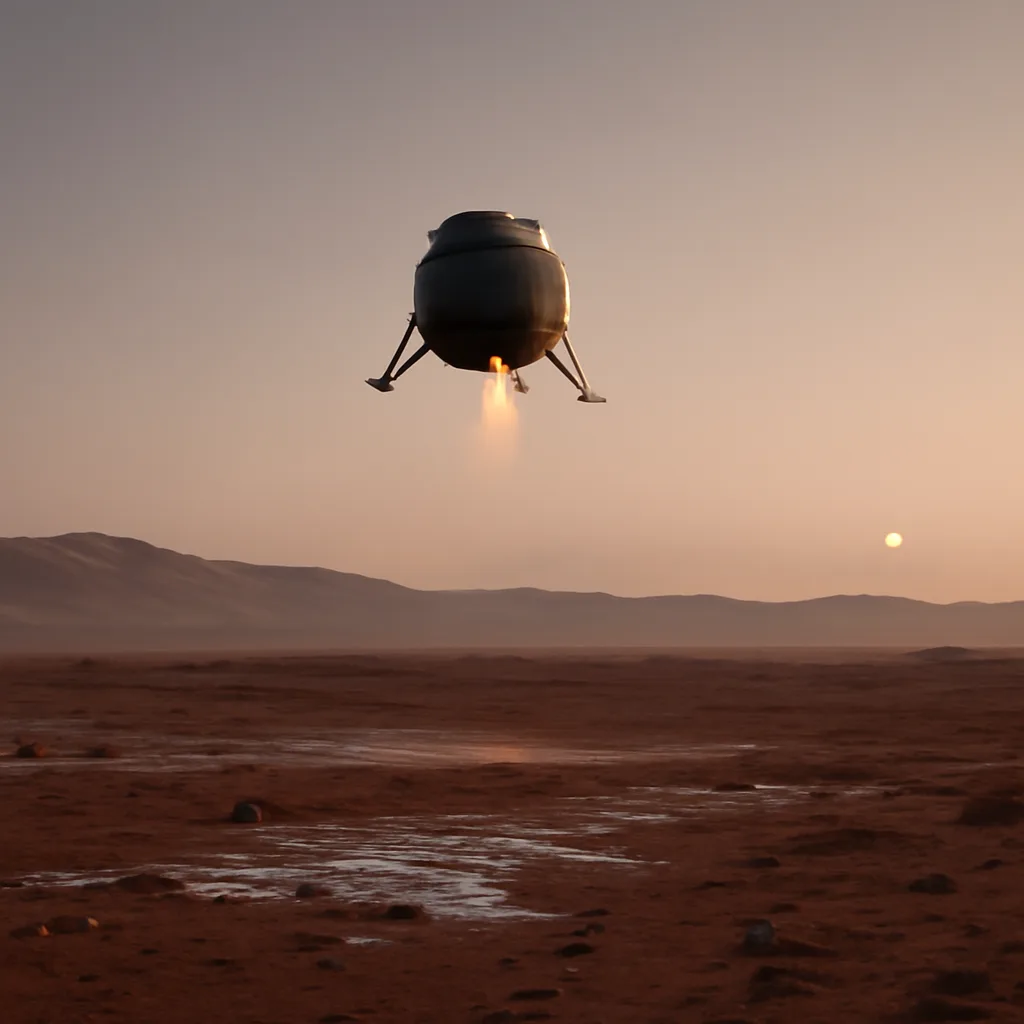
An artist’s respectful depiction of the Mars Polar Lander approaching the Martian southern polar region over a rocky, ice-streaked landscape under a dark, thin atmosphere.

On Aug. 3, 1999, NASA announced it had lost contact with the Mars Polar Lander during its descent to the Martian surface; the spacecraft was intended to study the planet's polar region and search for water and climate records.


On August 3, 1999, NASA announced that the Mars Polar Lander (MPL) had failed to make contact after its planned descent to the Martian south polar region and was presumed lost. MPL launched on January 3, 1999, as part of NASA’s Mars Surveyor '98 program. Its mission was to land near Mars’ south pole, deploy instruments to study surface and subsurface ice, and transmit climate and geological data that could reveal the planet’s water history.

The descent and landing were scheduled for late December 1999 in Coordinated Universal Time but the loss of communication was confirmed on August 3 after the spacecraft failed to reestablish telemetry during the critical landing period. Initial reports indicated the spacecraft had entered the Martian atmosphere and performed a planned cruise and approach, but signals expected through NASA’s Deep Space Network were not received after the time when the lander should have completed its descent sequence and transmitted status.

Engineers and mission managers began an investigation to determine the cause of the failure. Early hypotheses included a possible malfunction in the descent engines, an issue with the lander’s parachute or airbags (if used), or a software anomaly that might have caused the descent sequence to abort prematurely or misinterpret sensor data. At the time, mission teams also acknowledged that limited telemetry during the final minutes and the absence of a secondary beacon severely constrained immediate diagnosis.

The loss of MPL followed a mixed run of Mars missions in the late 1990s and prompted broad internal and external reviews of NASA’s planetary missions. The failure contributed to a re-evaluation of quality control, systems engineering practices, and mission oversight for subsequent Mars missions. Investigations and reviews produced technical analyses and recommendations aimed at improving spacecraft testing, verifying software and hardware interfaces, and strengthening cross-organizational communication.

While the Mars Polar Lander itself did not return science, its loss had lasting effects on NASA’s approach to Mars exploration. Lessons from MPL and related mission setbacks informed the design and operations of later successful missions, including Mars Exploration Rovers and Mars Reconnaissance Orbiter. Over time, NASA implemented procedural and engineering changes intended to reduce the risk of similar losses.

Because no confirmed images or telemetry from the surface were ever received, the precise sequence of events during MPL’s descent remains uncertain. Official reports and post-mission reviews provide the most reliable accounts available; they describe probable scenarios but note the inability to reconstruct a definitive, moment-by-moment failure chain without additional data from the lander itself. The MPL loss is remembered within the space community as a pivotal event that shaped subsequent Mars mission planning and risk management.

Share this

Email Share on X Facebook Reddit

Did this surprise you?