
09/10/1945 • 3 views
The Headless Chicken That Lived: Mike the Miracle Bird, 1945
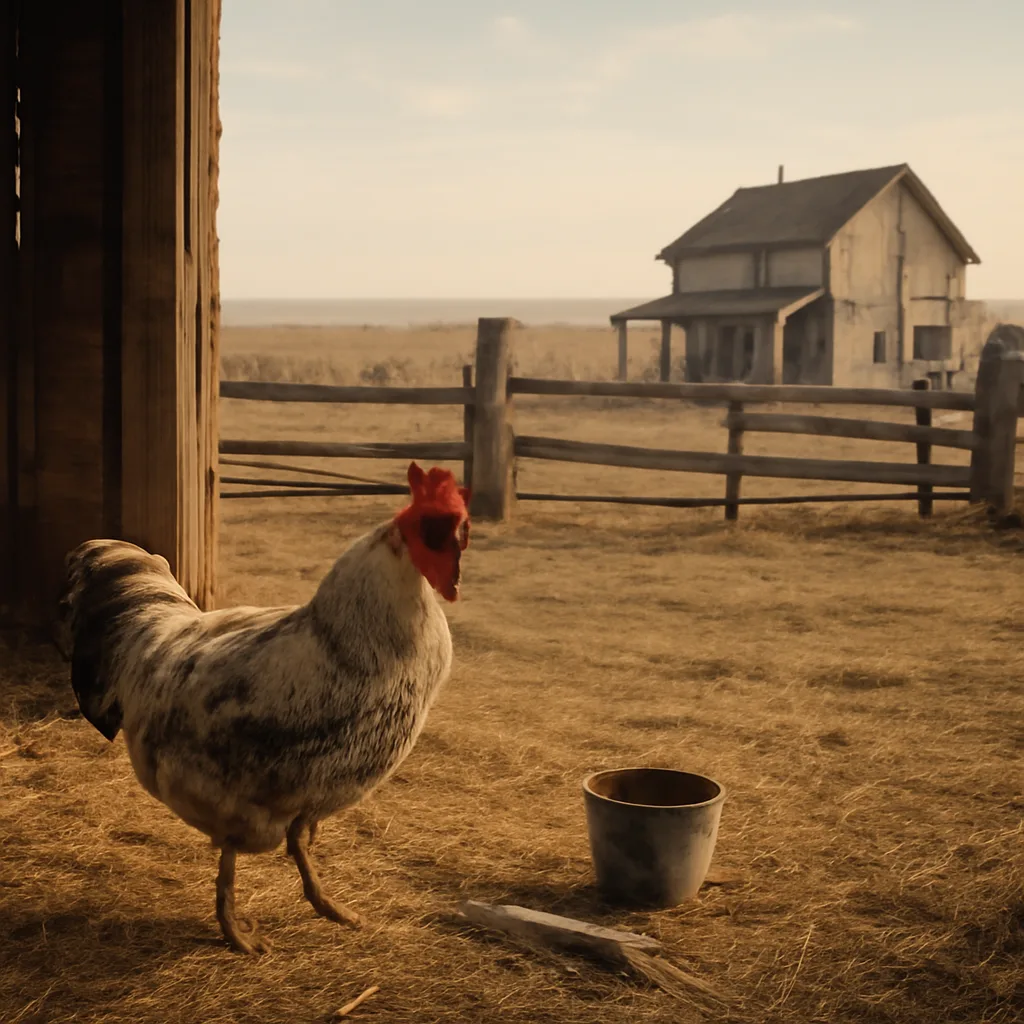
In September 1945 a farmed Wyandotte rooster known as Mike reportedly survived for 18 months after its head was cut off, becoming a widely reported oddity and draw for visitors before dying in 1947. The case was documented by newspapers and observers but remains a striking example of reflexive nervous system activity and unusual circumstances rather than proof of sustained cognition without a head
News of Mike spread quickly in local papers and then nationally. Reporters, photographers, and thousands of visitors came to see the headless rooster, and it was exhibited in sideshows and toured briefly. Mike was examined by veterinarians and others who noted that because the brain stem — which controls many automatic functions such as breathing, heart rate, and basic reflexes — had not been entirely destroyed, some coordinated responses could occur. Contemporary coverage emphasized the oddity and drew crowds; however, descriptions and measurements varied between accounts.
Mike’s survival for about 18 months (accounts place his death in March 1947) is striking but must be understood in physiological terms rather than as evidence of consciousness without a head. Birds have heavily distributed neural control: the brain stem and spinal circuits mediate many reflexive motor patterns. If enough of the brain stem remains intact and the trachea and major blood vessels are not catastrophically severed, basic life functions can continue for a time. In Mike’s case, human caretakers supplied food and water and protected him from infection and predators, compensating for functions the bird could no longer manage independently.
Contemporaneous press accounts are the primary documentary sources for Mike’s story. These reports drew on interviews with the Olsens, eyewitnesses, and occasional medical or veterinary comment. As with many highly unusual human-interest stories, details vary across reports: some emphasize the spectacle, others the care Mike received, and some include anecdotal or exaggerated claims about his abilities. Scientific discussion in reputable sources has used Mike’s case as an illustration of how reflexive and autonomic systems can sustain certain behaviors after major injury, rather than as a validated demonstration of higher mental functioning.
Mike’s death has competing descriptions in contemporary reports: a common version says he choked while being given a corn kernel and aspirated; another states he developed an infection or simply weakened and died. After his death, specimens and photographs circulated in the press. The story remained a memorable oddity of mid-20th-century American popular culture and has been cited in later discussions about neurophysiology and folklore.
What the Mike story reliably shows is the interaction of peculiar biological circumstances and human attention. A partly intact brain stem can support breaths, heartbeat, and reflexive movements; attentive caretakers can maintain nutrition and hygiene; and human interest can transform such a case into national news. At the same time, the case highlights the risks of sensational reporting: contemporary accounts sometimes blurred observation and conjecture, so unilateral claims about cognition or sustained awareness in Mike are not supported by the physiological evidence available.
Mike’s story endures as a documented historical anecdote rather than a controlled scientific case. It is useful historically for understanding mid-century media, public fascination with medical curiosities, and basic principles of vertebrate neurophysiology, while requiring cautious interpretation of the sensational claims that circulated at the time.