← Back
01/13/1898 • 3 views

The Power of the Pen: "J'accuse…!"
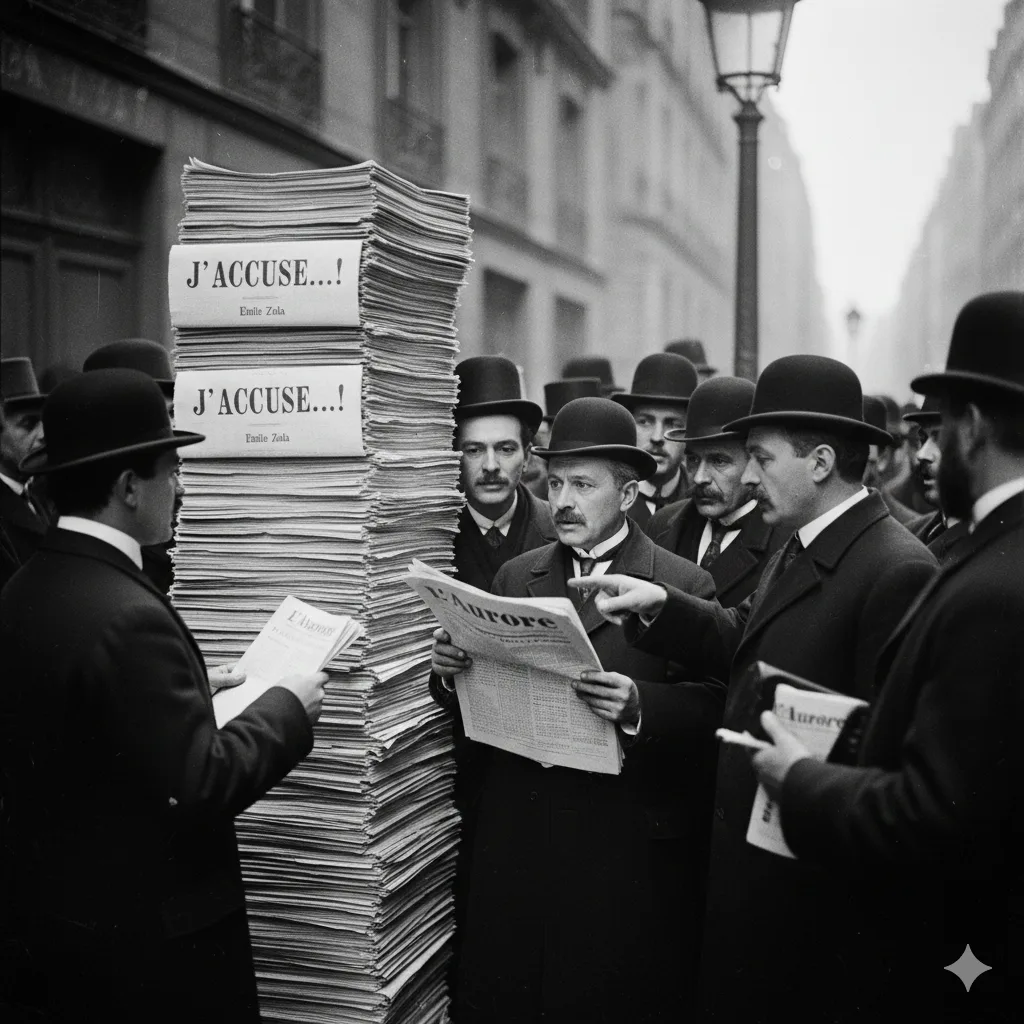
J'accuse

The publication of "J'accuse…!" on January 13, 1898, wasn't just a newspaper article; it was a political explosion that nearly tore France apart.


The publication of "J'accuse…!" on January 13, 1898, wasn't just a newspaper article; it was a political explosion that nearly tore France apart. It remains the gold standard for intellectual courage and the "power of the pen."
The Backstory: The Dreyfus Affair

To understand the letter, you have to understand the scandal. In 1894, Alfred Dreyfus, a Jewish captain in the French army, was falsely convicted of treason based on forged documents. He was stripped of his rank and sent to the brutal "Devil's Island" prison. Even when evidence emerged that the real spy was a man named Ferdinand Walsin Esterhazy, the French military covered it up to save face.
Zola’s High-Stakes Gamble

Émile Zola, the most famous novelist in France at the time, decided he couldn't stay silent. He wrote an open letter to the President of France, Félix Faure, and published it in the newspaper L'Aurore.

The Title: The massive headline "J’ACCUSE…!" (I Accuse…!) was chosen by his editor to ensure it couldn't be ignored on newsstands.

The Content: Zola systematically named names—listing generals, handwriting experts, and War Office officials—accusing them of judicial murder, anti-Semitism, and a massive cover-up.

The Strategy: Zola intentionally broke the law. By accusing officials of libel, he forced the government to sue him. This moved the debate from a closed military court to a public courtroom where the evidence could finally be aired.

The Consequences

The letter split France into two warring camps: the Dreyfusards (who fought for justice and individual rights) and the Anti-Dreyfusards (who valued the "honor" of the army and the Church above all else).

For Zola: He was found guilty of libel, sentenced to a year in prison, and forced to flee to England to avoid jail.

For Dreyfus: The letter's impact was so great that it eventually led to Dreyfus being granted a new trial and, years later, a full pardon and reinstatement in the army.

For History: It established the modern role of the "intellectual"—the person of letters who uses their fame to influence politics and fight for human rights.

Share this

Email Share on X Facebook Reddit

Did this surprise you?