
← Back
09/21/1993 • 6 views

Yeltsin Orders Shelling of Moscow Parliament in 1993 Constitutional Crisis
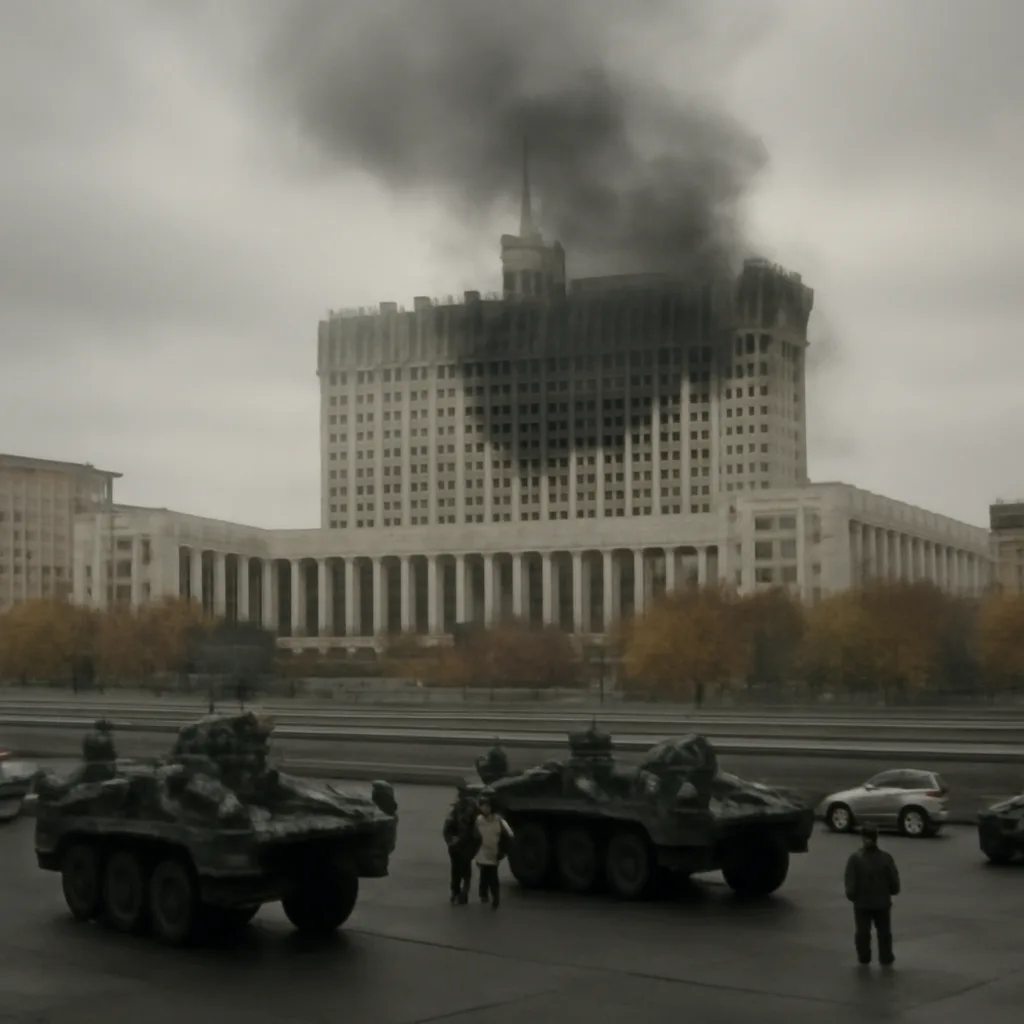
Armored vehicles and soldiers near the Russian White House (parliament building) in central Moscow during the 1993 constitutional crisis; smoke and damaged facade visible.

On September 21, 1993, Russian President Boris Yeltsin ordered the shelling of the Russian White House (parliament building) after a standoff with hard-line legislators during a constitutional crisis that escalated into armed confrontation and deaths in central Moscow.


Background: In 1993 Russia faced a political impasse between President Boris Yeltsin and the Congress of People's Deputies and its Supreme Soviet, which resisted Yeltsin's market reforms and his 1992–93 attempts to consolidate presidential authority. Throughout 1992–93 tensions intensified over the pace and social cost of economic reforms, the balance of powers under the Soviet-era 1978 constitution, and disputes over appointments and legislation.

Crisis escalation: On September 21, 1993, Yeltsin issued Decree No. 1400, dissolving the Congress of People's Deputies and the Supreme Soviet and calling new parliamentary elections and a referendum on a new constitution. The decree was widely viewed by opponents as unconstitutional under the 1978 constitution. Parliamentarians rejected the decree, declared Yeltsin removed from office, and appointed Vice President Aleksandr Rutskoy acting president. Supporters of parliament occupied the White House (the parliament building) and other positions in central Moscow. Street demonstrations and confrontations between pro- and anti-Yeltsin groups, including armed detachments and elements of the security forces with divided loyalties, followed.

The order to use force: Over the next days standoff hardened. On September 21–22, after negotiations failed and following an attempt by armed parliamentary supporters to seize television facilities and parts of Moscow, Yeltsin authorized the use of military force to restore order. Tanks and armored personnel carriers of the Russian military were deployed to central Moscow. On the morning of October 3 (by some accounts late on October 3 into October 4), units of the Ministry of Defense and Interior forces opened fire on the White House; a tank reportedly fired at the building, creating a breach and igniting fires.

Casualties and aftermath: The shelling and subsequent storming of the White House resulted in dozens to over a hundred deaths and hundreds of wounded—precise casualty figures remain disputed. Hundreds of participants and supporters of the parliament were arrested. The confrontation effectively ended organized parliamentary resistance. Yeltsin consolidated power and pushed through a new constitution in a December 1993 referendum that significantly expanded presidential authority and replaced the Soviet-era constitutional framework with a new one creating a bicameral Federal Assembly.

Key uncertainties and disputes: Exact casualty figures and the chain of command for specific units involved remain subjects of debate among historians, journalists, and investigators. There is disagreement about the extent to which various security services and political actors supported or opposed Yeltsin at different moments. The legality of Yeltsin's initial decree was widely contested at the time and remains a focal point for differing legal and historical interpretations.

Significance: The October 1993 events marked a decisive and violent turning point in post-Soviet Russian politics. They resolved the immediate institutional confrontation in favor of a stronger presidency but left a legacy of polarized politics, questions about the rule of law, and the use of force in settling political disputes. The crisis shaped Russia's constitutional order and political trajectory through the 1990s and beyond.

Share this

Email Share on X Facebook Reddit

Did this surprise you?