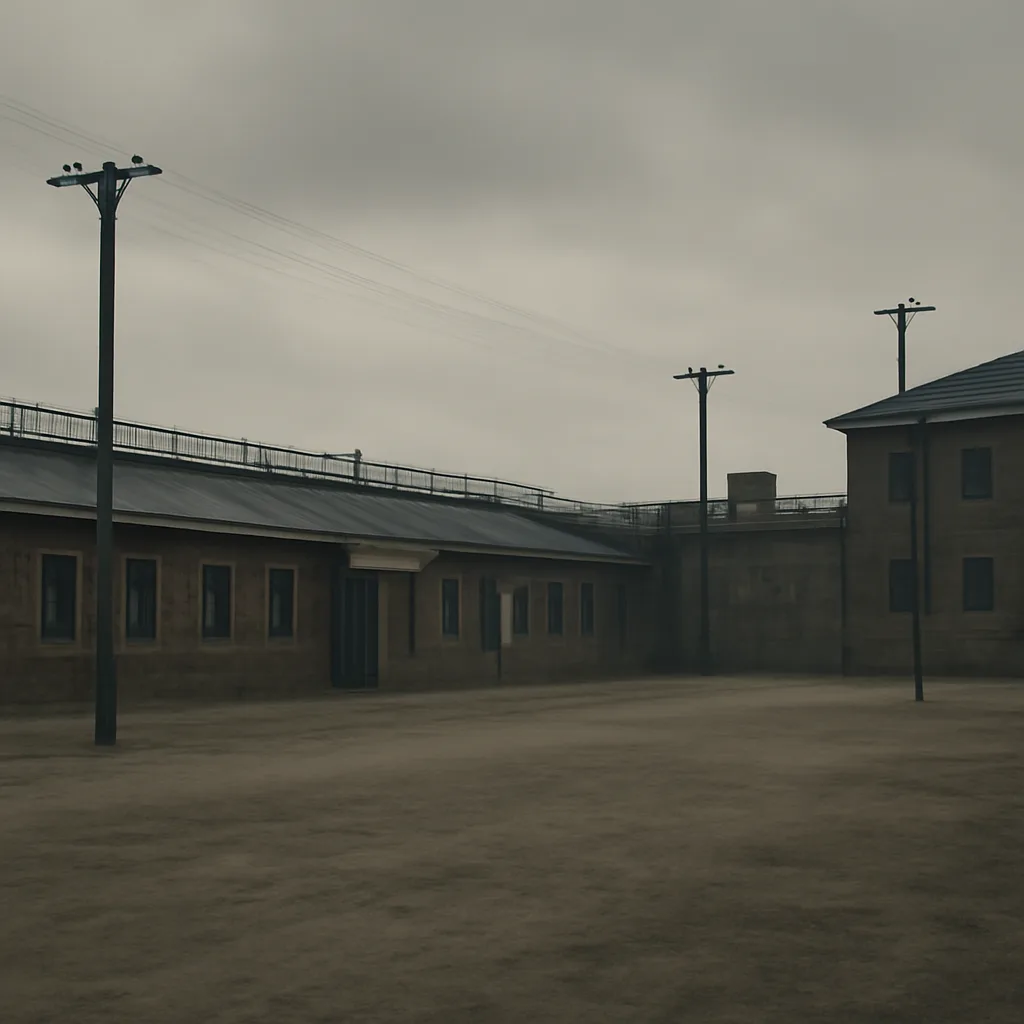
America's First Use of a Gas Chamber Execution, 1924
On February 8, 1924, the United States carried out its first execution by lethal gas at Nevada State Prison, a method introduced amid debates over humane capital punishment. The execution of Gee Jon marked a controversial shift in penal technology and racial tensions in early 20th-century America.
On February 8, 1924, Nevada conducted the first execution by lethal gas in the United States at Nevada State Prison in Carson City. The inmate executed was Gee Jon (also reported as Gee Jon or Gee Jon Wong), a Chinese immigrant convicted of murder during a 1921 robbery in Winnemucca, Nevada. Nevada prison officials and state legislators had sought an alternative to hanging and the electric chair amid concerns about botched executions and notions of a more “humane” method; the gas chamber was proposed and authorized in state law in 1921 and constructed at the prison for this purpose.
The execution process reflected both experimental penal technology and racialized aspects of early 20th-century American justice. Authorities isolated Gee Jon in a specially built airtight cell; sulfuric acid was used to generate lethal hydrogen cyanide gas when dropped onto potassium cyanide, producing a vapor intended to cause death by asphyxiation. Contemporary reports indicate that the process was chaotic: difficulties with the chemical reaction and with securing the inmate prolonged the ordeal. Some witnesses reported signs of struggle and distress before death, fueling public debate about whether gas was indeed more humane than existing methods.
Nevada’s adoption of lethal gas followed decades of penal reform discussions in the United States and was influenced in part by earlier proposals and experiments elsewhere, including in Europe. The Nevada execution set a precedent: other states subsequently considered and, in some cases, adopted gas chambers as an alternative to hanging or electrocution during the 1920s and 1930s. Over time, the gas chamber became associated with modern penal technology, but also with controversies about suffering, the spectacle of state killing, and the unequal application of capital punishment.
Historical accounts underscore uncertainty and disagreement about specific procedural details and eyewitness testimony from the 1924 execution. Reporting at the time varied, and later historians have relied on contemporary newspaper accounts, prison records, and legislative documents to reconstruct events. Scholars note that Gee Jon’s ethnicity and the broader context of anti-Chinese sentiment in the American West shaped both public perceptions and legal treatment.
The legacy of the 1924 gas-chamber execution is complex. While proponents at the time framed the method as a scientific improvement intended to reduce suffering, opponents highlighted the risks of a painful death and the potential for botched procedures. By the late 20th century, lethal gas had largely fallen out of favor in the United States as lethal injection became the predominant method; some states that retained gas chambers used them as a secondary option. The 1924 event remains historically significant as the first American use of chemical means in capital punishment and as an episode that illuminates intersections of technology, law, and social attitudes in the era.