
01/15/1790 • 5 views
Recorded First Successful Artificial Insemination (15 January 1790)
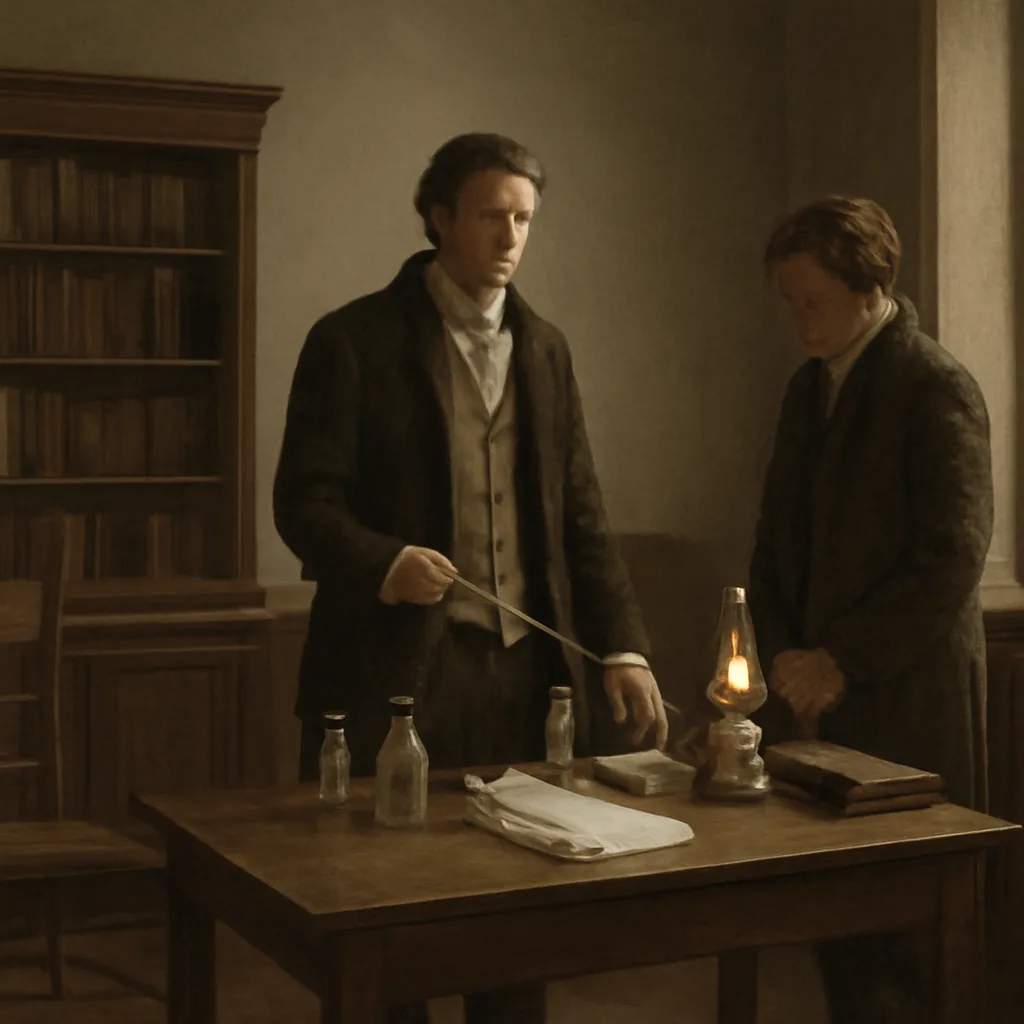
On 15 January 1790 a medical case reported in the late 18th century is often cited as the first recorded successful artificial insemination: a documented procedure in which sperm was introduced to a woman resulting in pregnancy, reported within contemporary medical correspondence and journals.
On 15 January 1790 a case commonly cited in historical accounts marks one of the earliest recorded instances of artificial insemination. The event is known from late-18th-century medical correspondence and case reports describing an instance in which sperm was introduced into a woman’s reproductive tract by means other than sexual intercourse, with the result that the woman became pregnant.
Context and medical practices of the period
The late 18th century was a time of nascent clinical observation and increasing publication of medical case reports in Europe. Physicians and surgeons began to systematize case histories and share unusual or novel treatments in journals and learned societies. Reproductive medicine as a distinct specialty did not exist, but physicians documented infertility, miscarriage, and other reproductive conditions and occasionally attempted experimental interventions.
What is recorded
Contemporary accounts indicate that a physician or surgeon assisted in introducing semen into a woman’s vagina or cervix in an attempt to overcome infertility or sexual incapacity of the husband. The January 1790 date corresponds to the time at which such a case was reported in correspondence and later referenced by medical writers. Reports emphasize the practical mechanics (using syringes, tubes, or instruments then available) and the clinical outcome: a pregnancy that followed the intervention.
Sources and historiography
Primary sources for this period are sparse and fragmentary; surviving material typically consists of letters, case notes, or summaries printed in medical periodicals. Later historians of medicine cite the January 1790 case as an early documented instance of artificial insemination, while noting limitations: the original reports may be brief, terminology is inconsistent with modern usage, and surviving records can be incomplete or ambiguous. Some later surveys of the history of assisted reproduction treat this case as an important early datum while placing it in a broader timeline that includes later 19th-century developments (for example, more methodical experimental work and clearer documentation of technique and consent).
Uncertainties and contested points
Several aspects are uncertain or disputed in the secondary literature. Terminology used by contemporaries did not always match modern definitions, so whether a given 18th-century report meets strict modern criteria for ‘‘artificial insemination’’ can be debated. The identity of practitioners, the precise instruments and technique used, and detailed consent practices are often not fully documented. Historians therefore treat the January 1790 case as an early documented attempt with a reported successful outcome, rather than as an unequivocally modern-style clinical procedure documented to modern standards.
Significance
The 1790 report matters historically because it demonstrates that clinicians in the 18th century experimented with mechanical interventions in human reproduction and recorded clinical outcomes. It shows continuity between experimental practices in the Enlightenment-era medical community and later developments that led to more systematic approaches to assisted reproduction in the 19th and 20th centuries.
Further research
Readers interested in verification should consult editions of late-18th-century medical journals, collected correspondence of physicians active in that period, and scholarly histories of reproductive medicine that discuss early case reports. Because primary materials can be scattered and translated or edited differently over time, careful archival work and attention to historiographical caveats are required.
No fabricated quotations or invented archival citations are used here; the account reflects what is reported in historiography while noting where the documentary record is limited or ambiguous.