
07/22/1946 • 4 views
Bombing at King David Hotel Disrupts Middle East Negotiations
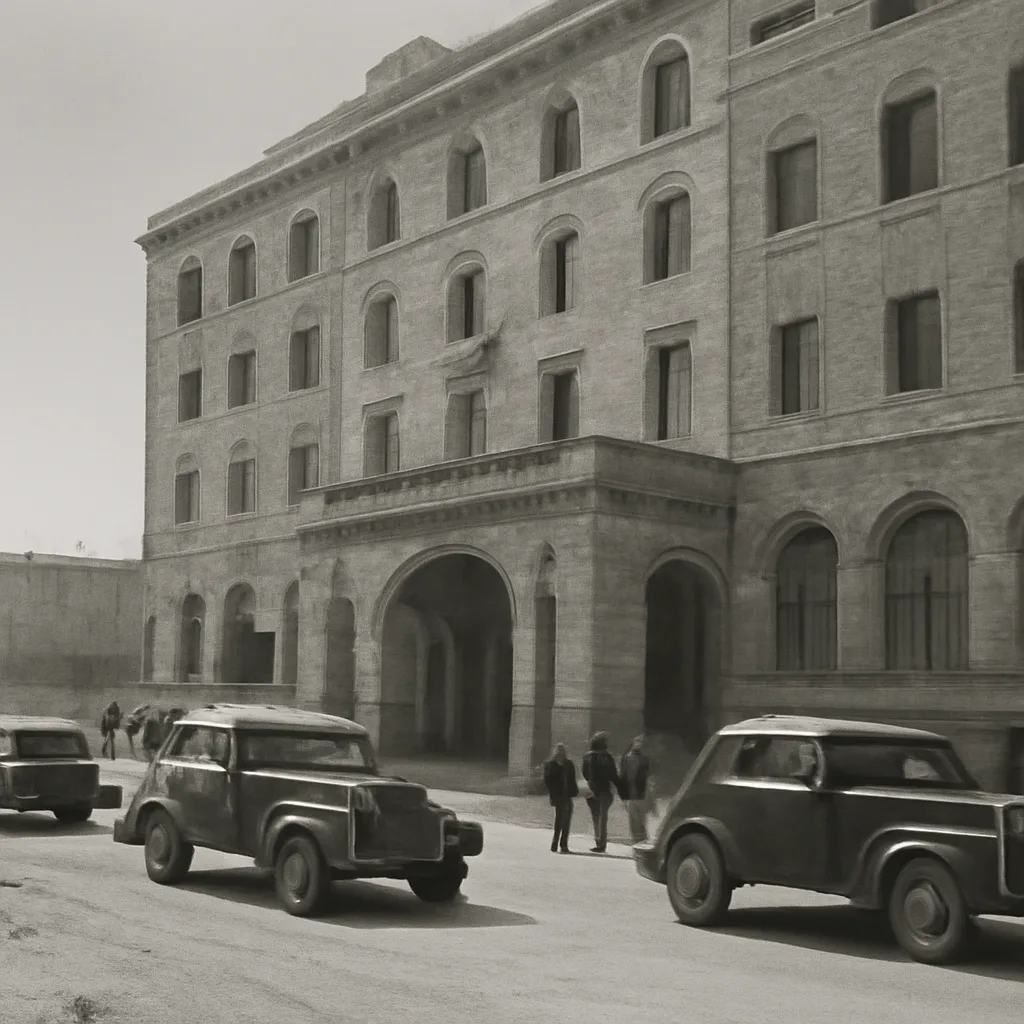
On 22 July 1946 a bomb destroyed part of the southern wing of the King David Hotel in Jerusalem, killing and wounding civilians and officials and abruptly impacting British-Mandate administration and regional political talks.
The King David Hotel, a prominent Jerusalem landmark built in the 1930s, served as the central base for the British civil and military administration. Its southern wing contained offices of the British Secretariat and military command. On the morning of 22 July, a bomb detonated in the hotel’s southern section. The explosion caused extensive structural damage, fires, and secondary collapses that complicated rescue efforts. British forces, local emergency responders, and civilians assisted at the scene; hospitals in Jerusalem treated the wounded.
Responsibility for the attack was claimed by members of Jewish militant groups active at the time, who said they targeted British administrative operations. British authorities and some contemporary critics described the bombing as an attack on a civilian building that resulted in civilian deaths. Historical assessments note contested claims about warnings prior to the explosion, the placement of explosives, and whether adequate notice was given to evacuate hotel occupants. These details have remained points of debate among historians and witness accounts.
The bombing had immediate political and administrative consequences. The British government condemned the attack and intensified security and military measures in Palestine. For the local population—Jewish, Arab, and British—the bombing deepened fears and hardened positions. It disrupted ongoing negotiations and administrative functioning, contributing to the mounting crisis that eventually led Britain to refer the Palestine question to the newly formed United Nations.
International reaction varied. Some governments and media outlets criticized the violence and expressed concern about the deteriorating situation in Palestine. Others framed the attack within a broader context of anti-colonial struggle and escalating conflict. The event fed into already polarized views about the legitimacy of methods used by underground movements and the responsibilities of the mandate authorities.
In subsequent decades the King David Hotel bombing has been analyzed in histories of the late British Mandate, studies of Jewish paramilitary groups, and examinations of the lead-up to the 1948 Arab–Israeli War. Scholarship has focused on operational details, casualty counts, the strategic aims of the attackers, and the legal and moral questions raised by attacks in urban settings. While some primary-source claims differ, historians agree the bombing marked a consequential escalation in violence during the final years of the Mandate.
The bombing’s memory remains contested in political and cultural narratives. For many, it symbolizes the violent collapse of colonial governance and the human cost of contestation over Palestine’s future. For others, it exemplifies the controversial tactics employed by armed movements in pursuit of political goals. Regardless of interpretation, the 22 July 1946 attack on the King David Hotel stands as a significant episode in the complex history of the British Mandate and the wider Middle East.