
← Back
07/22/1936 • 4 views

Athlete Collapses After Secretly Competing While Pregnant at 1936 Olympics
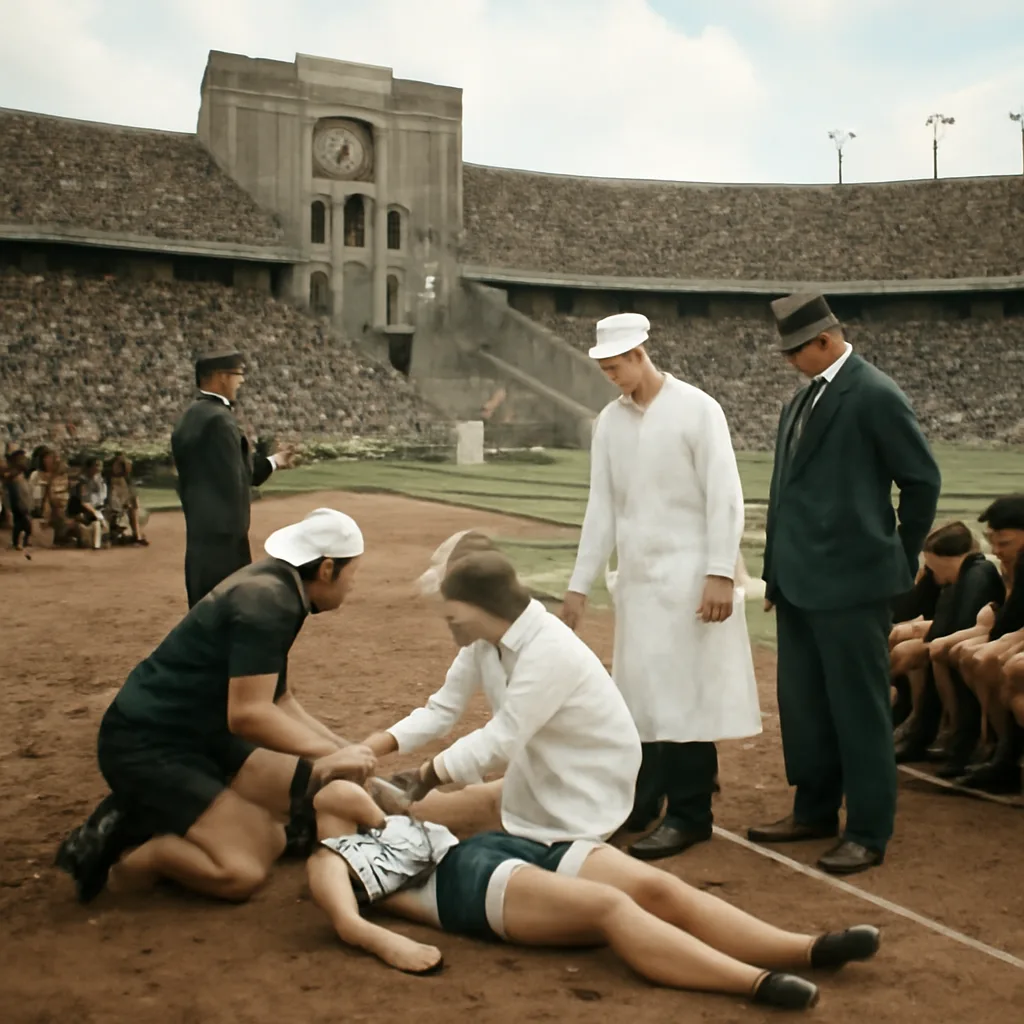
1930s Olympic track stadium with medical staff attending a collapsed female athlete on the sidelines, teammates nearby, and spectators in period dress.

At the 1936 Berlin Olympics on July 22, an athlete who had concealed her pregnancy collapsed after competing; contemporary press and medical reports noted exhaustion and the physical risks women faced when competing while pregnant, though some details remain disputed.


On July 22, 1936, during the Berlin Olympic Games, an athlete who had not disclosed that she was pregnant collapsed after taking part in a competition. Contemporary accounts emphasized extreme fatigue and medical attention at the venue. Coverage at the time reflected both concern for the competitor’s immediate health and broader debates about women’s participation in elite sport.

Context
The 1936 Olympic Games took place in an era when medical understanding of pregnancy and athletic exertion was limited and gendered assumptions influenced reporting and official responses. Women’s events were fewer than men’s, and athletes who became pregnant during training or competition often faced social stigma, sparse medical guidance, and pressure to conceal personal circumstances to avoid disqualification or social censure.

The incident
According to press reports from the day, the athlete completed her event and subsequently showed signs of collapse or fainting, prompting intervention by event medical staff and teammates. Reports attributed the collapse to exhaustion and the physical strain of competition while pregnant. Sources vary on the precise sequence: some accounts say she collapsed immediately after finishing; others say she became unsteady later while leaving the field. The athlete’s identity and the specifics of her pregnancy (how far along she was, whether it was known to team officials beforehand) are either disputed in sources or not consistently recorded in surviving contemporary accounts.

Medical response and aftermath
Medical attendants at the venue provided immediate care and transported the athlete to an infirmary. Contemporary observers noted symptoms consistent with fainting from exertion—pallor, weakness, rapid attention from staff—and there were no widely reported long-term medical consequences in the most accessible contemporary accounts. Because documentation from the period is uneven and reporting practices varied by country and newspaper, later historical summaries caution that some details were sensationalized or omitted depending on the source.

Public reaction and significance
The incident fed into broader conversations at the time about the appropriateness and safety of women’s athletic competition, and it was used by some commentators to argue both for protective restrictions and, conversely, for better medical support and training for female athletes. Historians note that such episodes illustrated the lack of clear medical guidance on pregnancy and sport in the 1930s and helped spur gradual changes in how athletic organizations, coaches, and medical staff approached women’s health in competitive settings.

Limitations and sources
Surviving primary sources include contemporary newspaper dispatches and memoirs from athletes and officials; these sources sometimes conflict on particulars such as timing, identity, and medical detail. No authoritative, single medical report with full clinical detail is universally cited across accounts. Because key specifics are variably reported, this summary presents the commonly attested facts while noting areas where the record is incomplete or disputed.

Legacy
The episode remains a cited example in histories of women’s sport of the risks athletes faced when medical knowledge and institutional support lagged behind competitive demands. It also highlights how social pressures could lead athletes to conceal pregnancies, with potential health consequences. Over subsequent decades, sports medicine developed clearer guidelines for pregnancy and exercise, and modern frameworks emphasize individualized medical advice, monitoring, and informed choices for pregnant athletes.

Share this

Email Share on X Facebook Reddit

Did this surprise you?