
09/17/1967 • 5 views
China’s 1967 Nuclear Test Intensifies Global Arms Competition
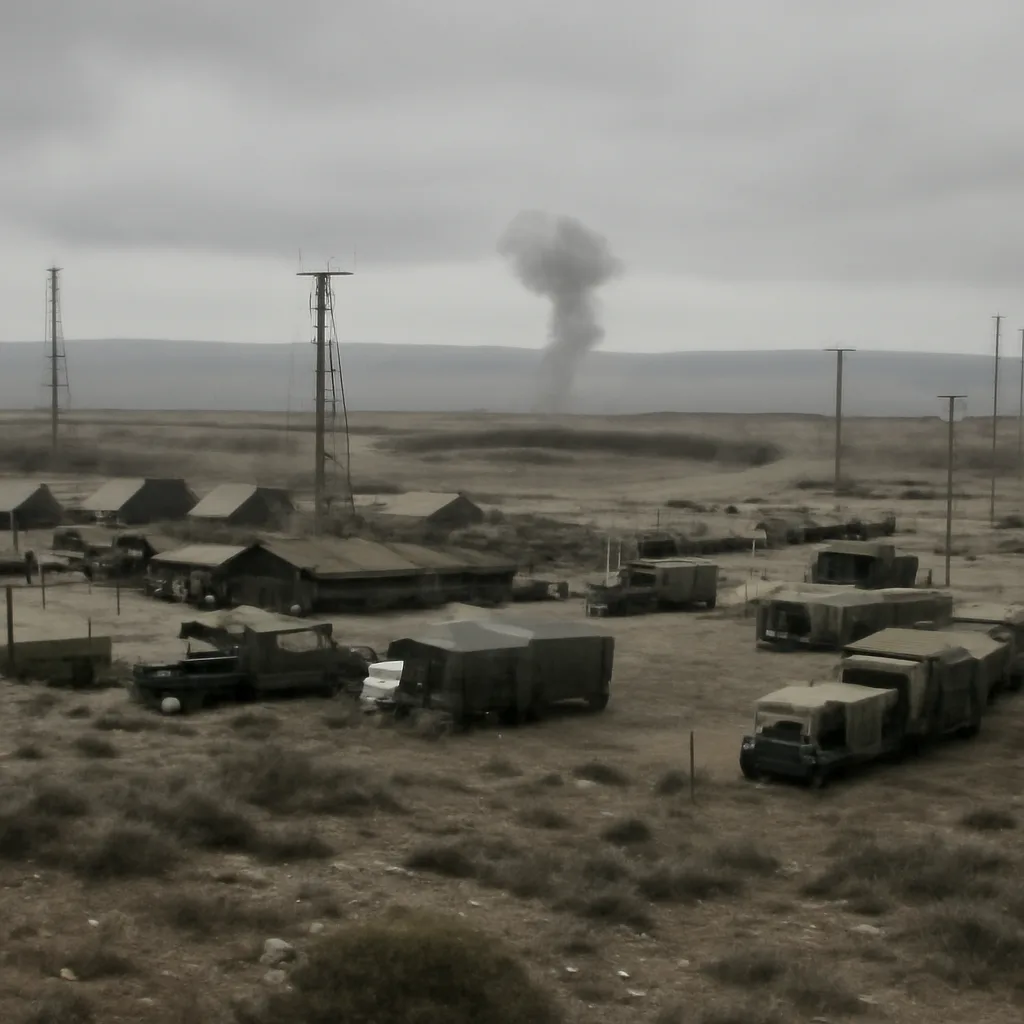
On September 17, 1967, the People’s Republic of China conducted a nuclear detonation that heightened Cold War tensions and accelerated nuclear arms dynamics among major powers and regional actors.
Context
China entered the nuclear club relatively late compared with the United States and the Soviet Union, conducting its first atomic test on October 16, 1964 (codenamed “596”) and later announcing a hydrogen-bomb capability with a test on June 17, 1967. By 1967, China’s leadership framed nuclear weapons as essential to national security, deterrence against perceived superpower threats, and as a symbol of great-power status. Domestically, the tests occurred during the Cultural Revolution (1966–1976), a period of intense political upheaval that complicated public reporting and international diplomatic responses.
Immediate international reaction
Western governments and regional neighbors viewed Chinese tests with concern. For the United States and NATO allies, China’s nuclear developments added another variable to an already tense strategic environment dominated by U.S.–Soviet rivalry. China’s tests prompted allied reviews of regional force posture, missile defense planning, and contingency coordination in East Asia. The Soviet Union, despite ideological alignment on some issues, had a fraught relationship with China by the late 1960s; Beijing’s tests further complicated bilateral tensions.
Regional implications
China’s demonstrated nuclear capability reverberated across East and Southeast Asia. Japan, South Korea, Taiwan, and other regional actors assessed the implications for their security policies. Some governments increased emphasis on U.S. security guarantees, while others debated arms control and nonproliferation approaches. The tests also contributed to anxieties in India and Pakistan, where long-term regional rivalries would later shape their own nuclear trajectories.
Impact on arms race and nonproliferation
China’s continuing weapons development influenced both nuclear arms dynamics and the international nonproliferation regime. On one hand, Beijing’s tests underscored the limits of efforts to confine nuclear capability to a small set of states; on the other, they bolstered diplomatic momentum for arms control among other powers concerned about further proliferation. The Partial Test Ban Treaty (1963) had already prohibited atmospheric testing by major powers, and later treaties and export controls would seek to manage the spread of nuclear technology—though China was not a party to all such agreements in the 1960s.
Longer-term consequences
China’s nuclear program continued to evolve after 1967, with expanded delivery systems and command-and-control developments over subsequent decades. The tests of the 1960s established a baseline for China’s deterrent posture that persisted through the Cold War and into the post-Cold War era. They also played a role in shaping U.S. and Soviet approaches to arms control negotiations, regional alliance planning, and strategic doctrines that accounted for an additional nuclear-armed state in Asia.
Historical assessment and uncertainties
Historical records from the period reflect state announcements, intelligence assessments, and contemporary diplomatic communications, but certain technical and operational details remain subject to scholarly analysis and classified archives. The political context of the Cultural Revolution affected transparency, complicating full reconstruction of internal Chinese deliberations from open-source material. Scholars continue to analyze declassified documents from multiple governments to refine understanding of how specific tests influenced policy choices.
Conclusion
The nuclear detonation on September 17, 1967, was a consequential event that heightened Cold War tensions and influenced both regional security calculations and the wider arms race. It reinforced China’s role as a nuclear power and contributed to subsequent strategic, diplomatic, and nonproliferation developments that shaped global security in the late 20th century.