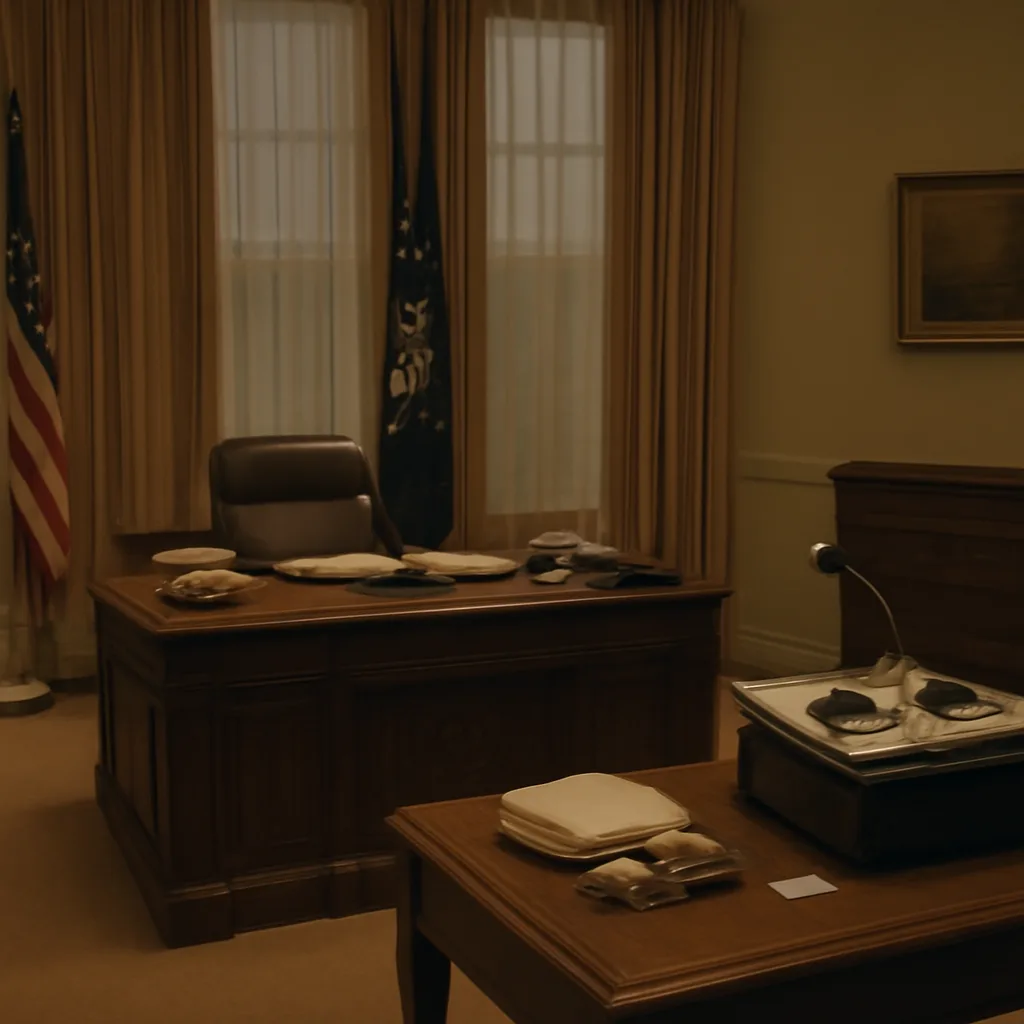
Revelation of Nixon White House Tapes Deepens Watergate Crisis
On September 17, 1973, President Nixon disclosed the existence of a secret White House taping system, intensifying congressional and public scrutiny of the Watergate affair and triggering legal and political battles over executive privilege and access to evidence.
On September 17, 1973, President Richard Nixon informed the nation that a secret recording system had captured conversations in the Oval Office and other White House locations. The disclosure came amid an expanding investigation into the June 1972 break-in at the Democratic National Committee headquarters in the Watergate complex and subsequent efforts by administration officials to impede the inquiry.
The tapes’ revelation marked a turning point in the Watergate saga. Prior to this announcement, Senate and House investigators, as well as special prosecutors, had gathered testimony and documents suggesting high-level involvement in the break-in and subsequent cover-up, but definitive contemporaneous records of presidential conversations were not publicly known. The existence of verbatim recordings raised the prospect of incontrovertible evidence about who knew what, and when.
Immediate reactions were intense and varied. Congressional leaders emphasized the need to obtain the recordings for their inquiries. Legal advisers for the White House asserted claims of executive privilege and confidentiality, arguing that some taped conversations could not be disclosed without harming presidential decision-making and national security. Critics countered that if the tapes contained evidence of wrongdoing, they would be indispensable to ensuring accountability.
The disclosure set off a protracted legal and political contest over access to the tapes. Special prosecutor Archibald Cox and Senate investigators sought the recordings; the White House resisted, citing privilege and the institutional separation of powers. The dispute ultimately moved through the courts and became central to debates about the limits of presidential confidentiality and the reach of judicial power in enforcing subpoenas for executive-branch materials.
Beyond the immediate legal implications, the tapes’ existence altered public perception of the presidency. Polls and news coverage reflected growing concern about potential misuse of executive power and about obstructing justice. For many Americans, the possibility that recorded conversations might reveal direct presidential involvement in the cover-up intensified calls for oversight, transparency, and, for some, impeachment proceedings.
The struggle over the tapes also produced consequential institutional tensions. Congress asserted its investigatory prerogatives, while the executive branch defended long-standing claims to protect internal communications. The courts were drawn into resolving the competing constitutional claims, setting precedents about judicial review of executive privilege that would shape future clashes between branches of government.
In the months following September 1973, the fight over the tapes escalated, culminating in dramatic episodes—most notably the “Saturday Night Massacre” in October 1973, when Nixon ordered the firing of the special prosecutor after demands for the tapes were renewed. The confrontation eventually reached the Supreme Court, which in United States v. Nixon (1974) rejected an absolute executive privilege claim in the context of a criminal subpoena for tapes, ordering their release to the special prosecutor.
The tapes ultimately provided direct evidence that influenced impeachment proceedings and public understanding of the Watergate cover-up. Portions of the recordings revealed conversations implicating White House figures and, in certain instances, President Nixon’s awareness of efforts to obstruct the investigation. The disclosures contributed to Nixon’s political isolation and to his decision to resign the presidency on August 8, 1974.
Historically, the revelation of the White House taping system on September 17, 1973, is viewed as a pivotal moment in the Watergate scandal: it transformed investigative efforts by introducing recorded contemporaneous evidence, intensified legal battles over executive privilege, and reshaped public and institutional expectations about presidential accountability.
Notes on sources and certainty: This summary is based on the established historical record of the Watergate investigation, the public announcement of the taping system in September 1973, subsequent legal disputes, United States v. Nixon (1974), and Nixon’s resignation in 1974. Where interpretations of motives or private deliberations exist, historians may debate emphasis and nuance.