
06/23/1939 • 4 views
First public demonstration of night-vision technology, June 23, 1939
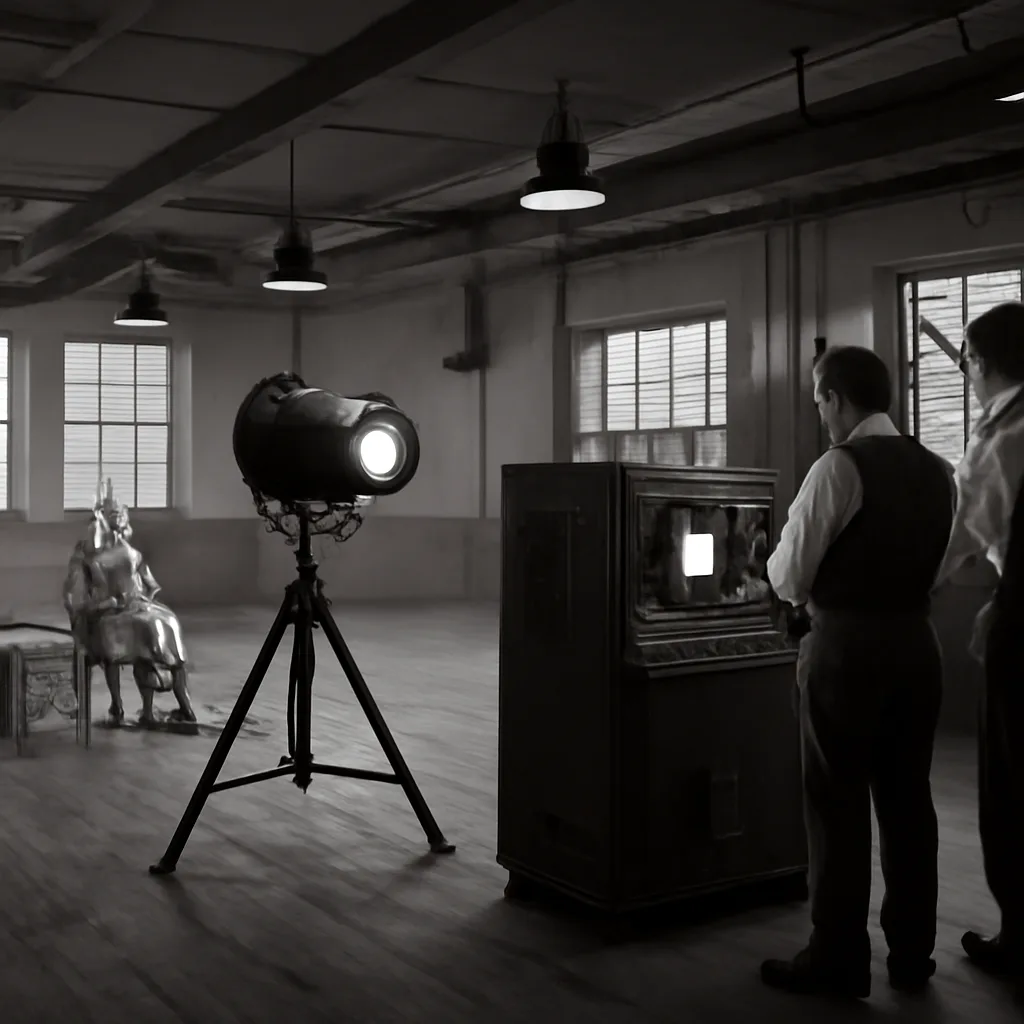
On June 23, 1939, inventors publicly demonstrated early active infrared night-vision equipment that used infrared searchlights and image converters, marking one of the first recorded public displays of night-vision technology.
Background
Interest in seeing by infrared wavelengths dated back to the late 19th and early 20th centuries as researchers explored the electromagnetic spectrum beyond visible light. By the 1930s, laboratories in several countries had developed practical infrared emitters and detectors. Two technical approaches dominated early work: active systems that projected infrared light onto a scene and detected its reflection, and passive systems that amplified faint visible or near-infrared light.
The 1939 demonstration
Contemporary accounts describe the June 23, 1939 demonstration as using an active infrared arrangement—an infrared searchlight paired with an image-converting receiver that rendered otherwise dark scenes visible to observers. The apparatus typically included an infrared lamp or incandescent emitter fitted with filters, optics to collimate the beam, and a receiver using photoelectric cells or early image-intensifier tubes to produce a visible display on a screen or eyepiece. Those attending could observe objects and people illuminated only by the invisible infrared beam, illustrating the potential for nocturnal observation and short-range night operations.
Significance and context
The demonstration was notable for being public and for drawing attention from both civilian technologists and military representatives interested in reconnaissance and nocturnal navigation. While earlier laboratory experiments and classified trials had already taken place, the June 1939 event helped introduce the capabilities and limitations of active infrared systems to a broader audience. These systems were limited by the range and power of available infrared emitters, the sensitivity and durability of detectors, and the bulky, power-hungry components required.
Subsequent developments
World War II accelerated development and deployment of night-vision technology. Both active infrared systems (using searchlights and converter receivers) and passive image-intensifier technologies advanced rapidly during the war years and afterward. Postwar research produced more sensitive image intensifiers and, later, thermal imaging systems that detect mid- and long-wave infrared radiation without the need for an external light source.
Uncertainties and sources
Contemporary press reports and technical journals from the late 1930s describe public and semi-public demonstrations of infrared viewing equipment, but details such as the exact venue, organizers, and participants may vary among accounts. Some demonstrations were organized by private firms, research institutes, or military-affiliated laboratories; records are often fragmented or reported differently in period newspapers and trade publications. For this summary, the date June 23, 1939 is used as the known public demonstration date, but the precise institutional context and technical specifications reported at the time can differ between sources.