
← Back
06/23/1912 • 5 views

Early roller coaster tragedy at New Jersey trolley park, June 23, 1912
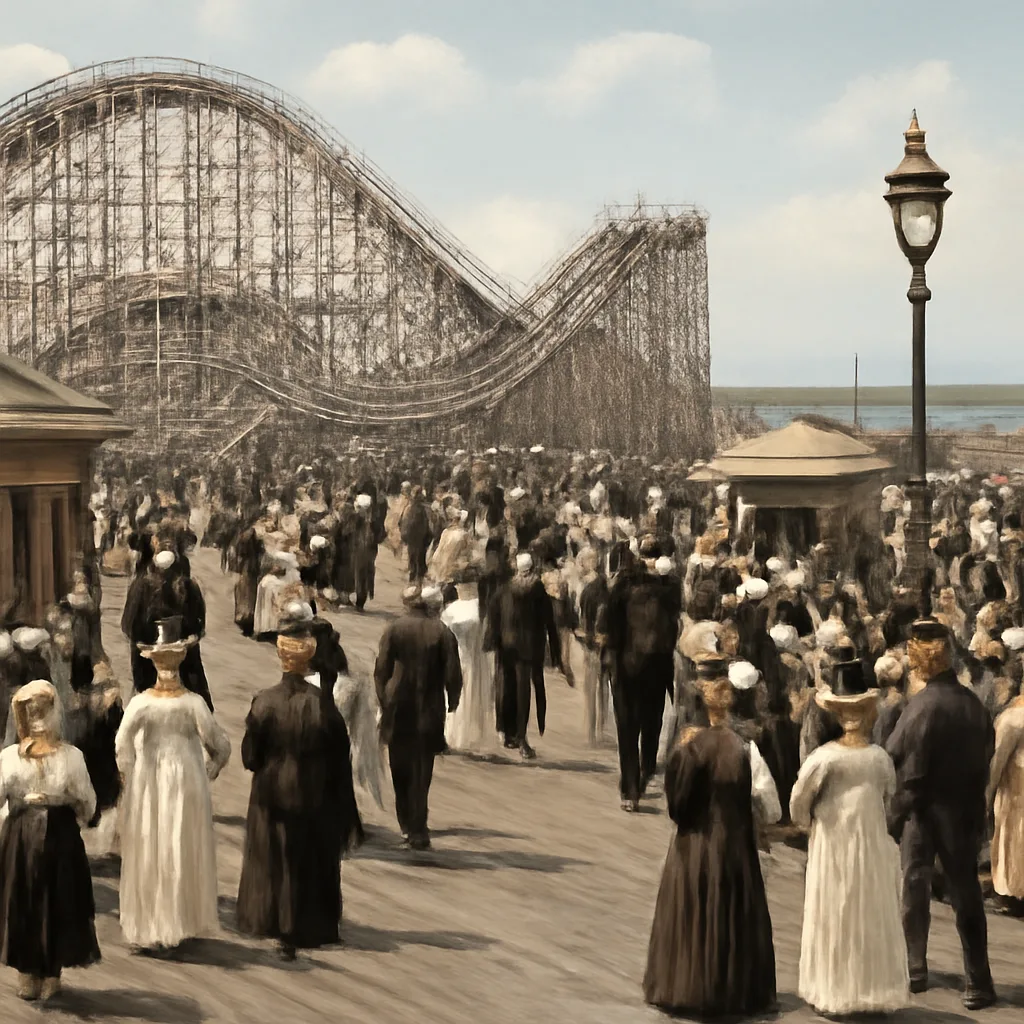
Early 20th-century wooden roller coaster structure at a coastal trolley park with open cars on elevated track and crowds on nearby boardwalks.

On June 23, 1912, a derailment on the Giant Dipper-style roller coaster at Asbury Park's nearby trolley park (later known as the Seaside Heights/Steeplechase area) killed four riders and injured several others, prompting scrutiny of early amusement ride design and safety practices.


On June 23, 1912, a deadly accident on a large wooden amusement ride in New Jersey highlighted the hazards of early thrill attractions and became one of the first widely reported modern amusement park disasters. Contemporary newspaper accounts describe a derailment that sent a coaster train from its track, killing four people and injuring a number of others. The incident occurred during a period when ‘‘modern’’ amusement parks—featuring electrically powered roller coasters, scenic railways, and other mechanically driven attractions—were proliferating along American seaside and trolley-park circuits.

The ride involved was a wooden out-and-back coaster typical of the era: elevated track, strapped or bench seating in open cars, and relatively rudimentary braking and restraint systems compared with later standards. Exact technical causes reported at the time included a suspected structural failure or a wheel/axle malfunction, though contemporary investigations and later summaries sometimes disagree on the single point of failure. Local coroners and newspaper reporters questioned maintenance practices, the adequacy of inspections, and the qualifications of ride operators.

Victims included men, women and children who had been enjoying a summer outing. Newspapers published lists of the dead and injured and described chaotic rescue efforts by other park-goers and first responders. Hospitals and emergency physicians of the period treated numerous fractures, lacerations and internal injuries; some wounded were reported in serious condition. The fatalities and injuries received wide coverage in regional papers, contributing to public debate about the safety of mechanical amusements.

The accident occurred amid a larger national conversation about amusement-park regulation. In the early 20th century, ride design evolved rapidly but oversight lagged: municipalities and states varied widely in inspection regimes, and there were few standardized engineering codes for coasters or passenger restraints. High-profile accidents such as the 1912 derailment helped galvanize calls for stricter inspections, better recordkeeping, and technical standards for construction and maintenance. In some jurisdictions, local authorities enacted more rigorous permitting and inspection rules for amusement rides in the years that followed.

Historians note that attributing the accident to a single factor is complicated by the quality and consistency of surviving sources. Contemporary reports sometimes conflated different parks and rides; later retellings occasionally misidentify the exact park or the number of casualties. Where records are clear, however, the June 1912 event stands out as an early example of a modern mechanical amusement ride causing multiple fatalities and spurring changes in public expectations around safety.

The episode also influenced amusement-park operators. Many companies increased maintenance routines, improved track and car construction, and adopted rudimentary safety measures—stronger couplings, more reliable wheel assemblies, and better-trained attendants. These changes unfolded unevenly and incrementally; comprehensive, codified safety standards for roller coasters and other major rides would not become widespread until several decades later.

While this 1912 disaster is sometimes overshadowed by later, better-documented accidents, it remains significant in the history of leisure and technology. It illustrates the intersection of rapid technological innovation, mass entertainment, and the slow development of regulatory frameworks—an intersection that would continue to shape amusement-park design and public policy throughout the 20th century.

Share this

Email Share on X Facebook Reddit

Did this surprise you?