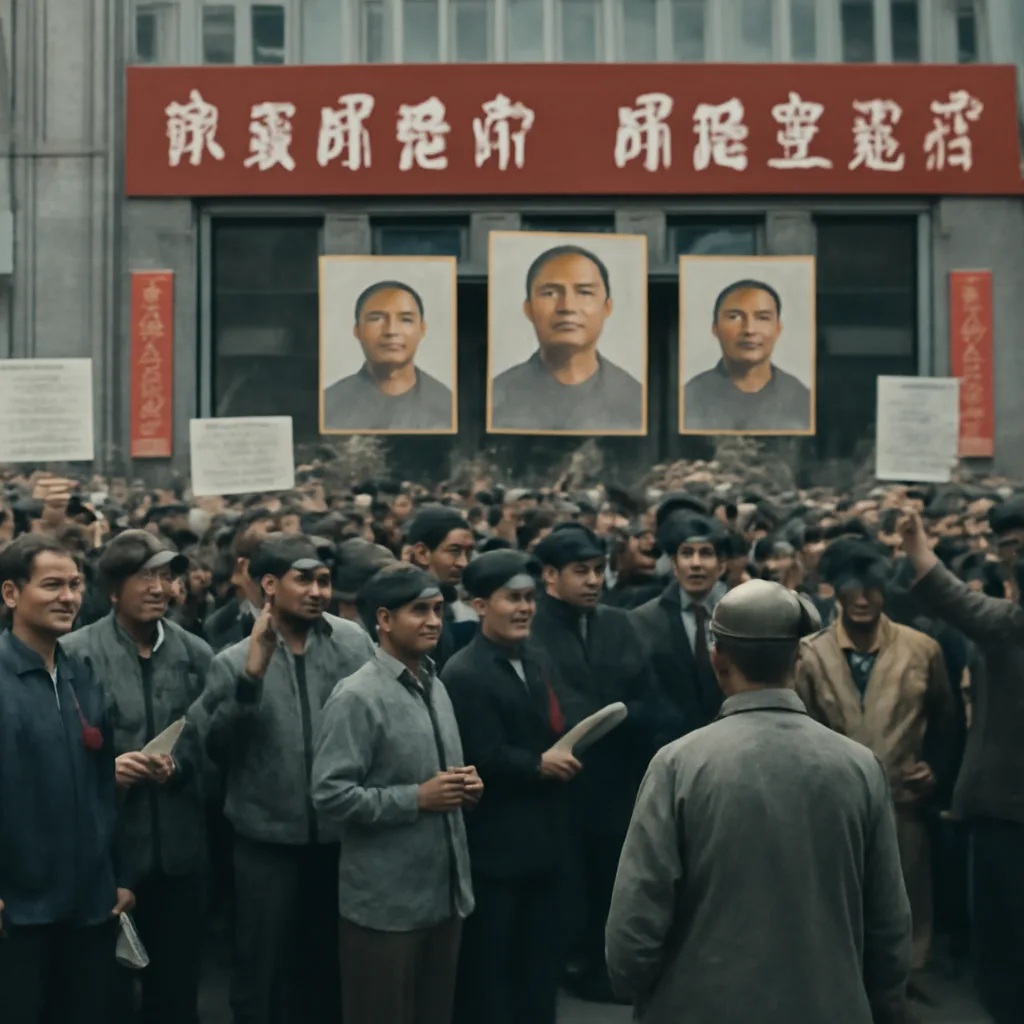
Communist Party Announces Major Purge amid Cultural Revolution Mobilization
On October 15, 1966, Chinese Communist Party leadership announced a broad political purge tied to the Cultural Revolution, targeting officials, intellectuals and perceived 'revisionists' and accelerating mass campaigns to remove entrenched party cadres.
On October 15, 1966, the Chinese Communist Party (CCP) announced a sweeping political purge linked to the Cultural Revolution, the mass political movement launched earlier that year by Mao Zedong. The announcement formalized a phase in which party and state institutions were subjected to intensified criticism, struggle sessions, removals from office and public denunciations aimed at those branded as 'capitalist roaders,' 'bourgeois elements' or 'revisionists.'
Background: By 1966 Mao and his allies sought to reconfigure political authority within the CCP and to mobilize youth and working-class supporters against established party leadership and intellectuals perceived to have deviated from revolutionary orthodoxy. The Cultural Revolution had been signaled in public and internal party communications through the spring and summer of 1966, but the October announcements marked a sharper turn toward organized campaigns of purging and mass participation.
Nature of the purge: The purge targeted multiple categories of personnel across party, government, educational and cultural institutions. Local party secretaries, veteran cadres, university professors, writers and administrators were publicly criticized, removed from positions, or subjected to investigative committees. Campaigns combined top-down directives with grassroots actions led by newly mobilized Red Guard groups, work units (danwei), and revolutionary committees. Methods included public struggle sessions, denunciation rallies, confiscation of property, forced labor or reassignments, and in some cases detention. The scale and intensity varied by locality and over time.
Political aims and consequences: The purge aimed both to displace officials associated with perceived ideological deviation and to consolidate Mao-aligned authority within the party. It weakened established bureaucratic checks and disrupted governance across provinces and cities. Educational institutions were closed or repurposed in many areas as students formed Red Guard organizations and joined political campaigns. The purge contributed to widespread social turmoil, disruptions to economic production and education, and the breakdown of normal administrative processes. It also fostered factional struggles within the CCP as competing groups sought control of local and national organs.
Social impact: For many individuals labeled as counter-revolutionary or revisionist, the purge meant loss of position, public humiliation, and, often, forced relocations to rural labor or ‘‘re-education’’ programs. Intellectual and cultural life was severely constrained as works, curricula and artistic expression were purged of perceived ideological impurities. Families of targeted individuals faced social ostracism and economic hardship. The mobilization of youth in Red Guard movements produced both zealous participants and those later disillusioned by factional violence.
Longer-term effects and historical assessment: The 1966 purge accelerated the broader Cultural Revolution, which continued in varied forms until Mao's death in 1976 and the subsequent arrest of the Gang of Four. Historians and participants have documented extensive institutional damage, loss of life in some episodes, and long-lasting trauma to Chinese society. After 1976, the CCP under new leadership formally criticized many Cultural Revolution policies and rehabilitated numerous purged officials, while debates continue about responsibility, scale and local variation of abuses. Precise casualty figures and the full extent of repression remain subjects of ongoing research and archival work.
This account draws on widely documented patterns of the Cultural Revolution era without asserting unverified details about specific individuals beyond broadly reported categories of targets and methods. Contemporary assessments rely on archival releases, memoirs, local records and scholarly studies that continue to refine understanding of the period.