
← Back
09/09/1972 • 5 views

Controversy at the 1972 Olympic Basketball Final
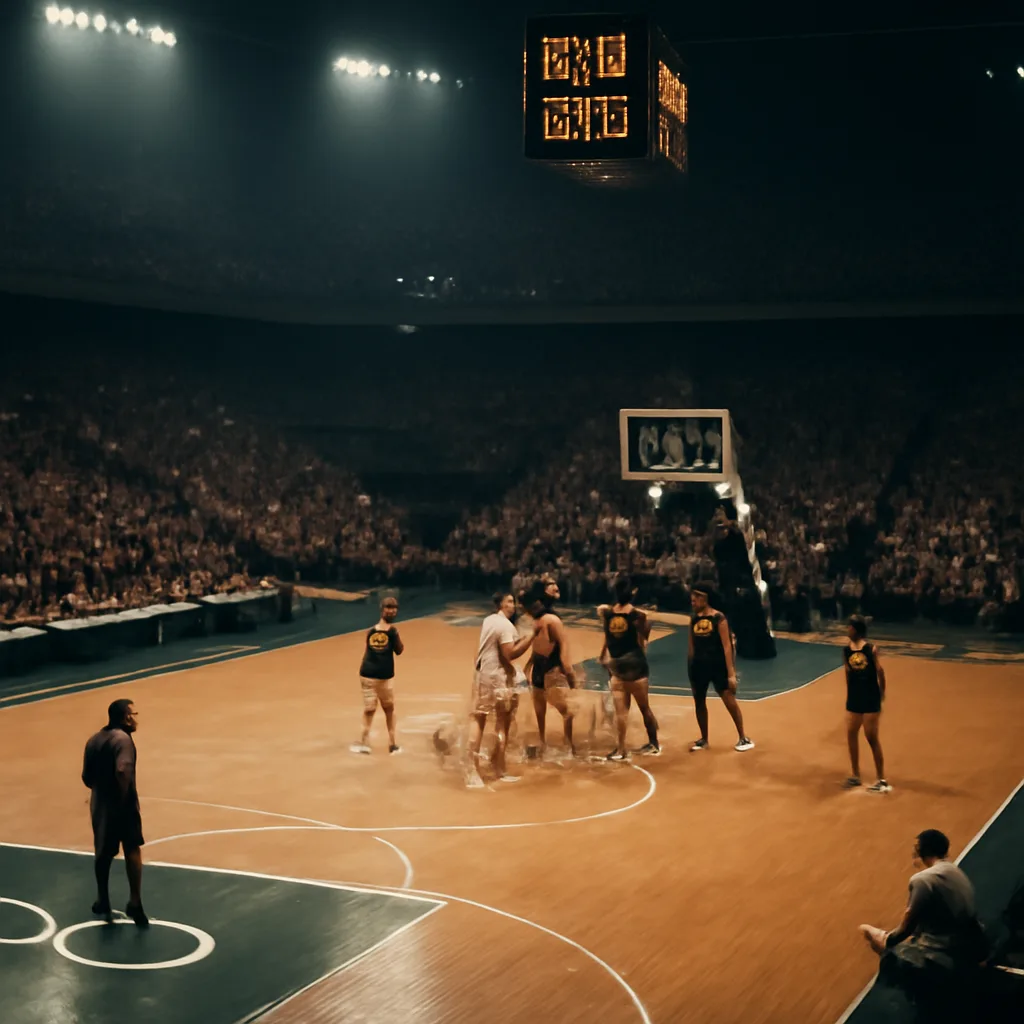
An indoor basketball arena in 1972 with players and officials near the baseline, a visible game clock above the court, and a crowded spectator stand; uniforms and equipment consistent with early 1970s international basketball.

The gold-medal basketball game at the 1972 Munich Olympics ended amid disputed officiating and administrative interventions, producing a contested Soviet victory and lasting debate over the result.


On September 9, 1972, the Olympic men's basketball final in Munich between the United States and the Soviet Union concluded in a highly disputed and lasting controversy. The match had been tightly contested throughout and culminated in chaotic final seconds that led to divergent accounts, contested rulings, and an official finish that left the U.S. team refusing their medals.

Game context and immediate sequence
The United States entered the game with a long Olympic winning streak in men’s basketball dating back to 1936 (excluding the 1956 controversy over amateur status) and were favored. The Soviet squad, composed of experienced international players, kept the game close. In the final moments, the U.S. led 50–49 after Doug Collins was fouled and made two free throws with three seconds remaining. What followed was a contested sequence involving timekeeping, clock resets, and an intervention by game officials and FIBA representatives.

Three restarts and the disputed final play
After Collins’ free throws, the Soviet team inbounded the ball. A horn sounded and play was stopped; however, confusion about whether the horn came from the game clock or the scorer’s table led officials to order a replay. On the second inbound attempt, another stoppage occurred when the Soviet coach protested, and a further intervention led to the clock being reset to three seconds for a third inbound. On this final try, Soviet player Alexander Belov (listed in some sources as Aleksandr Belov) caught a long pass in the paint and scored a layup as time expired. The referee crew allowed the basket, and the Soviets were awarded a 51–50 victory.

Controversy over officiating and authority
The central disputes were procedural: which party had authority to order the clock reset, whether the horn had legitimately sounded to end play, and whether the sequence of restarts complied with the rules in force. A FIBA secretary-general and other officials who intervened asserted that proper procedure had been followed in granting the Soviet team another play after the first horn; U.S. officials and players argued that the additional plays were unauthorized and that the clock and horn issues had been mishandled. The U.S. delegation filed protests that ultimately were rejected by a FIBA appeals panel with a 3–2 vote.

Aftermath and legacy
The U.S. team famously refused to accept their silver medals; the medals were returned to the International Olympic Committee and reportedly remain unclaimed. The result intensified Cold War tensions in sport and raised questions about officiating, adjudication, and the role of international sporting bodies in dispute resolution. FIBA subsequently reviewed and modified some procedures relating to game administration and protests, and the game remains a case study in sports governance and the impact of officiating controversies on competition integrity.

Historical assessment
Historians and sports analysts note that the game’s controversy rests more on procedural and administrative confusion than on a clear act of deliberate cheating by players. Different accounts emphasize the chaotic environment, human error, and the unusual involvement of multiple officials and administrators in the last seconds. The match persists in public memory as one of the most contentious Olympic finishes, often cited when discussing how disputes should be handled in high-stakes international sport.

Uncertainties and disputes
Some factual details—particularly the precise source of the horn, the wording of on-court instructions, and the internal deliberations of FIBA officials—are reported differently across contemporary accounts and later recollections. Where contemporaneous official documents exist, they were part of the appeals record; however, interpretations of those documents and eyewitness testimony continue to vary among participants and observers.

The 1972 final remains a landmark example of how split-second administrative decisions can determine sporting outcomes and how unresolved disputes can shape the historical reputation of an event.

Share this

Email Share on X Facebook Reddit

Did this surprise you?