
07/11/1962 • 5 views
Escape from Alcatraz Triggers Massive 1962 Manhunt
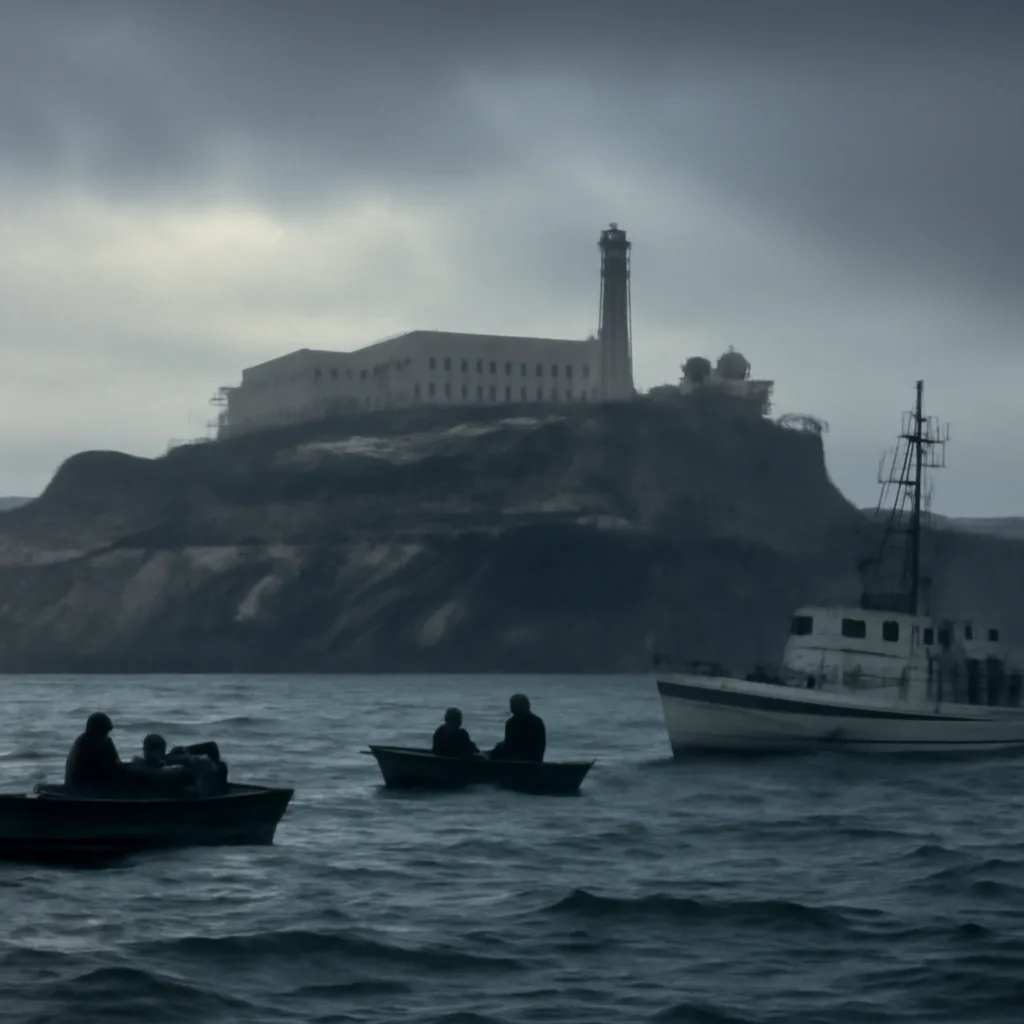
On July 11, 1962, three inmates vanished from Alcatraz after an overnight escape, prompting a large-scale search across San Francisco Bay and widespread media attention as authorities sought to determine whether they drowned or reached the mainland.
Background
Alcatraz Federal Penitentiary, opened in 1934 on a rocky island known for strong currents and cold water, housed inmates considered particularly dangerous or escape-prone. The prison’s isolated location and harsh environment were intended to make escape virtually impossible. By 1962, inmate ingenuity had led to several attempted breakouts, though few had succeeded in leaving the island.
The Escape
Investigators later determined that the three men had improvised tools and extensively modified the walls of their cells to access an internal utility corridor behind their cells. They created a noisy diversion and used a makeshift raft constructed from stolen raincoats. Dummy heads fashioned from plaster, papier-mâché and hair were placed in their beds to delay discovery. Sometime overnight, they climbed through vents to reach the roof, descended a drainpipe to the island’s shore, and launched the raft into the bay.
Discovery and Immediate Response
The escape was discovered during the morning count. The dummy heads and other evidence were found in the cells, and prison staff alerted law enforcement. The U.S. Marshals Service led the search for the escapees, assisted by the Coast Guard and local police. Search efforts included patrol boats, aircraft, and shoreline searches in the hours and days after the escape. Authorities also reviewed prison records and flight patterns and interviewed witnesses to search for any signs the men had reached the mainland.
Investigation and Theories
Official investigators concluded the escapees most likely drowned in San Francisco Bay, citing strong currents, cold water temperatures, and lack of confirmed sightings on the mainland. No bodies were recovered, however, and the absence of conclusive evidence of death left room for speculation and persistent claims of survival. Over the decades, occasional reported sightings and new leads prompted periodic reviews and follow-up investigations by law enforcement and authors, but none produced definitive proof that the men survived the attempt.
Consequences and Legacy
The escape exposed security weaknesses at Alcatraz and embarrassed prison authorities at the federal level. It contributed to scrutiny of the institution’s operations and conditions. Alcatraz closed as a federal prison in 1963, less than a year after the escape, though multiple factors including cost and deteriorating facilities influenced that decision.
The 1962 escape has become a focal point of popular interest, inspiring books, documentaries, and fictionalized portrayals. The case remains officially unresolved: while the U.S. Marshals Service lists the three men as presumed drowned, it continues to receive and occasionally investigate credible leads. The event endures in public memory as an emblematic example of prisoner resourcefulness and the enduring mysteries surrounding high-profile escapes from maximum-security facilities.