
← Back
12/22/1989 • 5 views

East–West Barrier Falls: Berlin Wall Opens Amid Rapid Change
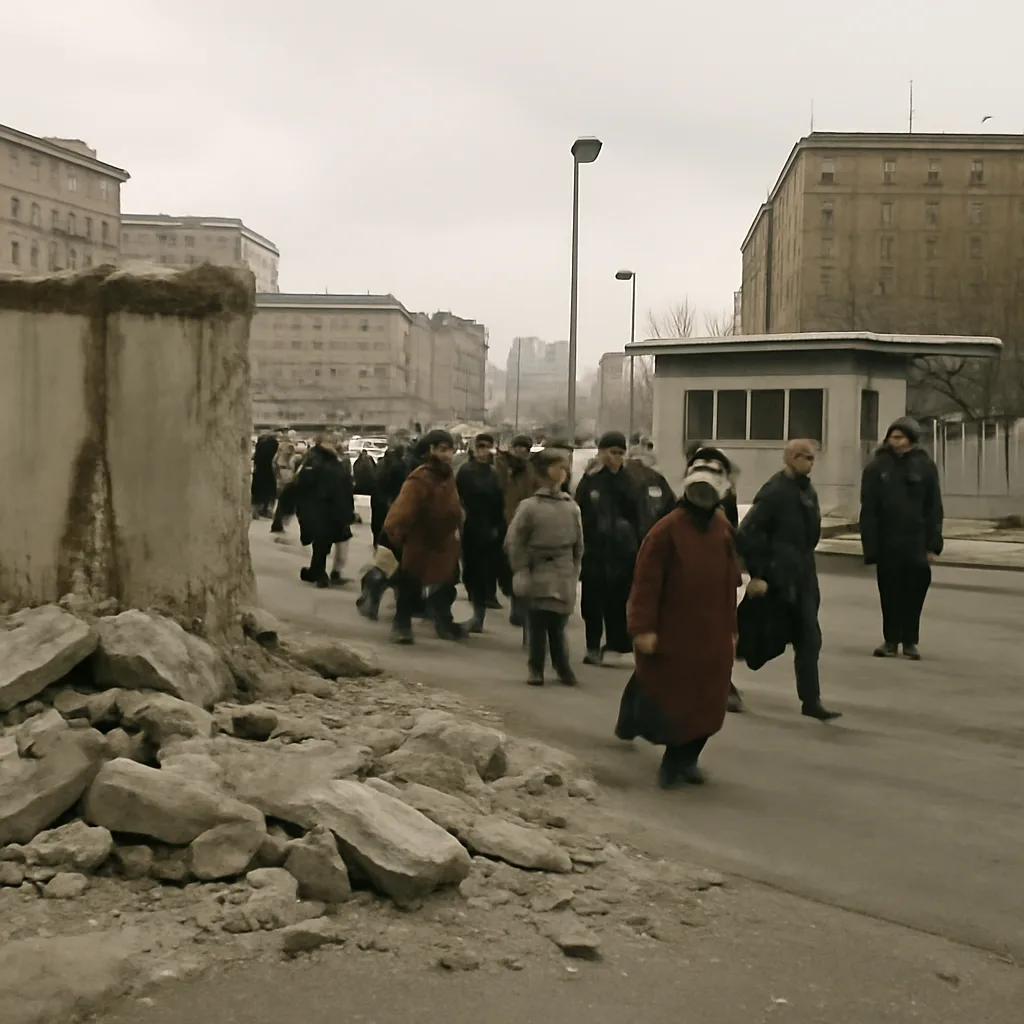
A wide view of the Berlin Wall area in late 1989 showing a partially dismantled concrete barrier, open crossing points with people walking between East and West, and nearby city buildings under winter light.

On 22 December 1989 authorities began dismantling crossings and allowing freer movement between East and West Berlin, marking a decisive step in the end of Germany’s postwar division and accelerating the Cold War’s conclusion.


On 22 December 1989, official actions to open crossings and reduce controls along the Berlin Wall signified a pivotal phase in the collapse of Germany’s postwar division. The barrier that had separated East and West Berlin since 1961 had already been pierced in parts by mass emigration and protest over preceding months; what took place in December was the formal easing of restrictions that had sustained the partition.

Background: After sustained public protests across East Germany, a reformist mood in several Eastern Bloc capitals, and the broader loosening of Soviet control under Mikhail Gorbachev, the German Democratic Republic faced mounting pressure. In the months prior, travel rules and emigration procedures had been subject to intense debate and frequent change. The mass demonstrations in cities such as Leipzig and Berlin and the exodus through neighboring countries undermined the credibility of the East German leadership.

Events of December 22: Government announcements and coordinated decisions by border authorities reduced controls at several crossing points and permitted greater movement between sectors of the city. Checkpoints that had been tightly managed for nearly three decades saw lines of people moving more freely, and sections of the Wall that had been symbolic and practical barriers began to be dismantled by official crews and private citizens. The actions of December 22 did not constitute a single moment of dramatic demolition but rather an administrative and physical unraveling carried out in the context of intense popular pressure and rapidly shifting political authority.

Immediate impact: The easing of controls accelerated travel, family reunifications, and the exchange of goods and information. The opening of crossings undermined the institutions that maintained the division—border guards, checkpoint infrastructure, and the political legitimacy of a regime that had relied on isolation. The events contributed directly to the swift political transformations that culminated in German reunification on 3 October 1990.

Longer-term significance: The December actions formed part of a broader sequence in 1989 that included the fall of other Eastern Bloc regimes and ultimately the dissolution of Cold War-era borders in Europe. For Berliners, the changes transformed daily life, property relations, and urban development. For international politics, they symbolized the weakening of Soviet-style control in Eastern Europe and the rapid reconfiguration of the continent’s security and political architecture.

Notes on sources and interpretation: Contemporary reporting, government records, and later historical scholarship describe the dismantling of border controls in late 1989 as a process rather than a single event. While 9 November 1989 is often cited for the abrupt opening of certain checkpoints earlier that month, December actions continued the dismantling and formal reduction of controls. Historians emphasize the combination of popular protest, institutional collapse, and international shifts that together ended Berlin’s division.

Share this

Email Share on X Facebook Reddit

Did this surprise you?