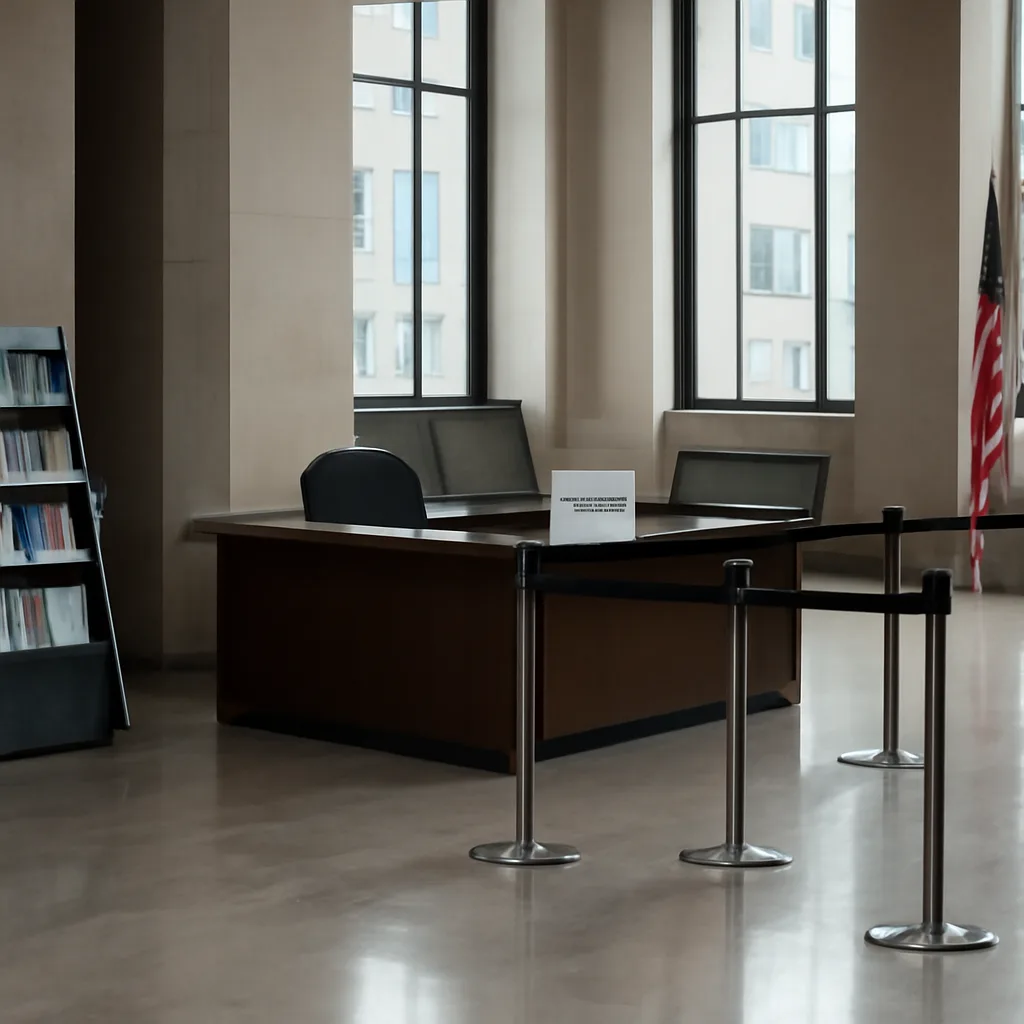
Federal government partially shuts down as budget talks collapse
On December 22, 2018, the U.S. federal government entered a partial shutdown after lawmakers failed to pass appropriations or a short-term funding bill, halting many discretionary services and furloughing nonessential federal workers.
On December 22, 2018, the United States federal government began a partial shutdown after Congress did not pass appropriations legislation or a continuing resolution to fund government operations. The impasse followed weeks of negotiations over domestic spending levels and, in particular, demands for funding for a southern border wall, an issue that divided Republican and Democratic lawmakers as well as the White House. The lapse in funding affected many federal agencies and programs that rely on annual appropriations.
Scope and immediate effects
Many federal departments and agencies designated nonessential employees for furlough, while essential personnel continued to work without pay until funding was restored. Agencies reported disruptions to services that depend on discretionary appropriations: national parks and museums reduced operations, and federal grant processing and contract work slowed. Some veterans’ services, Social Security payments and Medicare and Medicaid benefits continued because those programs are funded separately or through permanent mandatory spending. The shutdown also delayed routine activities such as new federal hiring and certain regulatory work.
Political context
The shutdown followed an extended period of negotiations in which House and Senate leaders, and the Trump administration, sought differing funding levels and policy concessions. A central contention was funding for physical barriers on the U.S.–Mexico border; President Donald Trump and many Republican lawmakers sought statutory funding for wall construction, while House Democrats declined to agree to such funding as part of a funding package. The 116th Congress convened on January 3, 2019, and political dynamics shifted as the House changed party control, but the shutdown as of December 22 reflected the breakdown in late-2018 talks.
Economic and social impacts
Analysts and agencies warned that a prolonged shutdown would have measurable economic consequences, including lost federal wages for furloughed employees, delayed contracts and slower economic data collection. Some federal workers, contractors and businesses that rely on federal activity faced financial strain. Certain services affecting the public—such as national park operations, passport processing and regulatory reviews—were curtailed or delayed, creating backlogs that would take time to clear after funding resumed.
Duration and resolution (context)
Shutdowns require congressional action to resume appropriations; historically, they have been resolved by passage of continuing resolutions or consolidated spending bills. The specific length and resolution of any shutdown depend on subsequent legislative decisions. For the December 2018 shutdown, the standoff continued into late December and beyond, with political negotiations and public debate shaping the timing and terms of any funding agreement.
Reporting and sources
This summary is based on contemporaneous reporting and official statements from late December 2018 regarding the lapse of appropriations and its immediate effects. For detailed timelines, agency notices and exact counts of furloughed personnel, readers should consult official agency announcements and congressional records from the period.