
← Back
05/29/1953 • 8 views

First Successful Ascent of Mount Everest Announced
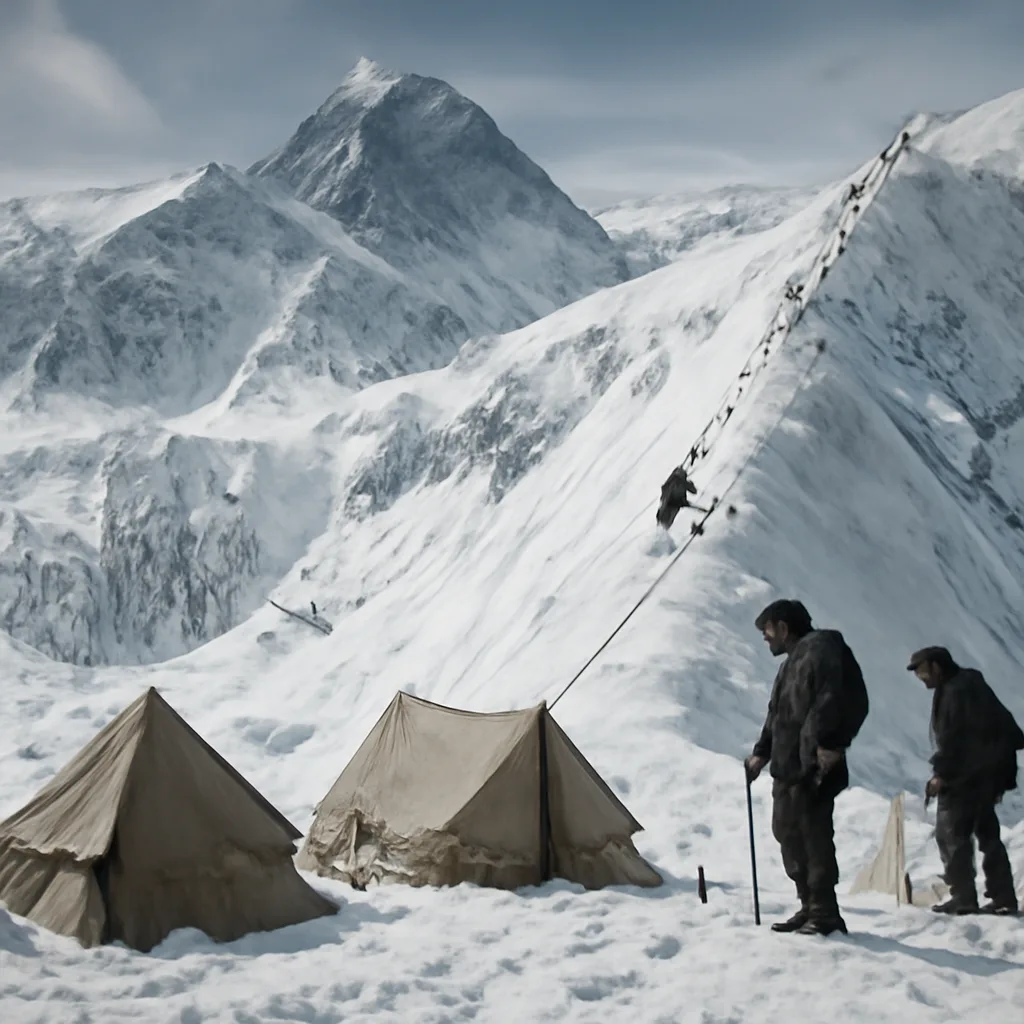
Edmund Hillary and Tenzing Norgay's 1953 Everest expedition route area: snowy high-altitude ridge near the South Col with ice walls and tents, low-angled sunlight, climbers' equipment and ropes visible; no identifiable faces.

On 29 May 1953 British climbers Edmund Hillary and Tenzing Norgay reached the summit of Mount Everest, the highest point on Earth, marking the first widely recognized successful ascent. The achievement capped the 1953 British Everest Expedition led by John Hunt.


On 29 May 1953 members of the 1953 British Mount Everest Expedition achieved the first widely recognized ascent of Mount Everest. New Zealander Edmund Hillary and Nepalese Sherpa Tenzing Norgay reached the mountain’s summit (8,848 m / 29,029 ft) in the morning, after careful acclimatization and a series of established high camps during the spring season.

Background: Attempts to climb Everest had been made since the 1920s, with notable expeditions in the 1920s and 1930s led by British teams. After World War II, mountaineering resumed, and access to Nepal opened in the early 1950s. The 1953 British expedition, led by Colonel John Hunt, combined military-style organization, experienced climbers, and Sherpa support to attempt the southeast ridge route via the Khumbu Icefall, Western Cwm, Lhotse Face and South Col.

The final push: Hillary and Tenzing had been part of several summit attempts from the South Col. On 28 May they set out from Camp IX (the South Col) and established a high camp. In the early hours of 29 May they left the high camp and climbed the summit ridge, negotiating technical sections such as the exposed rock and ice features on the final slopes. By mid-morning they reached the top; each later gave personal accounts of the moment, though their recollections differ in emphasis. Photographs taken on the summit—most notably by Hillary—document their presence at the top.

Immediate aftermath: News of the ascent reached Britain on 2 June 1953, coinciding with the coronation of Queen Elizabeth II; the timing amplified public interest. The British expedition’s achievement was celebrated internationally and awarded official recognition. Hillary and Tenzing became prominent figures: Hillary continued mountaineering and later engaged in extensive philanthropic work in Nepal; Tenzing became an internationally known Sherpa leader.

Historical notes and disputes: While Hillary and Tenzing’s 29 May climb is the first ascent with widely accepted evidence, there have been later debates about earlier claims, and the use of supplemental oxygen and fixed ropes on early expeditions is often discussed in historical assessments. The question of whether any undocumented summit was reached earlier remains unresolved in the historical record; however, no earlier claim has gained the same level of corroboration as the 1953 ascent.

Legacy: The successful 1953 ascent opened a new chapter in high-altitude mountaineering, demonstrating that the world’s highest peak could be climbed with organized expedition support, improved equipment, and experienced high-altitude climbers and Sherpas. It also brought greater attention to Nepal and the Himalayan region and raised ongoing discussions about the role, recognition and welfare of Sherpa climbers in high-altitude expeditions.

Sources and verification: This summary is based on contemporary expedition reports, subsequent historical accounts of the 1953 British Everest Expedition, and the well-documented personal histories of Edmund Hillary and Tenzing Norgay. Where accounts differ on personal details of the summit moment, this text notes that recollections vary rather than asserting a single, unverifiable narrative.

Share this

Email Share on X Facebook Reddit

Did this surprise you?