
← Back
04/27/1828 • 10 views

London’s First Public Zoo Opens in 1828
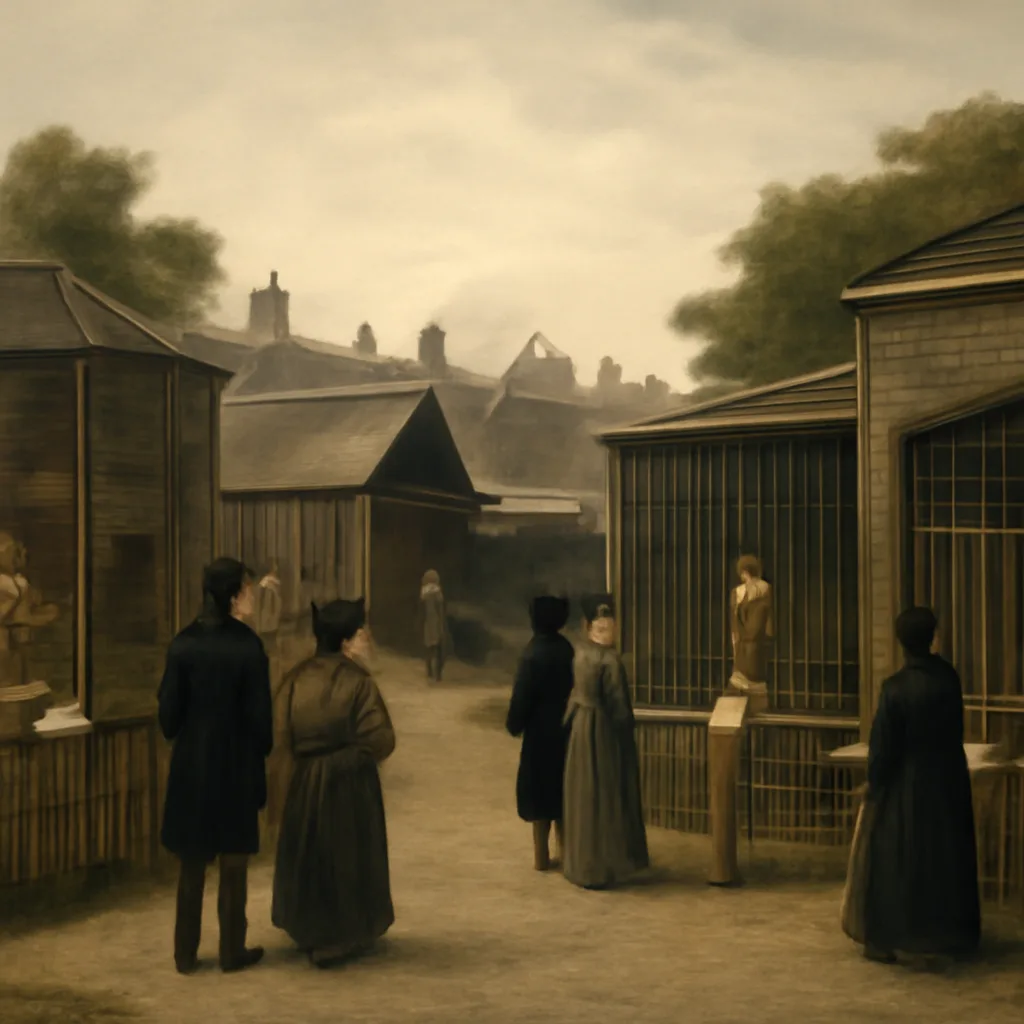
A 19th-century London outdoor animal collection showing caged exotic birds and a fenced area with a small ungulate, visitors in period dress viewing the enclosures.

On April 27, 1828, London saw the opening of its first public zoological garden, offering paying visitors structured displays of exotic animals and marking a shift toward public scientific education and urban leisure.


On 27 April 1828 a zoological collection in London was opened to the paying public, reflecting broader 19th-century developments in natural history, urban leisure, and commercial exhibition. While natural history menageries and private collections had long existed, this event signaled one early instance in London when animal displays were presented with regular admission for a general paying audience.

Background
Before the 19th century, Europeans encountered exotic animals mainly through royal menageries, aristocratic collections, traveling circuses, and natural historians’ cabinets. These private collections were unevenly accessible and often intended to signal status rather than to educate the general public. The late 18th and early 19th centuries saw growing public interest in natural history, fueled by publications, museums, and expanding imperial trade that made live specimens and preserved curiosities more available in European capitals.

The opening in context
The April 1828 opening belongs to this milieu. It was part of a trend in which entrepreneurs and naturalists aimed to attract urban audiences by combining entertainment, education, and commercial opportunity. Such establishments offered enclosures of exotic mammals, birds, reptiles and sometimes live demonstrations or guided tours. The layout and interpretation varied, but the stated purposes usually mixed curiosity, instruction in comparative anatomy and natural history, and the provision of a novel leisure activity for Londoners and visitors.

Visitors and experience
Contemporary visitors would have encountered cages, aviaries and fenced grazing enclosures rather than the modern-style landscaped habitats. Labels and printed guides were sometimes provided; animal care standards varied and often reflected the limits of contemporary husbandry knowledge. Admission charged a modest fee, making the collection more widely accessible than aristocratic menageries but still a commercial enterprise. The audience included middle-class families, gentlemen interested in science, and tourists.

Significance
The 1828 opening is important for several reasons. It exemplifies how animal displays moved from private prestige to a public, commercialised form of urban culture. It contributed to the popularization of natural history: visitors could see living examples that complemented museum specimens and published accounts. It also foreshadowed later institutional developments—by mid-19th century many cities established larger zoological gardens explicitly oriented toward scientific study, education and conservation.

Limitations and historical caution
Records from this period can be fragmentary and terminology inconsistent: different sources use terms like “zoological garden,” “menagerie,” or “collection,” and several small establishments opened in Britain around the same years. While 27 April 1828 is the date associated with this particular public opening in London, historians distinguish such early commercial collections from later municipal or scientific zoos (for example, the Zoological Society of London’s Regent’s Park Zoological Gardens, opened to members earlier and to the public in various stages from the 1820s–1830s). Because contemporary accounts vary in emphasis and detail, researchers treat this event as part of a broader process rather than as a singular origin point for all public zoological institutions in Britain.

Legacy
The emergence of public zoological displays in the early 19th century influenced public attitudes toward animals and nature, the development of animal husbandry practices, and later debates over ethics and conservation. Over the following decades, public expectations and scientific ambitions reshaped many such institutions into larger, more professionally managed zoological gardens devoted to research, education and, eventually, species protection.

Further reading
For verifiable detail about specific early London collections and the evolution of zoos, consult contemporary newspaper reports, period guidebooks, and modern scholarship on the history of zoos and menageries, which contextualize individual openings like the 1828 event within broader social and scientific currents.

Share this

Email Share on X Facebook Reddit

Did this surprise you?